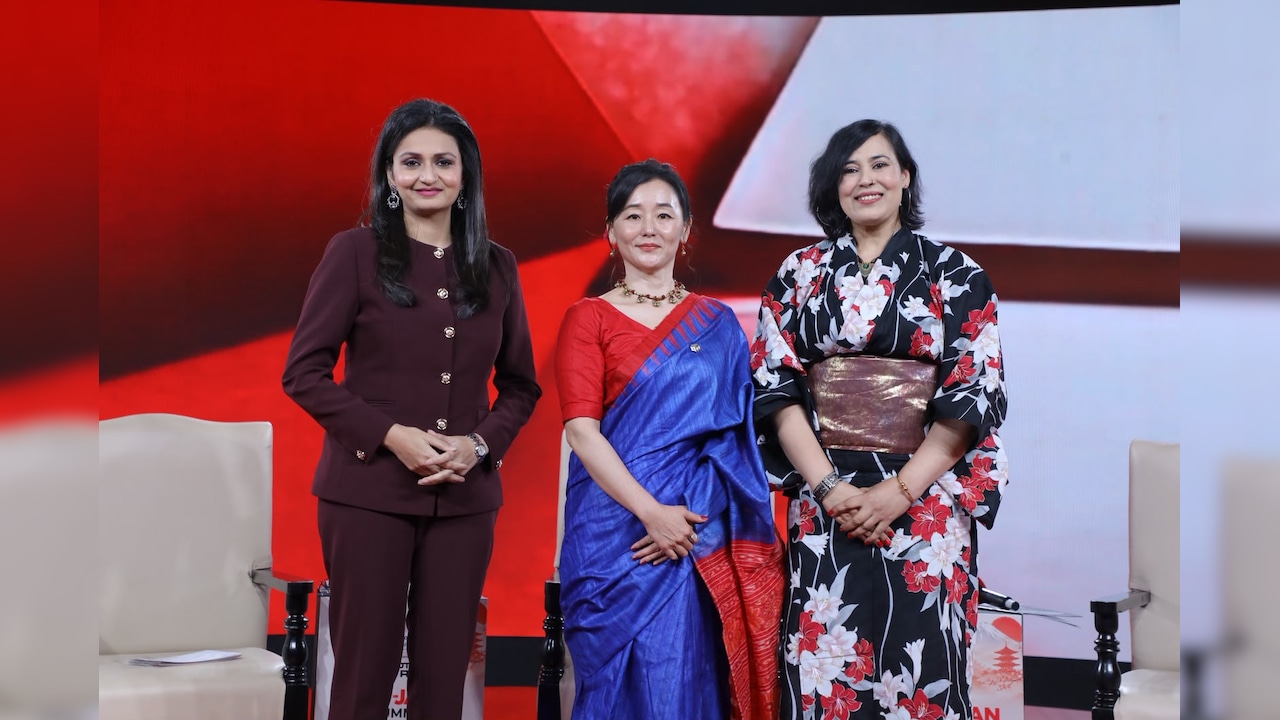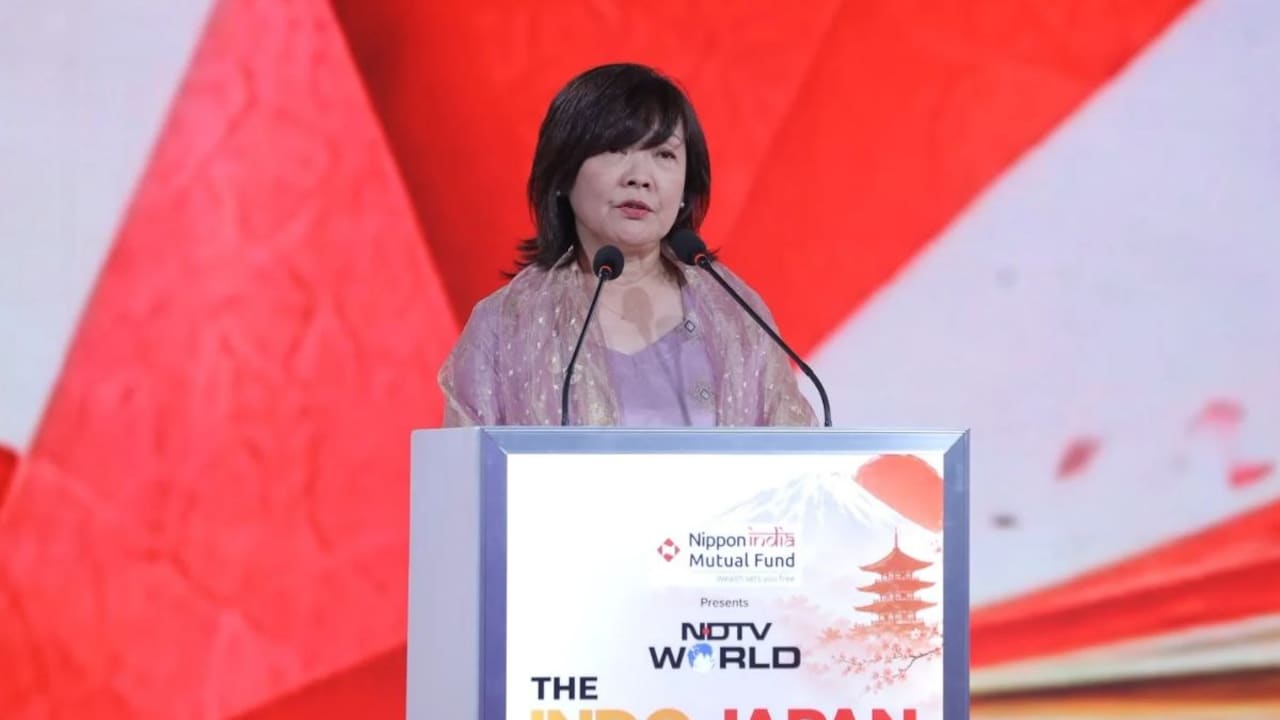
Standard political reporting reduces public displays of emotion to human-interest filler, missing the underlying diplomatic mechanics. When Akie Abe broke down at the NDTV Indo-Japan Summit in October 2026 while recounting her husband’s final words before his 2022 assassination, legacy media framed the moment entirely around personal tragedy. That framing obscures a deliberate statecraft mechanism: the conversion of bereavement into institutional trust between New Delhi and Tokyo.
In international relations, formal treaties and bilateral trade agreements operate on rational self-interest, which remains vulnerable to electoral cycles and shifting cabinet priorities. Personal diplomacy acts as an insulation layer against bureaucratic friction. By stepping onto an international summit stage more than four years after Shinzo Abe’s death, Akie Abe functioned not merely as a grieving widow, but as an informal custodian of his strategic doctrine—specifically the Free and Open Indo-Pacific (FOIP) framework and the bilateral alignment between Japan and India. If you found value in this article, you should look at: this related article.
The Three-Tiered Mechanism of Proxy Diplomacy
When a transformative political architect dies unexpectedly, the institutional momentum behind their foreign policy faces immediate decay. Successors inherit the policy architecture without inheriting the interpersonal rapport that initially overcame bureaucratic inertia. In the case of the Tokyo-New Delhi axis, that rapport was concentrated heavily in the personal bond between Shinzo Abe and Indian Prime Minister Narendra Modi.
To prevent strategic drift, bilateral ecosystems rely on proxy diplomacy, which operates across three distinct layers: For another perspective on this development, refer to the recent update from Al Jazeera.
- Symbolic Continuity: The physical presence of a former leader’s spouse at high-level policy forums signals to domestic and foreign stakeholders that the foundational bilateral relationship transcends individual administrations.
- Emotional Anchoring: Publicly recounting private moments—such as Abe’s routine breakfast with his mother and wife and his final "See you later" before departing for Nara—humanizes abstract geopolitical alignments for mass audiences, generating public consensus that supports capital-intensive state partnerships.
- Informal Backchanneling: Without holding formal cabinet rank, a recognized surrogate can attend summits, inaugurate memorial corridors, and engage with business leaders without triggering diplomatic protocol constraints or binding the sitting government to premature commitments.
This structure explains why Akie Abe’s appearance coincided with broader summit programming focused on a projected 3.5x expansion in India-Japan foreign direct investment (FDI) over the coming decade and the construction of a shared Asian technology stack. The emotional narrative creates the atmospheric trust required for private-sector capital allocation.
Deconstructing the "Unfinished Plans" Doctrine
During her address, Akie Abe noted that her husband "had many plans for the world" that remained incomplete at the time of his assassination, observing how drastically the global environment had shifted in the intervening four years. Standard coverage treats this statement as a sentimental platitude. Analyzed through the lens of realist international relations theory, the remark points directly to the structural vulnerabilities of the post-2022 security environment.
Shinzo Abe’s strategic blueprint rested on two primary pillars that remain only partially executed:
- Multilateral Containment via the Quad: Abe conceptualized the Quadrilateral Security Dialogue (Australia, India, Japan, and the United States) in 2007 as a maritime counterweight to regional coercion. While the grouping has institutionalized since his death, operational synchronization across defense industrial bases and critical supply chains lags behind the original strategic intent.
- Constitutional Normalization: Domestically, Abe sought to revise Article 9 of Japan’s pacifist constitution to formally recognize the Self-Defense Forces and remove legal ambiguities surrounding collective self-defense. Because he was killed before achieving a national referendum on the issue, Japan’s security posture remains constrained by statutory reinterpretations rather than permanent constitutional reform.
When Akie Abe references her husband's unfulfilled global plans, she is highlighting the gap between the strategic architecture he designed and the execution deficit left behind. In systems management, this represents a succession bottleneck: the vision was fully mapped, the initial alliances were brokered, but the primary executive sponsor was removed prior to final deployment.
The Cost Function of Emotional Statecraft
Deploying personal vulnerability in high-stakes diplomatic forums carries distinct operational trade-offs. While emotional authenticity generates immediate media amplification and deepens cultural affinity, it introduces specific structural limitations that strategists must account for.
First, sympathy is a depreciating asset. Public grief commands attention in the immediate aftermath of a political assassination, but its utility as a diplomatic lubricant diminishes over time. Four years post-event, bilateral progress must transition from commemorative goodwill to hard metrics: joint semiconductor fabrication, defense co-production, and infrastructure financing. If state actors over-rely on commemorative diplomacy, they risk masking policy stagnation behind ceremonial warmth.
Second, surrogate diplomacy lacks executive authority. Akie Abe possesses immense soft-power capital, particularly in India, where she has participated in events ranging from the NDTV summit to the inauguration of the Shinzo Abe Memorial Corridor in Varanasi. However, a private citizen cannot negotiate tariff reductions, resolve regulatory bottlenecks for Japanese conglomerates operating in Indian states, or align defense procurement timelines. During her husband's tenure, Akie Abe famously described her domestic role as an "opposition party" at home—willing to voice dissenting views on nuclear power or social policy to ensure her husband heard perspectives outside his political echo chamber. That independent posture gave her credibility, yet it simultaneously underscores her separation from the formal decision-making apparatus of the Japanese state.
Third, narrative control remains fragile. Live emotional moments are unscripted by nature. While her tears at the summit reinforced the sincerity of the Indo-Japan bond, media algorithms disproportionately index the emotional breakdown rather than the substantive policy discussions occurring on adjacent panels. In the attention economy, a fourteen-minute diplomatic reflection is routinely compressed into a thirty-second viral clip, stripping away the geopolitical context that justified the summit in the first place.
Transitioning From Commemorative Trust to Institutional Execution
The Indo-Japan partnership stands at an inflection point where the personal legacy of Shinzo Abe must be fully converted into self-sustaining institutional mechanisms. Relying on periodic commemorative appearances to maintain momentum is an unsustainable operating model for two major Asian economies navigating supply-chain decoupling and regional security threats.
To capture the value generated by high-trust public diplomacy, policymakers and corporate leaders operating within the Tokyo-New Delhi corridor must execute three specific shifts:
- Institutionalize Track-1.5 Dialogues: Move bilateral summits away from retrospective tributes toward binding working groups focused on regulatory harmonization, particularly in digital public infrastructure, clean energy transitions, and dual-use defense technologies.
- De-risk Private Capital Deployment: Translate summit-level goodwill into concrete sovereign credit guarantees and streamlined land-acquisition frameworks so that projected FDI increases materialize outside traditional manufacturing hubs.
- Establish Permanent Policy Fellowships: Replace ad-hoc memorial events with funded academic and defense fellowships dedicated to stress-testing the Free and Open Indo-Pacific framework against contemporary maritime and cyber contingencies.
Personal rapport initiated the modern Indo-Japan alignment, and Akie Abe’s public appearances continue to protect its cultural foundation, but only codified economic and security integration will ensure the architecture survives the next decade of geopolitical volatility.