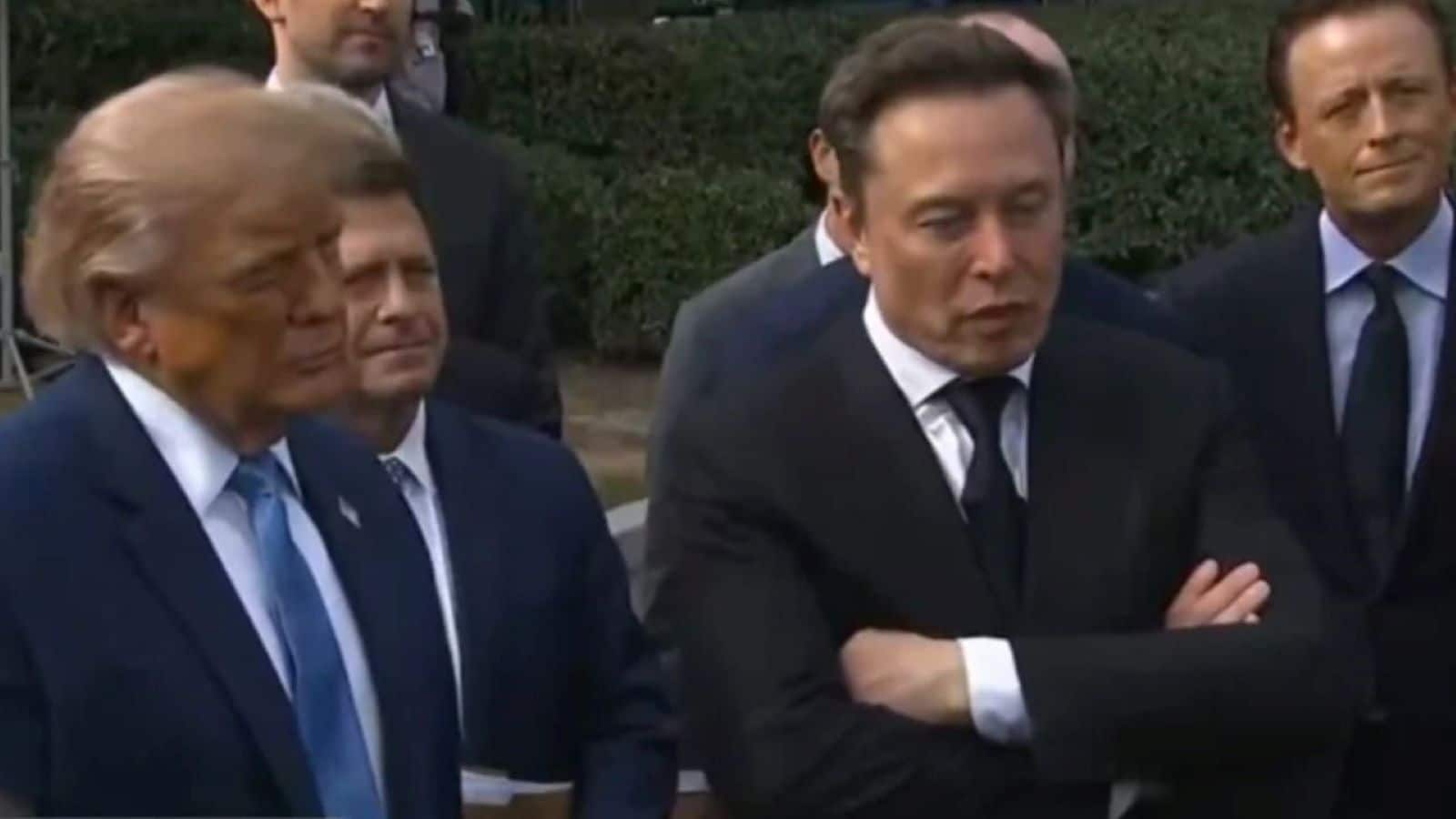
The recent conferral of the National Medal of Science and the National Medal of Technology and Innovation upon a select oligarchy of chief executives—including Elon Musk, Jensen Huang, Satya Nadella, Sergey Brin, Lisa Su, and Michael Dell—signals a structural shift in the political economy of American innovation. Historically, these honors targeted academic pioneers and institutional researchers funded by long-term federal appropriations. The pivot toward corporate operators codifies a new reality: the state has outsourced foundational scientific infrastructure to commercial monopolies.
Understanding this shift requires examining the underlying mechanics of capital concentration, compute supply chains, and sovereign dependency.
The Bifurcation of Discovery and Deployment
Traditional models of technological progression operated on a linear pipeline. Federal entities like the National Science Foundation or DARPA funded basic science; universities built the theoretical frameworks; corporations commercialized the output. Over the past decade, that pipeline inverted.
Capital-intensive scaling laws in frontier fields, particularly artificial intelligence and aerospace manufacturing, rendered academic laboratories obsolete for heavy compute tasks. Training a frontier foundational model or constructing reusable orbital-class heavy-lift rockets requires capital expenditure footprints that match small nation-states.
Consequently, the state no longer precedes the market in high-leverage domains. Instead, corporate balance sheets absorb the existential risk of foundational research. When the White House awards medals to the heads of Nvidia, AMD, Microsoft, SpaceX, and Alphabet, it is acknowledging a structural capitulation: industrial policy is now directed by corporate capital allocation strategies rather than public-sector master plans.
The Compute Bottleneck and Sovereign Leverage
The selection of recipients highlights the primary variables of twenty-first-century geopolitical power: silicon architecture, hyperscale cloud distribution, and kinetic propulsion.
Jensen Huang and Lisa Su represent the hardware foundation. The architectural shift from scalar processing to massively parallel graphics processing units and chiplet-based integration created the physical substrate upon which modern machine learning operates. Without this specific hardware vector, national strategies for automated intelligence stall.
Satya Nadella and Sergey Brin control the distribution layers. Hyperscale infrastructure and massive data aggregation frameworks dictate whether raw compute translates into operational intelligence.
Elon Musk bridges manufacturing physics and information architecture, combining heavy industrial rocketry with distributed satellite networks and autonomous systems.
This centralization creates a profound asymmetry. The state retains regulatory and monetary levers, but it lacks the execution velocity of private enterprises operating outside bureaucratic friction. When supply chains for advanced lithography, high-bandwidth memory, and orbital launch capacity are controlled by a half-dozen corporate entities, sovereign security becomes inextricably bound to corporate shareholder value.
The Regulatory Theater of Self-Regulation
Concurrent with these accolades, the administration's engagements with these same executives—such as voluntary frameworks for artificial intelligence safeguards and domestic manufacturing commitments—reveal the limits of state control.
When regulators attempt to govern rapidly accelerating technologies without possessing internal technical parity, policy defaults to self-certification. The mechanism is straightforward: corporate leaders draft the operational parameters under the guise of voluntary compliance, securing market protection while preempting statutory mandates that could slow velocity.
The simultaneous friction involving regulatory actions on labor mobility and visa programs (such as scrutiny over permanent residency sponsorships) juxtaposed against high-profile awards demonstrates the transactional friction of this relationship. The state utilizes honors and public-private summits to align private capital with national security priorities, attempting to bind corporate entities to domestic industrial objectives while avoiding capital flight to competitive foreign jurisdictions.
Strategic Realities of the New Industrial State
The elevation of corporate executives to the pinnacle of scientific recognition confirms that technological supremacy is now an industrial output driven by concentrated private monopolies.
For enterprise strategists and geopolitical analysts, the takeaway is unambiguous. Innovation velocity is bounded by access to physical infrastructure—power grids, chip fabrication plants, and orbital corridors. Public policy will increasingly react to the balance sheets of these institutions rather than dictate their direction. The stability of the technological ecosystem rests entirely on the operational continuity of a fragile, highly centralized group of commercial enterprises.
This video provides additional context regarding the specific awards ceremony and the recognition of these prominent technology leaders by the administration.