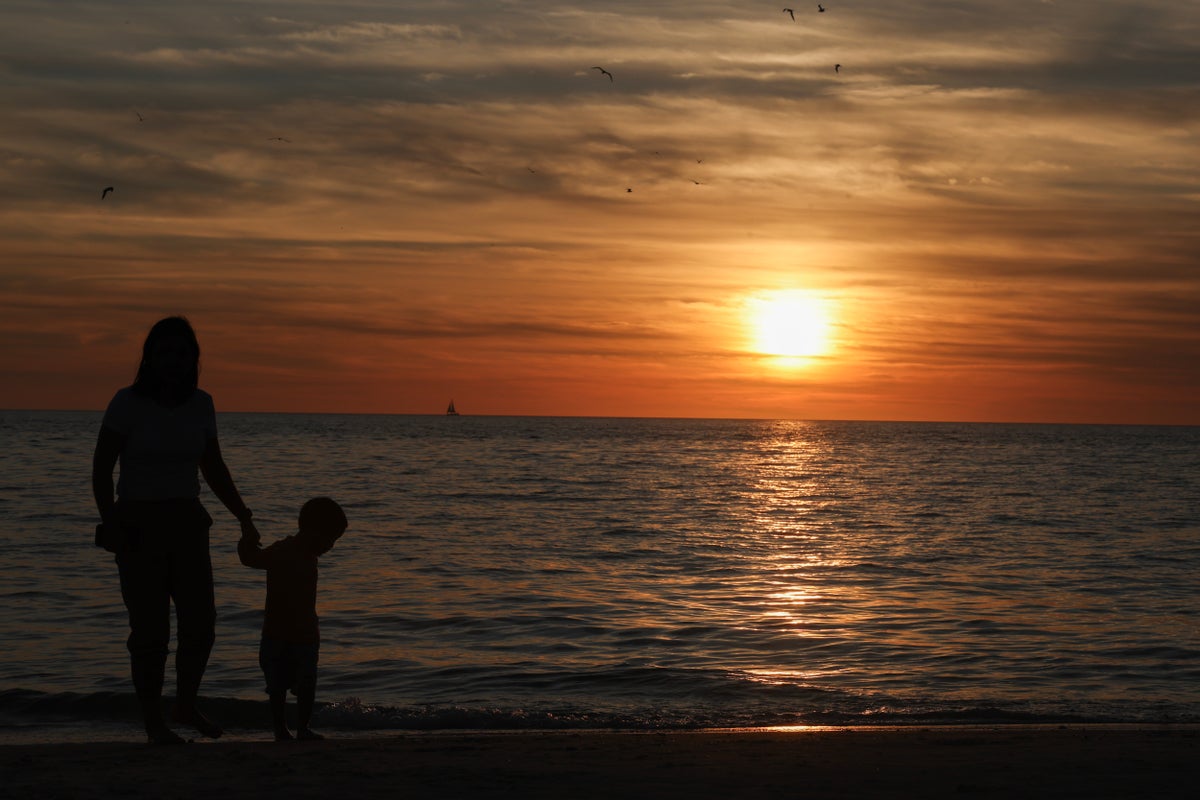
My grandfather used to walk three miles just to buy a loaf of bread, and he lived to ninety-six without ever knowing what a macro-nutrient was. When he died, he didn't slip away in a sterile hospital room surrounded by beeping monitors. He fell asleep in his favorite armchair after spending the afternoon arguing with a tomato plant that refused to yield.
For years, I thought he was just lucky. Good genes. Clean living. The rustic mythology we tell ourselves about the past.
Then I started looking at the blueprints.
Across the globe, there are pockets of geography where people routinely outlive the rest of us. They don't do it by swallowing handfuls of synthetic supplements or by spending three hours a day on an elliptical machine while staring at a tiny screen. They do it simply because they walk out their front doors and have no choice, structurally, architecturally, geographically, but to bump into each other. Their streets curve. Their benches invite lingering. Their grocery stores sit within a three-minute stroll of their kitchens.
We built cities that prioritize speed over breath. And it is killing us.
The Concrete Trap
Let us be completely honest about the modern neighborhood. We designed our towns for machinery, not for humans.
Look out your window right now. What do you see? Asphalt that stretches toward the horizon like a black river. A sea of driveways swallowing front yards. If you want to buy a carton of milk, you climb into a two-ton metal box, turn a key, navigate a labyrinth of stroads, and park in a concrete crater the size of a football field.
We call this convenience. It is actually isolation disguised as progress.
When urban planners layout a grid of suburban cul-de-sacs, they aren't just shaping traffic patterns. They are engineering loneliness. They are cutting the invisible threads that tie an individual to a community.
Imagine a hypothetical resident named Arthur. Arthur is seventy-two. His wife passed away three years ago. His children live four states away. Every morning, Arthur wakes up in a house that feels too big. To get his morning coffee, he has to drive. But driving requires coordination, vision, traffic anxiety, and fuel. So Arthur stays home.
Day after day, Arthur stays inside.
This is where the math turns terrifying. Social isolation carries a mortality risk equivalent to smoking fifteen cigarettes a day. It is worse for your longevity than obesity. When your environment forces you into a box, your body responds by shutting down. Cortisol spikes. Inflammation rises. The brain, starved of spontaneous, low-stakes human contact, begins to wither.
Arthur isn't dying of old age. He is dying of architecture.
Redesigning the Habitat
Can a community actually be designed to extend human life?
To answer that, we have to look past the marketing brochures of modern master-planned developments that promise "luxury resort-style living" while hiding a massive parking garage beneath a fake downtown square. Real longevity design is ancient. It is intuitive.
Consider the principles behind the celebrated blue zones of the world—places like Sardinia or Nicoya. What do their towns look like?
First, they are dense, but human-scale. You can walk across them. This is not because the residents are militant fitness enthusiasts; it is because walking is the default state of getting from point A to point B. The environment naturally nudges physical activity into the background of daily life. You don't schedule a workout. You just go to the post office.
Second, the public spaces are engineered for friction. And by friction, I mean the good kind. The kind where you cannot walk down the street without making eye contact with your neighbor, or stopping to pet a stray dog, or shouting a greeting to the baker.
Architectural layout dictates social frequency. If your front door opens directly onto a high-speed arterial road with no sidewalk, your social circle consists of your television screen. If your front door opens onto a narrow, shaded pedestrian lane where cars are guests rather than rulers, your social circle consists of everyone who lives within a hundred yards.
When urban designers talk about walkability, they often miss the emotional core of the metric. It is not about burning calories. It is about accidental belonging.
The Biology of Place
Let us look beneath the skin for a moment. How does a street corner change your cellular structure?
Stress is the great oxidizer. It tears down telomeres, accelerates cellular aging, and keeps the nervous system trapped in a permanent state of low-grade panic. Modern life is a masterclass in manufacturing low-grade panic.
When you live in a car-dependent sprawl, every errand is a logistical chore. You are constantly managing risk, traffic, parking, and schedules. Your amygdala is working overtime.
Now, contrast that with a neighborhood designed for spontaneous connection. A place where the noise of engines is replaced by the murmur of voices and the crunch of gravel underfoot.
In these environments, the nervous system exhales.
Research into environmental psychology shows that cortisol levels drop significantly when people spend time in pedestrian-first, green-rich spaces. Blood pressure stabilizes. The vagus nerve, which regulates our rest-and-digest functions, responds profoundly to the presence of safety and community.
You cannot out-meditate a toxic neighborhood. You can take all the vitamins in the world, but if your daily landscape tells your primal brain that you are isolated, vulnerable, and surrounded by hostile metal machinery, your body will slowly, quietly break down under the strain.
longevity is not a pill. Longevity is a place.
The Price of Asphalt
We have poured trillions of dollars into asphalt and infrastructure that prioritizes cars over heartbeats. We have built monuments to efficiency that leave us lonely, sedentary, and chronically ill.
And the scariest part is how normal it feels.
We accept traffic jams as the weather. We accept isolation as the natural cost of growing older. We accept that our neighborhoods are places we escape from on the weekends rather than places we inhabit with joy.
But it does not have to be this way.
Changing our physical world requires a radical shift in imagination. It means demanding narrower streets and wider sidewalks. It means planting trees that offer shade rather than just ornamental decoration. It means zoning laws that allow a corner store, a café, or a library to exist within walking distance of every front door, instead of segregating our lives into sterile residential pods and commercial deserts.
It means valuing the slow, messy, unpredictable beauty of human interaction over the cold, frictionless efficiency of the highway.
My grandfather didn't live to ninety-six because he had a secret. He lived that long because his world was scaled to the size of a human stride. He walked. He talked. He belonged to a place that held him, quite literally, in its arms.
We know how to build these places. We forgot for a while, blinded by the roar of the engine and the promise of the highway. But the blueprints are still there, waiting in the dust, waiting for us to remember what it feels like to finally arrive home.