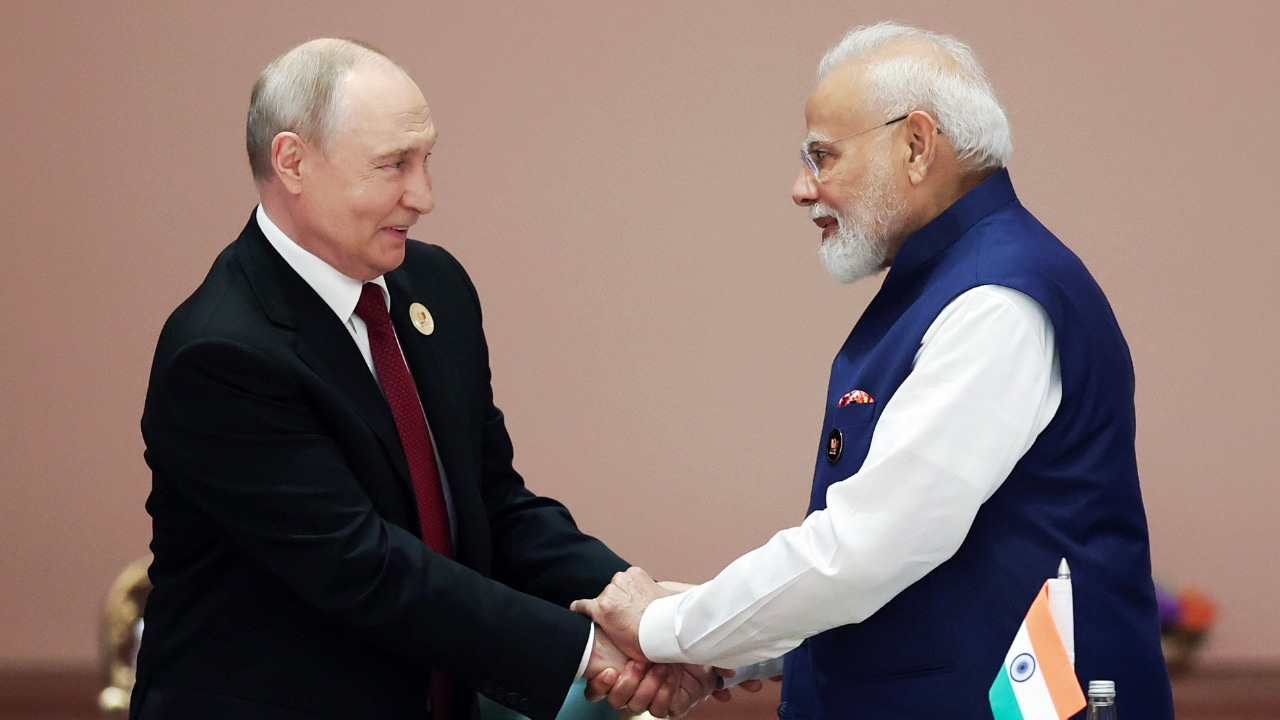
Geopolitical non-alignment functions as a calculated trade-off between transaction costs and systemic influence. When Russian President Vladimir Putin acknowledged Indian Prime Minister Narendra Modi for offering constructive perspectives regarding the resolution of the Russia-Ukraine conflict, the diplomatic signal extended far beyond polite rhetoric. It highlighted a structural reality of contemporary international relations: states maintaining independent channels with all belligerents possess a monopoly on intermediary credibility.
Understanding this dynamic requires dissecting how middle powers operate within a fractured unipolar-multipolar transition. Traditional alliance theory dictates binary alignment. However, contemporary statecraft relies on multi-alignment, a strategy where a nation maximizes trade utility and security vectors across competing power blocs without incurring the liabilities of a formal security pact.
The Mechanics of Non-Aligned Mediation
Mediation efficacy depends on perceived impartiality combined with material leverage. Nations entirely embedded within Western security frameworks face structural constraints when engaging Moscow. Conversely, states dependent on Russian military hardware or energy exports lack leverage in Western capitals. India occupies a structural intersection where bilateral trade dependencies—spanning discounted crude oil imports, defense tech transfers, and long-standing nuclear energy partnerships—coexist with a stated commitment to international law and territorial integrity.
This dual exposure creates a distinct bargaining space.
- Access Symmetry: New Delhi maintains open communication lines with Kyiv and Moscow, alongside institutional dialogues with Washington and Brussels.
- Economic Insulation: By refusing to join unilateral sanctions while simultaneously avoiding direct material support for Russia's military campaign, India insulates its domestic macroeconomy from supply-chain shocks while preserving transactional optionality.
- Conceptual Neutrality: Proposing dialogue as the sole mechanism for conflict termination avoids the trap of zero-sum peace formulas that demand immediate, unconditioned capitulation from either nuclear-armed power.
The Cost Function of Multilateral Balancing
Maintaining strategic autonomy is not a cost-free equilibrium. The structural tension between Western demands for compliance and Eastern demands for solidarity generates continuous friction across three distinct vectors.
Secondary Sanction Exposure: Financial institutions and logistics networks operating cross-border face constant regulatory scrutiny from Western compliance authorities. Managing trade settlement mechanisms—such as rupee-ruble accounts or alternative currency invoicing—requires specialized legal insulation to prevent asset freezes or secondary penalties.
Technology Transfer Bottlenecks: Dual-use technology access remains conditional. Western defense primes remain hesitant to share critical source codes or advanced manufacturing nodes with nations maintaining deep defense ties with Moscow, creating a ceiling on indigenous defense modernization timelines.
Diplomatic Fatigue: Balancing competing narratives requires continuous calibration. Every international vote or joint communique is parsed by rival blocs for hidden signals, raising the transaction costs of routine diplomatic engagement.
The Limits of Independent Peace Proposals
While leaders like Putin validate external diplomatic inputs as constructive, the structural impediments to a negotiated settlement remain embedded in the irreconcilable war aims of the primary combatants. Moscow requires territorial recognition and constitutional guarantees regarding Ukrainian neutrality, whereas Kyiv demands complete territorial restoration and international security guarantees akin to Article 5 protections.
External actors offering mediation cannot bridge this fundamental divergence through conceptual ideas alone. Peace architectures succeed only when the cost of continued conflict exceeds the political cost of concessions for the belligerents. Until battlefield attrition alters the cost-benefit calculus in Moscow and Kyiv, high-level diplomatic interventions function primarily as signaling mechanisms to preserve global supply stability and prevent secondary escalation.
Strategic Execution and Future Alignment
The utility of India's diplomatic posture lies in its role as a systemic shock absorber. By keeping channels open, New Delhi preserves the institutional memory and technical frameworks necessary for eventual post-conflict reconstruction and diplomatic normalization. Statecraft under these conditions requires ruthless pragmatism: prioritizing domestic economic resilience while deploying diplomatic capital only where tangible leverage exists. The focus remains explicitly on safeguarding national resource security while preventing the fragmentation of global trade into mutually exclusive economic blocs.