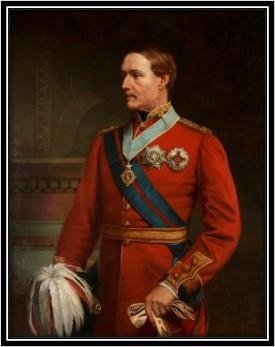
Sir Arthur Purves Phayre stands as a central architect of British imperial dominance in nineteenth-century Southeast Asia, serving as the first Commissioner of British Burma while simultaneously cementing his legacy as a foundational historian and naturalist. Yet framing his career through a dual lens of enlightened scholarship and administrative duty misses the structural mechanics of how imperial power actually consolidated itself. Phayre was not merely an observer who happened to collect palm-leaf manuscripts; his governance of Arakan, Pegu, and later the entire British province provided the bureaucratic bedrock that dismantled indigenous sovereignty. Beneath the surface of his scholarly pursuits lies a rigorous masterclass in territorial acquisition and institutional re-engineering.
History often remembers colonial officials by the boundaries they drew and the records they kept. Phayre arrived in the East Indian military apparatus in 1828, decades before the Second Anglo-Burmese War of 1852 thrust him into civilian administration. By the time he was appointed commissioner of the newly annexed Pegu province, the British Empire required more than soldiers; it required administrative machinery capable of extracting wealth from teak forests, rice plains, and mineral deposits. Phayre understood the local idioms, dialects, and court customs better than most of his military peers. This linguistic fluency weaponized his administration. He did not need to guess how traditional revenue systems operated because he read the indigenous chronicles, the Ya-zawin, mapping the exact financial arteries of the Konbaung dynasty to redirect them toward Calcutta and London. Don't miss our earlier coverage on this related article.
The core tension of Phayre’s tenure rests on the contradiction between preservation and possession. He amassed vast collections of Burmese manuscripts—many of which found their way into the British Museum—while overseeing the systematic dismantling of the institutions that produced them. He attempted to integrate European education models by co-opting traditional Buddhist monastic networks, a policy that ultimately fractured against local religious and cultural resistance. Observers frequently categorize this as a well-intentioned misfire. A more critical reading reveals an aggressive push toward epistemic colonization. By attempting to repurpose the monastic school system, the colonial state sought to shape the cognitive framework of a conquered populace, replacing sovereign historical consciousness with an administrative curriculum tailored to the needs of the Raj.
Consider the geopolitical chessboard of the mid-nineteenth century. King Mindon Min attempted to navigate the encroaching British presence through diplomatic channels, sending delegations and seeking modern concessions. Phayre acted as the primary interlocutor for these missions, balancing polite diplomacy with the steady, unyielding expansion of British frontier posts. When trade disputes arose over teak extraction—such as the heavy fines levied against the Bombay Burmah Trading Corporation by the royal court in Mandalay—the imperial framework that Phayre helped design provided the legal and military justification for total annexation. Diplomacy was never an alternative to conquest; it was the preliminary survey that measured how much pressure the structure could take before collapsing inward. To read more about the context of this, NPR offers an in-depth summary.
Phayre's landmark 1883 publication, History of Burma, compounded this dynamic by establishing the authoritative Western narrative of the region's past. By filtering indigenous annals through Victorian historiography, he authored the baseline text that generations of European administrators would use to understand—and govern—the country. History, in this context, was an instrument of statecraft. When the victor writes the chronicle of the vanquished, the narrative framework permanently alters future political realities, legitimizing past displacement by embedding it within a scholarly consensus.
The zoological and botanical specimens bearing his name—ranging from Phayre's leaf monkey to various squirrels and birds—reveal a parallel impulse of the nineteenth-century colonial mind. To name, catalog, and classify the physical ecosystem was to assert total dominion over it. Every species tagged with his moniker represents a fragment of an ecosystem absorbed into a global imperial ledger. Science and subjugation marched in lockstep, driven by the belief that the entire world was a specimen drawer waiting to be organized by European hands.
When Phayre retired to Bray, Ireland, where he passed away in 1885, he left behind an infrastructure that made the final collapse of Burmese independence later that same year inevitable. The Third Anglo-Burmese War was short because the structural work had already been completed over decades of commissioners, boundary commissions, and legal codifications. The legacy is complex only if one insists on separating the scholar from the soldier, the naturalist from the governor. In the reality of the nineteenth-century imperium, they were the exact same instrument.


