An elite international football team cannot survive on inspiration; it functions as an optimization problem where space, time, and physiological output are the primary variables. For the Islamic Republic of Iran national football team, heading into the 2026 World Cup Group G campaign against New Zealand, Belgium, and Egypt, this optimization problem center entirely on a single structural focal point: Mehdi Taremi.
The conventional narrative framing Iran journey as a simple triumph of grit or veteran leadership obscures the mechanical realities of their tactical system. Under head coach Amir Ghalenoei, Team Melli qualified by winning Group A in the third round of the Asian Football Confederation (AFC) qualifiers, securing 23 points across ten matches. Yet, an analysis of their tactical architecture reveals an extreme dependency model. Ghalenoei deploys a pragmatic 4-2-3-1 system designed to maximize defensive territory containment while exploiting vertical transitions. Within this model, Taremi operates not merely as a striker, but as the operational engine that translates defensive structural integrity into offensive output.
The Asymmetric Transition Engine
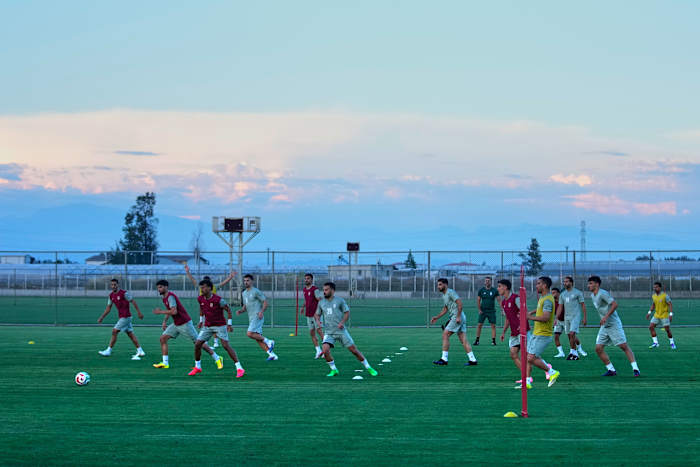
To understand why standard metrics like raw goal tallies fail to capture Taremi value, one must look at the spatial mechanics of Ghalenoei 4-2-3-1 variant. Iran defensive baseline is a low-to-mid block. The structural objective is territory containment rather than active possession recovery. By compressing the lines and conceding central possession to superior opponents, Iran minimizes high-value spaces in their own defensive third.
This structural passivity introduces a severe tactical bottleneck: the transition distance. When possession is won deep in the defensive third, the distance to the opponent goal requires either a high-risk sequence of short passes or a direct vertical launch. Iran chooses the latter. During the AFC third-round qualifiers, Iran recorded 12 successful through-balls, the second-highest in the Asian qualifiers. This execution relies on a specific structural mechanic:
[Defensive Low-Block] ---> [Vertical Outlet: Taremi Drops Deep] ---> [Wide Runners Ignite]
                                     |
                                     v
                        [Draws CBs / Creates Space]
Taremi acts as the primary decompression valve. When possession is recovered, his immediate movement is counter-intuitive for a traditional number nine: he drops vertically into the half-spaces or the central midfield strata. This creates a cascade of spatial adjustments:
- Center-back Dislocation: By dropping deep, Taremi forces opposition center-backs into a decision matrix: follow him into midfield and compromise the defensive line, or drop off and grant him time to turn and distribute.
- The Flank Vacuum: As Taremi vacates the central forward position, the opposition defensive line naturally contracts to protect the vacated central channel. This opens up massive low-density space on the flanks for inverted wingers and overlapping full-backs.
- Possession Stabilization: With 103 international caps and 59 goals, Taremi possesses the physical profile required to shield the ball under pressure, drawing fouls and allowing the midfield block to advance 40 yards up the pitch.
This mechanism reveals the flaw in traditional scouting reports that judge Taremi purely on standard box-striker metrics. His true utility is structural stabilization during negative-to-positive transition phases.
The Midfield Deficit and Creative Shifting
The structural dependency on Taremi is magnified by a systemic deficit within the Iranian midfield. While Saman Ghoddos and Saeid Ezatollahi provide structural discipline and clean recycling of possession, the squad lacks a volume-based, creative playmaker capable of breaking low-blocks via central passing lanes. The midfield profile is fundamentally destructive rather than creative.
This lack of central distribution forces a tactical pivot: creative responsibility is offloaded onto the forward line. Instead of relying on a traditional number ten to feed the strikers, Taremi and his long-term strike partner, Sardar Azmoun, must manufacture their own supply lines. This structural shift alters Taremi statistical profile, transforming him from a pure finisher into a hybrid playmaker. During the qualification cycle, Taremi registered 10 goals and 7 assists, illustrating a balanced distribution between execution and creation.
When Ghalenoei shifts into a two-striker system to chase games late in the second half, the tactical configuration morphs into a direct 4-4-2. Here, the load-bearing requirements on Taremi change. Rather than operating as the apex finisher, he plays as a secondary forward, floating into wide channels to deliver high-volume crosses into the penalty box. This tactical flexibility masks the squad shallow creative depth, but it introduces a major physical risk: high systemic wear-and-tear on a 33-year-old athlete.
Systemic Vulnerabilities and Group G Match-ups
The limitations of Ghalenoei pragmatic model are clear when testing the system against varied tactical profiles. While highly effective in navigating the AFC qualification tiers, the deep-block-and-counter model possesses three distinct failure points that will be tested in Group G.
The Possession Surrender Bottleneck
Against possession-dominant sides like Belgium, Iran low-block risks prolonged territorial confinement. If an opponent effectively neutralizes Taremi as an outlet by deploying a mobile defensive midfielder to block the vertical passing lanes, the connection between Iran defensive block and their attack breaks entirely. The team then becomes vulnerable to fatigue-induced defensive breakdowns in the final 20 minutes of play.
The Chasing-Game Deficiency
The structural design of Team Melli functions optimally when the scoreline is level or when defending a lead. If Iran concedes early, the system must abandon its low-block containment strategy and advance its defensive line to press high. This shifts the team out of its tactical comfort zone. Because the midfield lacks natural press-resistance and creative distribution, chasing a game often degenerates into low-percentage diagonal crossing sequences, leaving the center-backs exposed to rapid counter-attacks.
Age and Depth Attrition
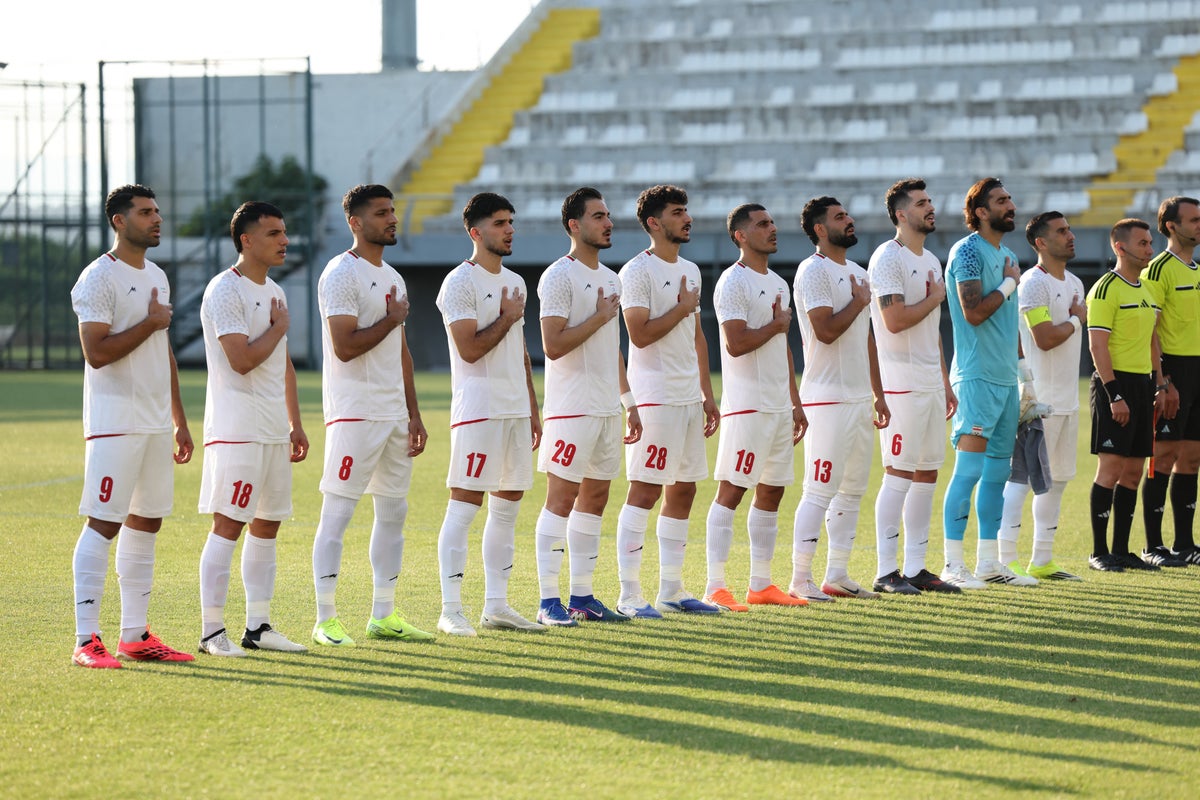
The core of Iran starting eleven leans heavily on a golden generation that is entering the twilight of their physical peaks. Key figures like Taremi (33), Ramin Rezaeian (36), Shoja Khalilzadeh (37), Alireza Jahanbakhsh (32), and Saman Ghoddos (32) represent a vast wealth of tournament experience but pose a significant physical liability in a tournament characterized by condensed schedules and high-intensity modern pressing systems. The drop-off in tactical execution between the veteran core and the provisional squad understudies is steep.
Group G Strategic Execution Matrix
To maximize the probability of achieving a historic progression to the knockout rounds for the first time in seven attempts, Iran must execute distinct tactical strategies tailored to the unique profiles of their Group G opponents.
| Opponent | Tactical Profile | Iran Structural Adjustment | Taremi Role Definition |
|---|---|---|---|
| New Zealand | Physical, structured, lower-tempo mid-block | High-line variant, sustained possession, wide overloads | Primary box finisher; target for high-volume flank crosses |
| Belgium | Elite possession, high-pressing, vertical transitions | Extreme low-block, compressed central lines, restricted full-back advancement | Decompression valve; dropping deep into half-spaces to draw fouls and break press |
| Egypt | Inverted wingers, intense mid-press, rapid counter-attack | Balanced mid-block, restricted space in wide areas, double-pivot insurance | Target-man deployment; holding up direct aerial balls to launch inverted wingers |
The opening fixture against New Zealand on June 15 at SoFi Stadium represents the high-probability win vector for Iran. New Zealand physical profile will not easily succumb to simple long-ball strategies, requiring Iran to dictate a higher share of possession than they traditionally favor. In this specific match-up, Taremi role shifts back to a clinical box presence, relying on wide supply corridors to convert chances early.
Conversely, the fixture against Belgium requires maximum defensive conservation. The objective here is a calculated draw or a minimized goal-difference deficit. The entire tactical apparatus will rest on the physical capacity of Taremi to hold the ball for 5 to 7 seconds per transition phase, allowing the defensive unit to step up, reset their shape, and deplete the clock.
The final group match against Egypt will likely serve as the decisive qualification playoff. Egypt reliance on quick, wide transitions means Iran double-pivot must remain strictly disciplined, refusing to join the attack. This isolates Taremi and Azmoun upfront, requiring an ultra-efficient conversion rate from limited opportunities.
Iran tournament trajectory will not be determined by tactical reinvention. Ghalenoei has signaled a rigid commitment to his established framework, betting that defensive organization, set-piece efficiency, and Taremi elite spatial intelligence can overcome their creative and physical limitations. The strategy contains no margin for error: if Taremi structural efficiency drops, the entire tactical apparatus collapses. If it holds, Iran possesses a viable blueprint to disrupt Group G and redefine their modern football history.