The valuation of a modern sports franchise is fundamentally detached from linear broadcasting metrics. While traditional media rights rely on aggregated household impressions, the economic and cultural engine of the New York Knicks operates on a decentralized network effect. When an individual watches a game alone, the economic value is capped by standard advertising rates and subscription fees. When that consumption scales into collective environments—bars, community centers, and impromptu public screenings—the franchise transforms from a media property into a coordination mechanism for local commerce.
Understanding this phenomenon requires moving past sentimental narratives about "fan passion." Instead, the behavior of New York basketball fans must be analyzed through structural frameworks: the economics of shared spaces, the friction of fragmented media distribution, and the sociological concept of public-sphere synchronization.
The Network Economics of Collective Viewing
The distribution of sports content is increasingly fragmented. Consumers navigate a matrix of linear cable networks, regional sports networks (RSNs), and direct-to-consumer streaming platforms. This fragmentation introduces financial and cognitive friction. In a market like New York, the cost barrier to access every live game creates an economic incentive for collective consumption.
We can model this behavior using a basic utility function for the consumer, where the total value of watching a game is determined by three distinct variables:
$$U = V_{content} + V_{social} - (C_{access} + C_{opportunity})$$
- $V_{content}$: The baseline utility of viewing the live sporting event.
- $V_{social}$: The variable utility derived from shared emotional response, peer validation, and communal atmosphere.
- $C_{access}$: The direct financial cost of acquiring the broadcast (subscriptions, hardware).
- $C_{opportunity}$: The cost of transit, time, and premium pricing at commercial venues.
When media companies gatekeep content behind premium tiers, $C_{access}$ rises significantly for the individual. To maximize utility, the consumer shifts from private consumption to commercial spaces. In these venues, the business owner absorbs the commercial broadcast licensing fees, distributing that cost across hundreds of patrons via high-margin food and beverage sales.
This creates a self-reinforcing economic loop. Commercial venues convert live sports into an anchor product that drives foot traffic during off-peak weekday evening hours. The fan minimizes direct subscription friction while maximizing $V_{social}$, converting a standard broadcast into a high-density networking event.
Spatial Distribution and the Decentralized Arena
The physical footprint of Madison Square Garden holds a finite capacity of roughly 19,500 seats. Ticket pricing operates on a hyper-aggressive dynamic scale, effectively pricing out a significant demographic portion of the local market. The excess demand for the live experience does not dissipate; it reorganizes into decentralized viewing hubs across the metropolitan area.
These hubs function as secondary and tertiary arenas, categorized by their structural density and social intent:
Commercial Aggregators (Bars and Taverns)
These nodes operate on high-velocity throughput. The objective is spatial maximization. Fans pack into these environments to replicate the auditory feedback of an actual stadium bowl. The value proposition here is collective effervescence—the psychological phenomenon where individuals synchronize their emotional states during a shared high-stakes event.
Public Square Screenings
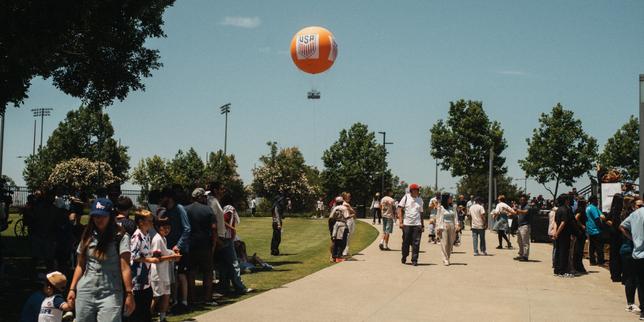
Whether outside the arena or in public parks, these spaces represent zero-cost access points that democratize the fan experience. They serve as a vital top-of-funnel marketing mechanism for the franchise, onboarding younger or lower-income demographics into the ecosystem without requiring immediate capital expenditure from the consumer.
Digital Micro-Communities
Simultaneously, physical viewing is amplified by second-screen synchronized consumption. Group chats, localized subreddits, and audio spaces allow isolated viewers to achieve a simulated form of collective viewing. This hybrid model mitigates geographical dispersion, allowing fans outside the physical boundaries of New York to participate in the real-time cultural production of the fanbase.
Structural Bottlenecks and Market Risks
This decentralized viewing model is highly resilient, but it faces systemic threats from technological and regulatory shifts.
The first limitation is the reliance on physical real estate in a hyper-inflated commercial market. As real estate costs rise in urban centers, independent bars and community venues face severe margin compression. If the density of these third places decreases, the physical infrastructure supporting collective viewing degrades. Corporate chains may fill the void, but they rarely replicate the localized cultural specificity required to sustain high-engagement fan hubs.
The second bottleneck is the technical latency of streaming infrastructure. As regional sports networks transition from linear cable to digital streaming apps, the time delay between the live action and the digital broadcast increases. In a hyper-connected urban environment, a 30-second streaming delay creates an immediate information asymmetry.
A fan in a commercial venue might receive a push notification or hear a neighbor cheer before the play occurs on their screen. This latency penalty fractures the synchronized experience, actively penalizing digital viewers and reducing the overall utility of remote collective viewing.
Strategic Optimization for Franchise Valuation
To maximize the enterprise value of this distributed network, sports franchises and media partners must shift from a defensive posture focused on copyright protection to an offensive strategy focused on network monetization.
Franchises should establish an official licensing framework for independent viewing hubs. Instead of treating commercial venues merely as entities that purchase commercial broadcast packages, the organization can treat them as verified satellite campuses. A verified venue network allows the franchise to capture localized data, deploy targeted regional sponsorships, and distribute exclusive merchandise directly to high-density fan clusters.
Furthermore, integrating low-latency broadcast feeds specifically for commercial partners would eliminate the information bottleneck. By guaranteeing that decentralized hubs experience the game in true real-time, the franchise preserves the integrity of the collective viewing experience, ensuring that the emotional and financial capital generated in the neighborhoods of New York continues to compound the value of the central brand.