When a university student gets locked up at the US border over airport photographs, you expect a mundane customs misunderstanding. Instead, you get federal indictments, clandestine online handlers, and a viral family defense that immediately catches public attention.
Weiheng Zeng, an undergraduate student at the University of Waterloo in Ontario, found himself caught in the crosshairs of an FBI counter-intelligence investigation after crossing the Ambassador Bridge into Michigan. The charges against him aren't quite standard espionage. Federal prosecutors didn't hit him with a direct spying charge. They locked down a charge of making false statements to federal authorities. Yet the underlying narrative painted by court documents reads like a poorly planned amateur hour of international intelligence gathering.
The Curious Case of the Airport Photographer
The saga started unfolding back in April at Chicago's O'Hare International Airport. US authorities noticed Zeng taking pictures of aircraft, including military planes, and freight areas. To federal agents, plane spotting looked a lot like target reconnaissance.
According to the FBI affidavit filed in US District Court, Zeng gave investigators a shifting timeline of events across multiple interviews. First, he claimed he was simply visiting his sister and tracking aircraft as a hobby. Then came the physical evidence on his phone. Agents found photos of aircraft alongside pictures of Zeng and others wearing tactical gear while holding airsoft rifles.
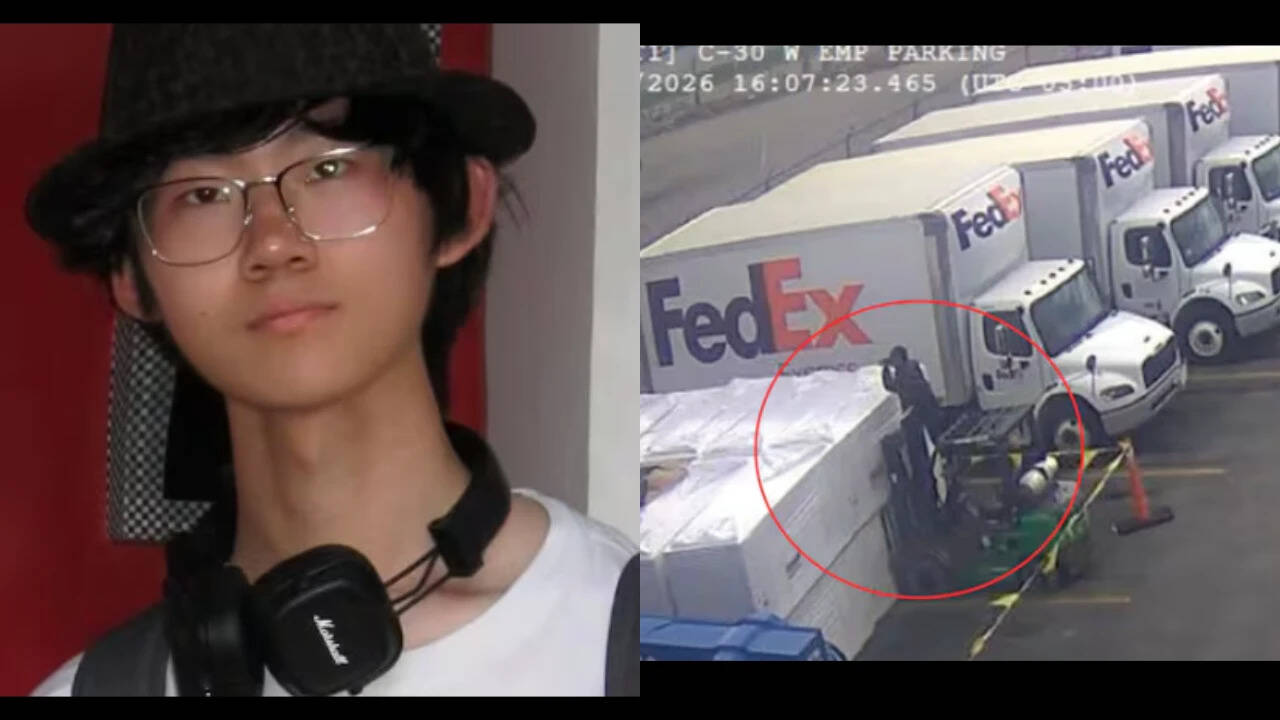
Things escalated when investigators dug into surveillance footage and deeper admissions. Court filings show security stills of a man climbing onto a forklift and attempting to open a locked FedEx truck at O'Hare. Prosecutors allege he pulled similar trespassing stunts at Toronto Pearson International Airport.
Enter the Mysterious Online Handler
The most damning claims in the federal complaint stem from how Zeng allegedly interacted with an anonymous contact. Investigators state that a person claiming ties to Chinese security forces reached out to Zeng through an online forum frequented by aviation enthusiasts.
The arrangement sounds shockingly cheap for high-level state espionage. The handler allegedly provided tail numbers, asked for specific logistical photos, and paid out roughly twenty to thirty dollars per shot via Bank of China transfers. Communications supposedly happened through disposable SIM cards, with instructions to wipe data immediately after task completion.
Zeng reportedly told the FBI he thought helping out was "cool" initially, treating it like specialized research before realizing the handler cared more about physical security layouts than rare aircraft models. Intelligence veterans note that foreign security services frequently exploit young, impressionable students abroad for low-level reconnaissance tasks, turning casual hobbyists into unwitting co-optees.
The Viral Defense and Family Outcry
While federal prosecutors in Detroit argue these actions constitute espionage-type activities, Zeng's family is pushing back hard. His sister, Meixuan Wang, posted a fiery social media defense that quickly went viral: "If my brother is a Chinese spy, then I'm Trump's father."
Wang told reporters that her brother is fundamentally obsessed with airplanes and lives on the autism spectrum. From her perspective, federal investigators are blowing a harmless aviation obsession completely out of proportion, transforming an awkward, easily manipulated student into a cartoonish international agent.
Legal experts point out a stark reality in modern cross-border security. Even if Zeng wasn't a seasoned operative trained in secret tradecraft, making conflicting statements to federal agents creates an immediate criminal trap. He remains in custody without a bond request, facing serious legal fallout while Canadian and American authorities navigate the messy intersection of youthful naivety, digital recruitment, and national security panic.