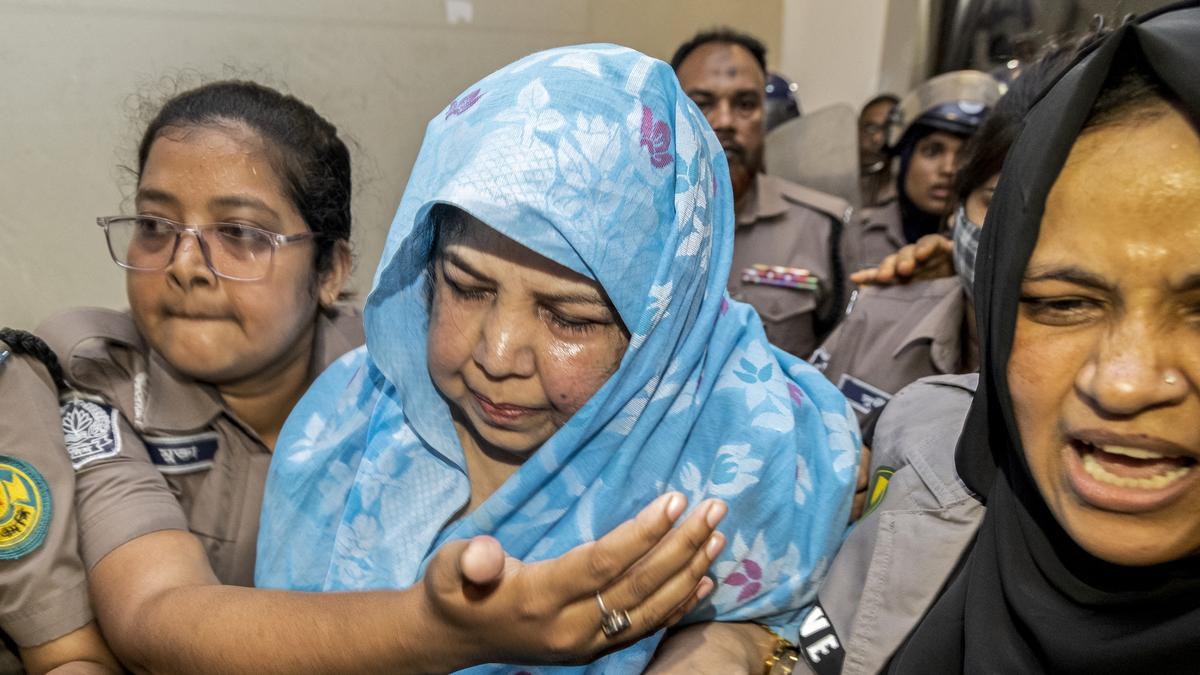
The fall of a political titan is rarely a quiet affair, and in Bangladesh, the echoes of the 2024 uprising are still shattering the careers of those once thought untouchable. On the morning of April 7, 2026, the long-standing silence surrounding Dr. Shirin Sharmin Chaudhury ended when the Detective Branch of the Dhaka Metropolitan Police picked her up from a relative's house in Dhanmondi. As the first female Speaker of the Jatiya Sangsad, her face was once a symbol of institutional stability. Now, she’s the third accused in a high-stakes attempted murder case.
This isn’t just another routine arrest in a messy political transition. It's a seismic shift. Chaudhury didn't just witness the Hasina era; she presided over it for over a decade. Her detention marks a aggressive new phase for the government led by Tarique Rahman and the Bangladesh Nationalist Party (BNP), who took the reigns after a landslide February election. If you've been following the chaos since the July 2024 "Mass Uprising," you know the stakes couldn't be higher.
The legal net tightens around the former Speaker
The specific charges hitting Chaudhury aren't light. We're talking about an attempted murder case filed at the Lalbagh Police Station involving a man named Ashraful, also known as Fahim. During the height of the student protests on July 18, 2024, violence erupted near the Azimpur Government Staff Quarter. Ashraful was caught in the crossfire, sustaining pellet injuries that eventually cost him the sight in his left eye.
Investigators aren't just looking at who pulled the trigger. They're looking at who gave the orders. The prosecution’s argument is that Chaudhury wasn't just a bystander in the Speaker’s chair. They allege she was a "key figure" in the decision-making process that led to the crackdown on unarmed students. Basically, the state is arguing that her position within the Awami League's inner circle makes her legally responsible for the tactical choices made during the "complete shutdown" of the country.
It's a tough spot for any defense lawyer. Shamim Al Sayeed, representing Chaudhury, called the charges "absurd," pointing out that a Speaker’s role is primarily parliamentary, not executive or military. But the court wasn't buying it. During a tense 20-minute hearing at the Dhaka Metropolitan Magistrate Court, Judge Jewel Rana rejected her bail and sent her straight to prison.
Life in the shadows after the uprising
Where has she been for the last year and a half? That’s the question everyone’s asking. Since the fall of Sheikh Hasina on August 5, 2024, Chaudhury basically vanished from the public eye. While other Awami League heavyweights were getting nabbed at the border or caught in hiding, she managed to stay under the radar.
- The Resignation: She didn't quit immediately. She waited 27 days after Hasina fled to India before resigning on September 2, 2024.
- The Hiding Spot: Reports suggest she moved between several locations before settling at a relative’s home in Dhanmondi.
- The Absence: She was notably missing from the interim government's oath-taking ceremony, a clear signal she knew the wind had shifted.
The scene at the courthouse on Tuesday was pure chaos. Pro-BNP and pro-Awami League lawyers actually clashed on the premises, shouting slogans as the 60-year-old former Speaker was led away. In a particularly dramatic moment reported by witnesses, she actually tripped on the stairs while being escorted. It’s a stark, almost poetic contrast to the poise she maintained for eleven years at the head of the Jatiya Sangsad.
The broader fallout for the Awami League
You can't talk about Chaudhury’s arrest without talking about the state of the Awami League. The party is currently banned, and its former leader, Sheikh Hasina, remains a fugitive in India. In November 2025, a special court even sentenced Hasina to death in absentia for her role in the 2024 killings.
Chaudhury is now part of a growing list of "Hasina-era" officials facing the music. This list includes former Commerce Minister Tipu Munshi, who is already in custody. The message from the Rahman administration is loud and clear: nobody is protected by their former title.
Critics of the current government argue these are "political cases" designed to decapitate the opposition. Supporters, however, see it as the only way to get justice for the estimated 1,400 people killed during the 2024 unrest. Regardless of which side you're on, the legal precedent being set is massive. We’re seeing a total dismantling of the old guard’s legal immunity.
What this means for you and the region
If you're wondering why this matters beyond the borders of Dhaka, look at the diplomatic tension. Hasina’s presence in India is already a massive thorn in the side of Indo-Bangladeshi relations. With high-profile figures like Chaudhury now in jail, the pressure on India to extradite Hasina is going to ramp up.
The new government is also trying to stabilize a country that has seen incredible volatility. Remittances might be hitting record highs and the forex market might be stabilizing, but political stability is the real currency. If these trials are seen as fair, it could help heal the national psyche. If they're seen as vendettas, the cycle of violence might just reset.
For now, the next steps for Dr. Shirin Sharmin Chaudhury are grim. She’s swapped the Speaker’s gavel for a prison cell while the Detective Branch continues its interrogation. You should expect more arrests in the coming weeks as investigators pore over the "decision-making chains" of the previous administration.
Keep an eye on the court proceedings in Rangpur as well. There’s a separate murder case there involving the death of a goldsmith, and Chaudhury is a named suspect in that one too. The legal battles are just beginning. To stay updated on this transition, keep a close watch on the official Dhaka Metropolitan Police briefings and the ongoing tribunal updates regarding the 2024 uprising. It's a fast-moving situation, and the legal landscape is shifting every single day.