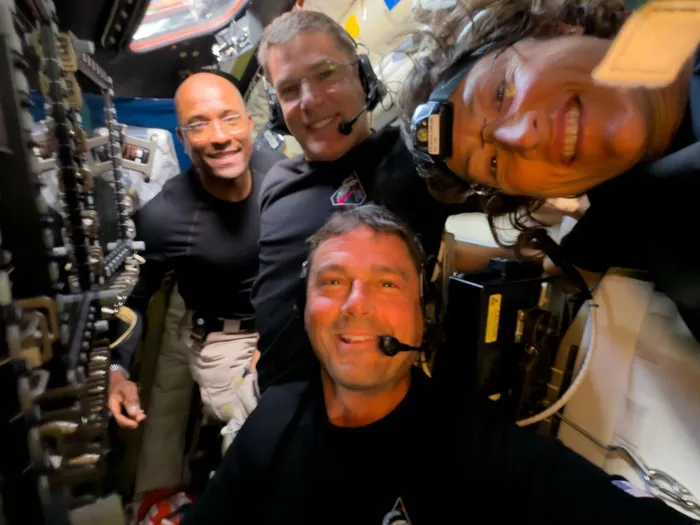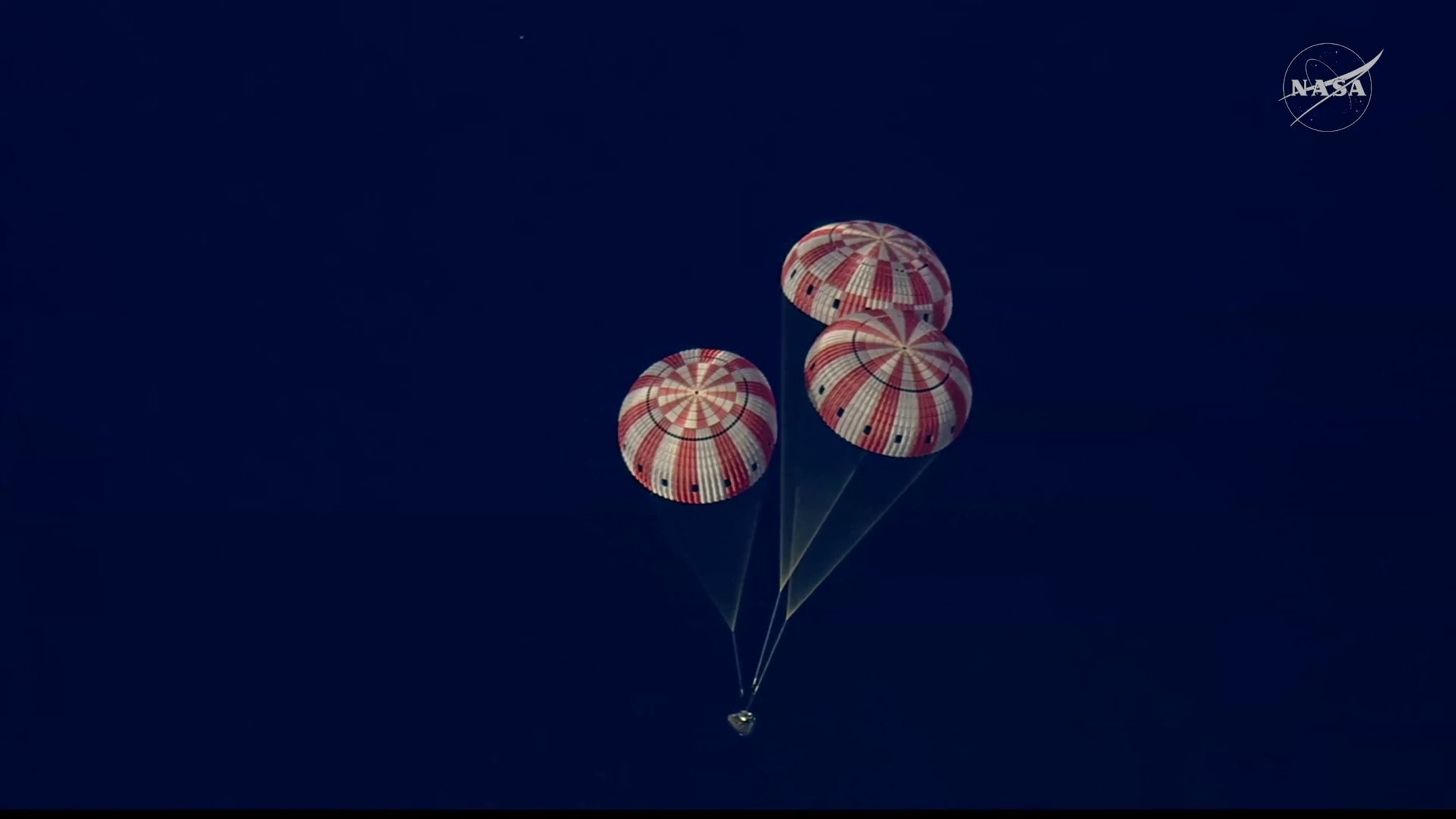
The Orion capsule bobbing in the Pacific Ocean marks the end of a ten-day mission that effectively reboots human deep-space exploration. While the safe recovery of the four-person crew provides a necessary PR win for NASA, the technical reality of the Artemis II mission reveals a much more complex and fragile path to a permanent lunar presence than the official press releases suggest. This wasn't just a flight around the moon. It was a high-stakes stress test of a life-support system and a heat shield that had to endure temperatures nearing 5,000 degrees Fahrenheit.
The successful splashdown confirms that the Orion spacecraft can sustain human life beyond low Earth orbit, a feat not accomplished since 1972. However, the data gathered during this voyage highlights significant hurdles that remain before humans actually set foot on the lunar surface again. Discover more on a connected issue: this related article.
The Engineering Gamble of the Orion Heat Shield
NASA engineers focused heavily on the performance of the heat shield during the skip-entry maneuver. This technique involves the capsule dipping into the atmosphere, popping back out like a stone skipping across water, and then entering a second time to bleed off velocity. It reduces the G-loads on the crew, but it places immense thermal stress on the Avcoat material protecting the craft.
During previous uncrewed tests, the heat shield showed unexpected charring patterns. The Artemis II mission was the first time humans relied on these fixes. The recovery teams are now inspecting the shield for "spalling," a phenomenon where bits of the shield break off prematurely. If the erosion was higher than predicted, the timeline for the Artemis III landing will face immediate delays. This is the brutal math of orbital mechanics. There is no margin for error when you hit the atmosphere at 25,000 miles per hour. Further journalism by Mashable explores similar views on the subject.
Life Support Under Pressure
Maintaining a breathable atmosphere for four people in a space the size of a large SUV is a chemistry problem with lethal consequences. The Artemis II crew—Reid Wiseman, Victor Glover, Christina Koch, and Jeremy Hansen—were effectively living inside a closed-loop experiment. Unlike the International Space Station, which has massive reserves and regular resupply runs, Orion must be self-sufficient.
The Nitrogen-Oxygen Recharge System had to perform flawlessly. Any spike in CO2 levels or a failure in the humidity control would have forced an immediate abort. Analysts are looking closely at how the system handled the "exercise loads" of four active astronauts. Humans vent a surprising amount of moisture and heat when they work out, and in a small capsule, that can overwhelm scrubbers quickly.
The SLS Launch Cadence Problem
While the splashdown is a victory, the rocket that put them there remains a point of contention. The Space Launch System (SLS) is a massive, expendable, and incredibly expensive vehicle. Current estimates put the cost of a single launch at over $2 billion. For a sustainable lunar program, this price tag is a heavy anchor.
The industry is watching the turnaround time for the mobile launcher and the production of the RS-25 engines. To keep the momentum of the Artemis program, NASA needs a launch cadence that the current supply chain isn't built to handle. We are seeing a clash between the legacy "big government" aerospace model and the rapid-fire iteration of private contractors. If the SLS cannot fly at least once every 18 months, the skills and tribal knowledge required to launch it safely begin to erode.
Geopolitical Realities of the Lunar South Pole
The mission wasn't just about testing hardware; it was about claiming territory. The Artemis II flight path took the crew over the lunar far side, but the ultimate goal is the South Pole. This region contains permanently shadowed craters where water ice is thought to exist. Water isn't just for drinking. It is the raw material for oxygen and rocket fuel.
The "Artemis Accords" are an attempt to establish a legal framework for lunar resource extraction, but not every spacefaring nation has signed on. China’s own lunar ambitions are moving on a parallel, and often faster, track. The success of Artemis II sends a signal to international partners that the American-led coalition is functional. If Orion had suffered a major malfunction, the political will to fund the program might have evaporated, leaving the door wide open for competitors to set the rules for the lunar economy.
Redefining Risk for a New Generation
We have grown accustomed to the safety of the Space Shuttle era and the ISS, where help is only a few hours away. Artemis II changes that. Once the Trans-Lunar Injection burn occurs, the crew is days away from any possible rescue. This mission forced a shift in the safety culture within NASA. The "fault tolerance" levels for deep space are fundamentally different than for low Earth orbit.
The crew spent ten days in a high-radiation environment outside the protection of Earth’s Van Allen belts. While the capsule has a dedicated "storm shelter" for solar flares, the long-term health data from this mission will dictate how long future crews can stay on the lunar surface. We are still learning how deep-space radiation affects human biology over even short durations.
The Software Layer Behind the Controls
Modern avionics in the Orion capsule are light-years ahead of the Apollo Guidance Computer, but complexity brings its own set of ghosts. The flight software for Artemis II consists of millions of lines of code, managing everything from thruster firings to the galley heaters. During the mission, mission control monitored several "anomalies" in the data stream that required real-time patching.
The move toward more autonomous systems is necessary because of the communication lag. Even at the speed of light, there is a delay between the moon and Earth. The capsule must be able to think for itself during critical maneuvers. The debriefing will likely focus on how the crew interacted with the glass cockpit displays versus manual overrides.
The Economic Impact of the Splashdown
The recovery of the capsule in the Pacific is also a massive logistical exercise involving the U.S. Navy. This operation serves as a reminder of the sprawling infrastructure required to support human spaceflight. Thousands of jobs across all 50 states are tied to the Artemis supply chain. This geographic distribution is a political shield that protects the budget, but it also creates a logistical nightmare for assembly and testing.
Every component of the Orion capsule traveled thousands of miles before it ever reached the launch pad. The success of the mission validates this distributed manufacturing model, even if it isn't the most efficient way to build a starship. It ensures that the lunar program remains a national priority rather than a localized project.
Hardware Reusability and the Path Forward
Unlike the Apollo command modules, which were strictly one-and-done, NASA aims to recover and refurbish as much of the Orion hardware as possible. The avionics and high-value internal components from the Artemis II capsule are slated to be stripped and tested for potential use in future missions. This is a nod to the shifting economics of space where reusability is no longer a luxury—it is a requirement for survival.
However, the saltwater immersion during splashdown makes refurbishment a grueling process. Corrosive sea air starts attacking the metallic structures the moment the hatches open. The speed at which the recovery teams can move the capsule from the water to a controlled environment determines how much of that multi-billion dollar investment can be saved.
The Lunar Gateway Missing Link
While Artemis II was a success, it highlighted the missing pieces of the puzzle. There is currently no lunar lander ready for flight, and the Lunar Gateway—a planned space station in lunar orbit—is still in the component stage. The transition from a "loop around the moon" to a "landing on the moon" requires a massive leap in technical capability.
We are currently in a period of "asymmetric capability." We can get people to the moon's vicinity, but we cannot yet get them to the surface and back. The Artemis II mission was the easy part of the decade. The next phase involves docking two massive spacecraft in lunar orbit, a maneuver that has never been attempted with modern hardware.
Logistics of the Deep Space Network
Communications during the mission relied on the Deep Space Network (DSN), a series of massive radio antennas across the globe. As more missions head to the moon—both robotic and crewed—the DSN is becoming a bottleneck. During Artemis II, mission control had to coordinate windows of communication to ensure they didn't "black out" during critical maneuvers.
Investment in laser-based communication is the only way to solve this. If we want high-definition video feeds and real-time data from the lunar South Pole, the existing radio infrastructure won't cut it. The splashdown confirms the current system works for a single capsule, but it won't support a lunar base.
Testing the Limits of Human Endurance
Beyond the tech, the mission was a psychological study. Ten days in a confined space with three other people, facing the constant threat of vacuum, is a psychological pressure cooker. The crew's ability to maintain high-level cognitive function while dealing with the physical toll of microgravity and radiation is the ultimate "go/no-go" gauge for Mars missions.
NASA psychologists are analyzing every hour of the mission transcripts. They are looking for signs of fatigue, stress-induced errors, or communication breakdowns. The data from these four individuals will form the baseline for how we select and train the crews who will eventually spend months, not days, in the lunar environment.
The Orion capsule is now headed back to the Kennedy Space Center for a forensic teardown. Every bolt, every wire, and every tile will be scrutinized. The splashdown wasn't the finish line; it was the start of a massive data-mining operation. We now know that humans can survive the trip. The question is whether we can afford to keep sending them. The success of Artemis II provides the momentum, but the engineering and economic challenges of Artemis III are an order of magnitude higher. NASA has proved it can still do the impossible, but the moon is a harsh mistress that doesn't care about mission schedules or budget cycles.