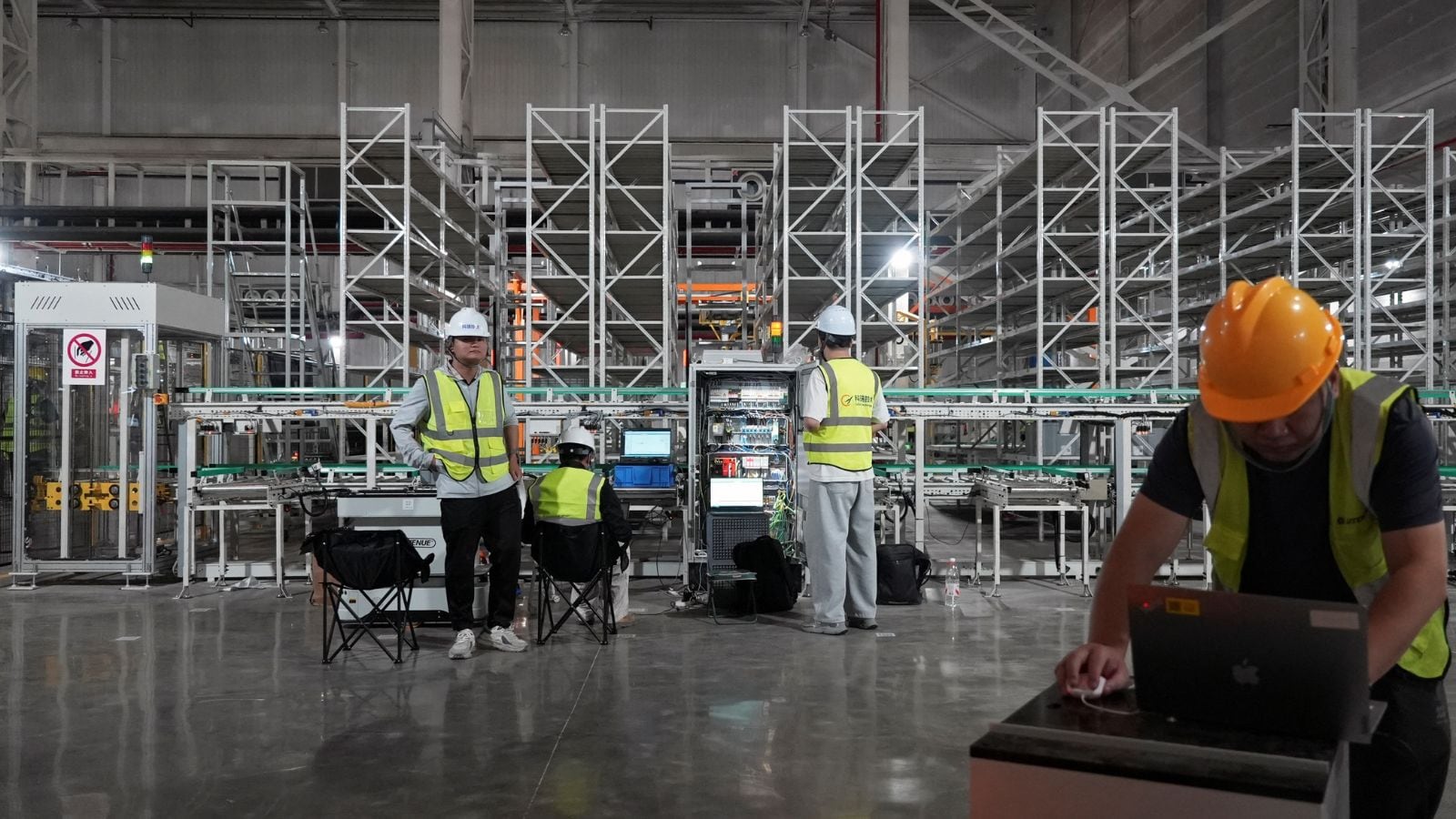
When official purchasing managers' indices ticked back into expansion territory last September, financial media outlets declared a definitive manufacturing resurrection powered by artificial intelligence. Headlines celebrated soaring output figures and surging electronics exports, treating the data as proof that industrial engines had overcome prior sluggishness. They missed the underlying structural fracture. China's factory floors are experiencing a profound bifurcation where high-end server assembly and semiconductor packaging are masking a persistent stagnation in consumer-facing production. Understanding this momentum requires looking past headline statistics to examine the specific hardware supply chains driving the shift. The artificial intelligence infrastructure boom is providing a temporary mechanical floor for industrial output, but it cannot override structural consumer weakness, debt burdens, or chronic real estate liabilities.
The Mechanics of the September Rebound
Industrial revivals do not happen in a vacuum. September purchasing data routinely captures seasonal stocking cycles ahead of year-end global holiday shipping schedules, but the recent acceleration carried a distinct technological fingerprint. Factories producing advanced electronic components, enterprise server racks, printed circuit boards, and liquid cooling systems reported significant capacity utilization increases. This was not a broad-based recovery of traditional light manufacturing or consumer goods assembly. It was a targeted surge concentrated in specialized industrial clusters across the Pearl River Delta and the Yangtze River Delta.
To understand how this happened, look at the global rush for data center hardware. As technology enterprises worldwide scramble to build out high-performance computing clusters, the physical supply chain runs straight through Asian manufacturing hubs. Contract manufacturers reconfigured production lines to prioritize high-margin server enclosures and specialized networking hardware over standard consumer electronics. This pivot inflated official output metrics. A single high-end server rack commands a radically higher economic value than hundreds of consumer smartphones, skewing production value metrics even when baseline unit volumes remain flat or declining.
Yet treating this as a sign of broad economic health requires ignoring the divergence happening on adjacent assembly lines. While automated facilities producing optical modules and specialized thermal management systems run at maximum capacity, factories stamping out household appliances, apparel, or basic consumer electronics face sluggish order books and aggressive price competition. The aggregate purchasing managers' index lumps these disparate realities into a single reassuring number. Beneath that number lies a narrow industrial specialization that benefits a select tier of high-tech exporters while leaving domestic consumer demand profoundly depressed.
Semiconductor Substitution and Assembly Constraints
The hardware push is heavily influenced by geopolitical realities and supply chain localization mandates. Domestic fabrication plants and advanced packaging facilities face immense pressure to supply local technology firms cut off from foreign advanced lithography equipment. This has forced an aggressive expansion of domestic legacy node semiconductor manufacturing and advanced packaging capabilities.
Factories tasked with assembling artificial intelligence accelerators must navigate tight tolerances and complex supply chains. Sourcing reliable substrates, high-bandwidth memory interfaces, and specialized power delivery components creates constant operational friction. When a bottleneck occurs at the packaging stage, the entire downstream assembly line stalls. Consequently, factory managers maintain high inventory buffers of critical inputs, artificially inflating raw material procurement metrics in monthly surveys.
This dynamic reveals why manufacturing activity indicators can flash green while underlying operational challenges multiply. The push for technological self-sufficiency demands massive capital expenditure on factory retooling. Companies borrow heavily to upgrade cleanrooms and robotic assembly cells. While this capital expenditure pumps up immediate industrial activity data, it also accumulates financial debt that must eventually be serviced by sustainable commercial demand. When credit conditions tighten, companies holding heavy debt loads face severe liquidity squeezes.
The Two-Speed Industrial Economy
Economic divides are rarely subtle once examined at ground level. In industrial parks across eastern provinces, the contrast between traditional manufacturing and the tech-hardware sector is stark. Traditional textile mills, furniture workshops, and low-end plastic injection molding plants operate under persistent margin compression. Domestic consumer confidence remains muted, weighed down by years of property sector contraction and cautious household spending habits. Families are saving more and spending less on discretionary durable goods, reflecting deep anxiety regarding employment stability and asset values.
Conversely, factories integrated into global and domestic artificial intelligence infrastructure supply chains operate in an entirely different economic climate. Capital expenditure from major cloud providers and enterprise technology buyers provides a deep reservoir of forward orders. These facilities enjoy strong pricing power for specialized components. They can pass rising raw material and energy costs downstream more effectively than a commodity manufacturer struggling against cutthroat domestic price wars.
This two-speed reality exposes the limits of relying on headline manufacturing indices to gauge national economic vitality. When high-tech hardware output surges, it mathematically offsets contractions or stagnation in legacy sectors. However, employment dynamics differ vastly between these sectors. High-tech server assembly is heavily automated, requiring specialized engineering talent rather than vast pools of low-skilled assembly line labor. Therefore, a manufacturing rebound driven by artificial intelligence hardware does not translate into a proportional recovery in consumer-facing employment or wage growth.
Overcapacity and International Friction
Excess industrial capacity remains an enduring structural feature of the economy. When domestic demand fails to absorb factory output, excess goods inevitably seek foreign markets. While high-end artificial intelligence servers and advanced electronic hardware are primarily absorbed by corporate data centers, the broader manufacturing apparatus continues to produce surplus industrial goods that spill across international borders.
Trade partners watch these inventory flows with mounting alarm. Industrial policy aimed at upgrading manufacturing capabilities often leads to over-investment in mature technology sectors, ranging from electric vehicle components to basic electronics. When factories are subsidized to maintain high production volumes regardless of real-time market clearing prices, global trade tensions escalate. Tariffs, anti-dumping investigations, and protectionist barriers become inevitable diplomatic friction points.
Factory managers caught in this crossfire must adapt quickly. Exporting excess high-tech hardware requires navigating complex regulatory frameworks and export control regimes. Compliance costs rise as governments restrict the movement of advanced computing hardware across borders. Manufacturers must carefully verify end-user identities and destination compliance, adding administrative friction to what was once a streamlined global supply chain. These regulatory hurdles eat into operating margins, forcing companies to pass compliance costs onto international buyers or absorb the hits locally.
Power Grids and Energy Realities
Advanced manufacturing is brutally energy-intensive. Operating cleanrooms, running high-temperature furnace operations for silicon processing, and powering thousands of server burn-in testing rigs require massive electricity inputs. The artificial intelligence manufacturing boom has placed unprecedented demands on regional power grids.
Industrial centers in coastal provinces have had to balance surging factory power demands with broader decarbonization goals and grid stability requirements. When sudden heatwaves or cold snaps strain energy supplies, industrial power rationing can abruptly halt high-tech assembly lines. Semiconductor packaging and precision electronics manufacturing cannot tolerate unstable power delivery; voltage fluctuations ruin expensive silicon wafers and sensitive optical components.
Consequently, industrial enterprises increasingly invest in dedicated microgrids, energy storage systems, and long-term renewable power purchase agreements. This infrastructure adds significant capital expenditure overhead for factory owners. While the energy transition is necessary for long-term operational resilience, the immediate cost burden squeezes operating margins across the manufacturing sector, particularly for mid-tier suppliers who lack the balance sheet strength of major tech conglomerates.
Sectoral Vulnerabilities in Tech-Led Industrial Expansion
Economic momentum sustained primarily by a single technological infrastructure cycle carries inherent vulnerabilities. The global artificial intelligence capital expenditure boom will eventually mature. Enterprise software adoption cycles, data center buildouts, and cloud infrastructure expansions operate on cyclical investment waves. When corporate buyers eventually pause to digest existing computing capacity, the downstream demand for server racks, specialized chips, and cooling systems will normalize.
Relying on high-tech hardware manufacturing to drive broader industrial growth leaves the economy exposed to global tech sector corrections. Unlike consumer staples or basic industrial goods, which enjoy steady replacement demand, enterprise tech infrastructure spending is notoriously volatile. A sudden tightening of corporate budgets or a reassessment of artificial intelligence return on investment can trigger rapid order cancellations across the hardware supply chain.
Policy makers face a difficult balancing act. Maintaining high factory output requires continuous capital investment and technological upgrading, yet without a simultaneous revival in domestic consumer demand, the industrial sector remains unbalanced. Pumping more resources into manufacturing without addressing structural household income stagnation risks compounding overcapacity issues. Factories continue pumping out goods that domestic wallets cannot absorb, maintaining relentless downward pressure on producer prices.
The recovery in factory activity is real, but its foundation is narrow, specialized, and vulnerable to external shocks. Until domestic consumption stabilizes and real estate liabilities are fully resolved, the industrial engine will continue to run on cylinders fueled almost entirely by technological infrastructure rather than broad-based economic health.