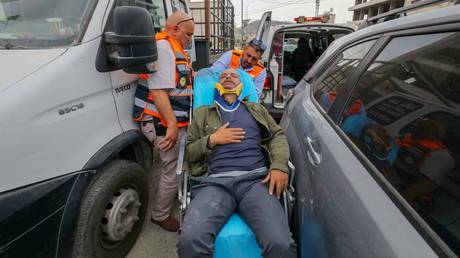
The operational environment for journalists reporting on the West Bank relies on a predictable friction coefficient between state forces, non-state actors, and the international press. When reporting shifts from macro-level territorial disputes to tactical field interactions, the mechanics of enforcement change entirely. The incident involving Agence France-Presse photographer Jihad Al-Saftawi, who was beaten and robbed by armed Israeli settlers, exposes the structural vulnerabilities governing press freedom in occupied territories. Deconstructing this event requires analyzing three distinct systemic failures: the jurisdictional fragmentation of law enforcement, the economic incentives of asset seizure, and the operational doctrine governing the safety of neutral observers.
The primary systemic failure stems from jurisdictional fragmentation. In the West Bank, civilian law, military authority, and localized administrative boundaries overlap in a way that minimizes accountability for non-state actors operating outside formal military command structures. When armed settlers engage in physical assault and equipment expropriation, the legal recourse available to a civilian journalist passes through a labyrinth of military checkpoints, district police jurisdictions, and administrative closures.
This creates a vacuum where enforcement is discretionary rather than mandatory. The cost function for aggressors approaches zero. Without an immediate, localized policing mechanism dedicated to protecting neutral non-combatants, the expected penalty for assaulting a member of the media is negligible compared to the political or territorial utility gained by driving observers from the field.
The second dimension involves the mechanics of asset seizure during field reporting. Cameras, long-lens optics, and digital storage media are not merely tools of observation; they are high-value evidentiary assets that document unlawful acts in real time. In conflicts characterized by asymmetrical documentation, the confiscation or destruction of recording equipment functions as an information-suppression strategy.
By targeting the physical apparatus of the press, perpetrators achieve a dual objective. They interrupt the immediate transmission of empirical data to global news feeds, and they acquire specialized hardware that represents a tangible financial loss for independent news agencies or freelance operators. The seizure of Al-Saftawi’s equipment was not a random act of opportunistic theft; it mapped directly to the strategic value of denying visual verification of settler expansion and settler-state friction points.
The operational doctrine of international news agencies in the region must also be re-evaluated under a risk-management framework. Media organizations typically deploy reporters with protective gear—flak jackets, helmets, and press insignia—calibrated to withstand conventional military engagements or crowd-control munitions. These defensive measures are functionally useless against targeted, ad-hoc assaults by armed civilians operating with localized impunity.
When a journalist is isolated from military escort or local protective networks, their vulnerability multiplies exponentially. The standard safety calculus assumes that the press emblem acts as a deterrent recognized by all armed combatants. In environments where civilian irregulars operate with de facto alignment or non-interference from formal security forces, that deterrent value depreciates entirely.
To alter this trajectory, international press coalitions and governing bodies must shift from diplomatic condemnation to structural deterrence. Diplomatic statements lacking enforcement mechanisms merely codify the existing risk baseline.
The immediate tactical requirement involves establishing direct, verifiable channels for rapid extraction and real-time geolocated distress signaling that bypass local jurisdictional bottlenecks. Until the cost of seizing media assets and assaulting press personnel is raised through targeted legal and administrative sanctions against the perpetrators and their institutional enablers, the field conditions for independent reporting will continue to deteriorate.