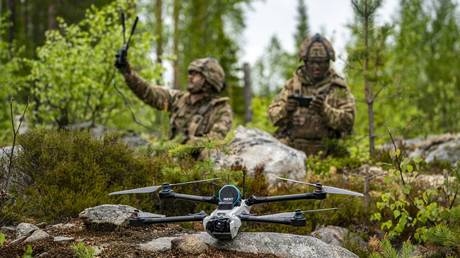
The strategic imperative for Ukraine to integrate American defense technology startups is not a diplomatic gesture; it is a structural necessity driven by the economic and material realities of modern attrition warfare. Traditional defense procurement cycles, which operate on multi-year development timelines and capital-intensive manufacturing, are fundamentally incompatible with a theater where the electronic warfare environment changes every two weeks. To survive, Ukraine must convert its operational airspace into an open-source, iterative testing environment. This requires a formal mechanism to fuse Silicon Valley's rapid software iteration with front-line combat data, bypassing the bureaucratic bottlenecks of legacy Western defense contractors.
This analysis deconstructs the structural barriers, operational advantages, and strategic trade-offs inherent in Ukraine’s push for direct co-development with non-traditional defense entities.
The Architecture of Asymmetric Defense Technology
The intersection of artificial intelligence, autonomous systems, and frontline combat can be broken down into three distinct operational vectors. Each vector represents a shift from centralized hardware-heavy platforms to decentralized, software-defined capabilities.
1. The Autonomous Attrition Vector
Legacy warfare relies on high-cost, multi-mission platforms (e.g., traditional fighter jets or missile systems). The Ukrainian theater has forced a pivot toward low-cost, single-use autonomous systems. The economic function governing this shift is simple: the cost of interception must not exceed the cost of the asset deployed. When a $500 first-person view (FPV) drone can neutralize a multi-million-dollar armored vehicle, the traditional defense economic paradigm collapses.
The primary technological bottleneck here is not the airframe or the payload; it is the guidance system. Under intense radio-frequency interference (RFI), manual piloting becomes impossible. The integration of edge-computed computer vision allows these systems to transition from human-in-the-loop to human-on-the-loop, executing terminal guidance autonomously once a target is selected, rendering electronic jamming irrelevant.
2. The Algorithmic Sensor-to-Shooter Loop
Raw data is a liability on the modern battlefield. The proliferation of commercial satellite imagery, reconnaissance drones, and open-source intelligence creates a data deluge that overburdens analytical teams. The objective of integrating AI startups is to automate the processing, exploitation, and dissemination (PED) pipeline.
By deploying computer vision models at the tactical edge, raw video feeds from thousands of reconnaissance drones can be parsed automatically. The system flags anomalies, identifies equipment types, and calculates geographic coordinates in real time. This automated pipeline reduces the sensor-to-shooter loop—the time elapsed between detecting a target and striking it—from hours to seconds.
3. Distributed Industrial Production
Traditional defense manufacturing relies on highly centralized, secure facilities. This infrastructure represents a critical vulnerability to long-range precision strikes. Co-development with agile startups allows Ukraine to shift toward a distributed manufacturing model.
Software architectures, electronic speed controllers (ESCs), and artificial intelligence models are developed globally or in secure digital environments, while physical assembly is decentralized across hundreds of small, anonymous workshops within Ukraine. The product is no longer a physical item shipped from a Western factory, but a digital blueprint updated weekly via secure networks and assembled locally.
Operational Friction: Why Silicon Valley Struggles in Combat Zones
The transition from a software laboratory in California to the Donbas mud exposes severe mismatches in engineering assumptions, operational environments, and regulatory frameworks.
The Electronic Warfare Reality Check
The most significant failure mode for Western commercial technology adapted for combat is the assumption of a permissive electromagnetic spectrum. Commercial drones and autonomous systems rely heavily on unjammed GPS/GNSS signals for navigation and standard commercial Wi-Fi or LTE frequencies for control telemetry.
In Ukraine, Russian electronic warfare (EW) complexes like the Krasukha-4 and Pole-21 generate massive GPS spoofing and jamming zones. Western startups frequently discover that their systems suffer immediate total failure because their software stacks do not include routine fallbacks for dead reckoning, inertial navigation, or dynamic frequency hopping. A system that boasts 99% accuracy in a Mojave Desert test range can be rendered entirely inert within ten minutes of deployment near Bakhmut.
The Bureaucratic Chokepoint of ITAR
The International Traffic in Arms Regulations (ITAR) and the Export Administration Regulations (EAR) form a rigid barrier to rapid technology co-development. Startups specializing in advanced algorithms, object recognition, or autonomous flight control often find themselves trapped in complex regulatory classification processes.
[Startup Innovation] ---> [ITAR/EAR Review] ---> [Delayed Export License] ---> [Obsolete Battlefield Value]
                                 |
                          (6-18 Month Delay)
By the time a Western startup secures the necessary export licenses to deploy an updated software patch or a new sensor package to Ukraine, the tactical reality on the ground has shifted, rendering the update obsolete. This regulatory friction disincentivizes early-stage companies that cannot afford to burn capital while waiting for regulatory clearance.
Data Monopolization vs. Open Architecture
A structural conflict exists between the business models of venture-backed tech firms and the operational needs of the Ukrainian military. Tech startups frequently attempt to build closed, proprietary ecosystems to lock in long-term government contracts and maximize valuation.
Ukraine requires open-architecture systems. Frontline units deploy a highly fragmented mix of Soviet-era hardware, Western donated systems, and locally manufactured components. Any software platform or AI tool must feature robust APIs capable of ingesting data from disparate, non-standardized sources. A proprietary platform that refuses to interface with localized target-generation software is a net-negative asset on the battlefield.
Quantifying the Value Proposition for American Startups
While Ukraine gains immediate access to advanced engineering talent, the incentives for American defense startups are equally profound, presenting an unprecedented opportunity for technological validation.
Accelerated Failure Analysis and Iteration
The lifecycle of defense technology development inside the United States is artificially slow due to safety margins, bureaucratic oversight, and risk-averse procurement policies. A software update to an autonomous system might take a year to clear military certification.
In Ukraine, the feedback loop is instantaneous. A startup can deploy a machine-learning model for terminal guidance on Monday, receive telemetry data showing failure modes under specific EW conditions on Tuesday, rewrite the code on Wednesday, and redeploy the corrected model on Thursday. This rapid iteration compressed weeks of laboratory testing into hours of real-world operational exposure.
Combat-Proven Valuation Premiums
The venture capital market places an immense premium on technology that is "combat-proven." For a defense tech startup, demonstrating that an algorithm or autonomous platform can operate successfully against a peer-adversary state like Russia creates an insurmountable competitive advantage over legacy contractors whose systems have only faced low-intensity, non-permissive environments. This operational validation acts as a powerful catalyst for securing subsequent funding rounds and lucrative domestic procurement contracts with the US Department of Defense.
Structural Re-engineering: The Optimal Collaboration Framework
To transform rhetorical agreements into tactical effects, Ukraine and its Western partners must establish a new structural framework for defense technology integration.
Establishing Forward-Deployed Code Sandboxes
To resolve the latency between software development and battlefield deployment, Western startups must embed engineering teams within secure infrastructure located inside or immediately adjacent to Ukraine (e.g., eastern Poland). These localized hubs must have direct access to raw data streams captured from the front lines, including electronic warfare signatures, video logs of failed autonomous engagements, and radar telemetry. This allows for real-time model retraining without exporting sensitive operational data back to the United States, mitigating ITAR complications.
Shifting Procurement Metrics from Platforms to Capabilities
The Ministry of Defence must alter its evaluation metrics when dealing with non-traditional defense startups. Rather than procuring a fixed number of physical drone units, contracts should be structured around software capability tiers. For example, procurement metrics should focus on:
- Target Recognition Latency: The millisecond delay between an onboard camera capturing an asset and the model classifying it.
- EW Resilience Thresholds: The ability of a flight controller to maintain stable navigation during total GNSS denial across specific frequency bands.
- API Interoperability: The speed with which a system can ingest data from external situational awareness networks like Ukraine's Delta system.
Traditional Metric: [Total Drone Units Delivered]
       Modern Metric: [Target Recognition Latency] + [EW Resilience Threshold] + [API Interoperability]
Strategic Risk Mitigation: The IP Protection Protocol
The integration of foreign startups requires a robust intellectual property and operational security protocol. The risk of Russian forces capturing a downed autonomous system and reverse-engineering its onboard software is high.
Startups must design their hardware and software stacks with zero-trust architectures. Machine learning models deployed at the tactical edge must be stored on encrypted modules designed to zero out all data instantly upon loss of communication, impact, or unauthorized tampering. The core intellectual property must remain housed in secure cloud environments, utilizing thin-client architectures on the physical battlefield wherever feasible.
The Strategic Realignment
The collaboration between Ukraine and Western defense startups will fundamentally redefine global arms procurement. By treating software as a primary weapon system and hardware as a commoditized delivery vehicle, this partnership creates a blueprint for future conflicts. The traditional defense industrial base, reliant on long lead times and rigid specifications, will be forced to adapt to this high-velocity, software-first paradigm or risk obsolescence. The ultimate success of this initiative depends entirely on whether bureaucratic and regulatory structures can be dismantled fast enough to keep pace with the software code being deployed to the frontline.