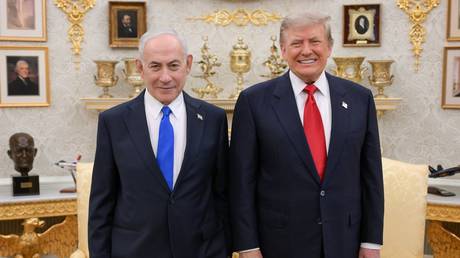
Two sequential national elections held seven days apart in late 2026—the Israeli Knesset election on October 27 and the United States congressional midterms on November 3—operated as a coupled political system around a single external variable: military conflict with Iran. Standard commentary treats these two electoral cycles as parallel geopolitical events, missing the structural zero-sum bind that locked Jerusalem and Washington into opposing strategic utility functions.
In a conventional alliance, synchronized elections encourage policy convergence. In the autumn of 2026, domestic institutional mechanics in Israel and macroeconomic sensitivities in the United States inverted that logic. While the Israeli executive required sustained regional escalation to preserve coalition discipline and suppress domestic legislative fractures, the American executive required rapid de-escalation to stabilize global energy markets before inflationary fuel costs triggered an electoral backlash against the incumbent party.
The Asymmetric Utility Function of Escalation
To understand why diplomatic and military coordination fractured ahead of the autumn ballots, analysts must model the distinct payoff matrices governing Prime Minister Benjamin Netanyahu and President Donald Trump. Both leaders faced acute domestic vulnerabilities, yet the identical military action—expanding kinetic operations against Iranian targets or maritime chokepoints—produced opposite domestic returns.
For the Israeli government following the Knesset dissolution on July 17, 2026, external military conflict functioned as a domestic centripetal force. High-intensity security crises compress political bandwidth, crowding out divisive internal legislation regarding judicial authority, media regulation, and ultra-Orthodox military conscription exemptions. Conversely, a negotiated ceasefire prior to October 27 threatened to return voter attention to domestic governance failures and personal approval deficits, which summer polling placed at 61% opposition to Netanyahu running again.
For the White House ahead of the November 3 midterms, the payoff matrix was governed by consumer price elasticity. Military escalation in the Persian Gulf or Strait of Hormuz immediately transmits risk premiums into global crude and liquefied petroleum gas markets. In American midterm cycles, retail gasoline prices act as a high-salience economic referendum on the president's party. Therefore, Washington's optimal pre-election equilibrium was containment or a diplomatic settlement that depressed energy prices, whereas Jerusalem's optimal equilibrium was sustained friction that prevented a domestic political reckoning.
Institutional Mechanics of the October 27 Knesset Election
Analysis of the Israeli electoral theater requires separating popular sentiment from parliamentary arithmetic. The Knesset comprises 120 seats allocated through closed-list proportional representation, requiring 61 seats for a governing majority and imposing a strict 3.25% electoral threshold. Under this institutional design, elections are rarely decided by marginal shifts between the largest parties; they are decided by threshold attrition among smaller bloc partners and post-election coalition geometry.
Pre-Election Bloc Dynamics and Structural Vulnerabilities
Entering the final month of the campaign, Netanyahu's governing alliance—comprising Likud, the ultra-Orthodox parties Shas and United Torah Judaism, and the far-right factions Otzma Yehudit and Religious Zionist Party—faced severe internal friction. Maintaining this bloc required advancing legislation to exempt yeshiva students from military service alongside measures expanding executive control over the judiciary and media. Those exact policy concessions alienated secular voters, centrist swing constituencies, and military reservists, creating a structural ceiling on the coalition's expansion.
Early October polling illustrated how narrow the margin for error was for both sides:
- The Channel 13 Survey (October 7, 2026): Projected Netanyahu's bloc at 55 seats, the Zionist opposition at 50 seats, and Arab parties at 15 seats, with Likud and Gadi Eisenkot's Yashar party tied at 20 seats each.
- The Channel 12 Survey (October 5, 2026): Projected Netanyahu's bloc at 49 seats, the Zionist opposition at 54 seats, and Arab parties at 13 seats, giving Yashar a 23-to-21 seat edge over Likud.
- Executive Suitability Metrics: Across both early October polls, Eisenkot maintained a personal lead over Netanyahu as preferred prime minister—44% to 40% in the Channel 13 poll and 41% to 38% in the Channel 12 survey.
Despite trailing in personal suitability and facing deep public skepticism over his candidacy, Netanyahu retained a structural advantage rooted in opposition fragmentation. For the anti-Netanyahu alignment—spanning Eisenkot's Yashar, the Bennett-Lapid grouping, Avigdor Liberman's Yisrael Beyteinu, and left-wing factions—out-polling the right-wing bloc was mathematically insufficient. Without incorporating Arab parties into a governing coalition, an arrangement major Zionist opposition leaders refused to commit to publicly, a plurality of seats could not automatically convert into a 61-seat government.
Official October 27 Results and Post-Election Deadlock
When Israeli voters cast their ballots on October 27, 2026, the official results from the Central Elections Committee confirmed a fragmented legislature in which neither ideological camp secured an outright majority.
- Netanyahu's Right-Religious Bloc (53 seats): Likud finished as the largest single faction with 27 seats (1,167,591 votes, or 20.42%). Its allied partners cleared the threshold with disciplined, compact totals: Otzma Yehudit won 7 seats (5.72%), United Torah Judaism won 7 seats (5.47%), Shas won 6 seats (5.24%), and the Religious Zionist Party won 6 seats (5.08%).
- The Zionist Opposition Bloc (48 seats): Yashar! secured second place with 21 seats (913,629 votes, or 15.98%). Beyachad (Together) captured 12 seats (9.31%), The Democrats won 8 seats (6.41%), and Yisrael Beyteinu took 7 seats (5.90%). Notably, The Reservists won 155,199 votes (2.71%), falling short of the 3.25% threshold and resulting in wasted opposition vote share.
- Arab Parties (19 seats): The Joint List won 11 seats (8.76%) and Ra'am secured 8 seats (5.91%).
The October 27 outcome validated the structural mechanics of proportional representation. Although Netanyahu's coalition fell 8 seats short of the 61-seat threshold required to govern independently, the Zionist opposition combined for only 48 seats, leaving it incapable of forming an executive without relying on the 19 seats held by Ra'am and The Joint List. That stalemate preserved Netanyahu's leverage as caretaker prime minister during the coalition-building window, sustaining his incentive to keep regional security crises at the forefront of national politics.
The November 3 U.S. Midterm Transmission Mechanism
Seven days after the Israeli vote, the geopolitical feedback loop collided with the American electorate. While foreign policy rarely drives congressional midterm voting in isolation, military conflict with Iran functioned as an economic transmission belt that directly undermined Republican incumbent messaging.
Three distinct operational mechanisms linked the Iran conflict to the November 3 congressional results:
- Energy Price Pass-Through: Maritime disruptions in the Strait of Hormuz—including strikes on commercial vessels and Iranian surface-to-air missile engagements—sustained upward pressure on oil and fuel prices throughout the autumn. Because fuel costs feed directly into household budgets and supply-chain logistics, voters penalized the party controlling the White House for persistent cost-of-living pressures.
- Executive Unilateralism vs. War Powers: Limited U.S. strikes on Iranian targets in the Strait of Hormuz hours before polls opened on November 3 reinforced voter perception of an open-ended military entanglement executed without congressional authorization. This dynamic energized anti-interventionist independents and alienated segments of the administration's own populist base.
- Down-Ballot Wave Amplification: In midterm elections, macro-level dissatisfaction with economic and foreign policy performance compresses margins in competitive districts. When an administration is unable to deliver either a decisive military victory or a negotiated diplomatic settlement that lowers fuel costs, vulnerable incumbents lose ticket-splitting swing voters.
The electoral consequences on November 3 were decisive across both chambers of Congress. According to the Associated Press via The Guardian, Democrats flipped control of both the House of Representatives and the Senate. In the Senate, Democrats expanded their ranks to 55 seats—later reaching 56 seats following Mary Peltola's ranked-choice victory over incumbent Republican Dan Sullivan in Alaska—while Republicans dropped 8 seats to 44. In the 435-member House, where 218 seats are required for a majority, Republicans suffered a net loss of 42 seats, falling to 169 with 425 races called.
Analytical Limitations of Single-Variable Election Models
While the coupled Iran-election framework explains the strategic tension between Jerusalem and Washington, rigorous political analysis requires acknowledging the boundaries of this model. Attributing electoral outcomes solely to Middle East conflict introduces omitted-variable bias in both theaters.
In Israel, structural demographic trends and domestic institutional cleavages—specifically the ultra-Orthodox conscription dispute, judicial reform, and long-term voter alignment—predated the 2026 escalation and would have produced severe coalition friction even under conditions of regional calm. Furthermore, the failure of The Reservists party to clear the 3.25% threshold accounted for 155,199 unrepresented votes, a mechanical quirk of Israeli election law entirely independent of Iranian military posture.
In the United States, midterm elections historically penalize the incumbent president's party regardless of foreign crises. Thermostatic public opinion—where the electorate shifts toward the out-party in response to executive overreach or unfulfilled economic expectations—accounts for a substantial baseline of congressional seat losses. The Iran conflict and associated energy price pressures acted as an accelerant on an existing structural vulnerability rather than the sole causal agent.
Strategic Posture for Post-Election Actors
With both ballots decided, the institutional constraints governing Washington and Jerusalem have shifted from electoral survival to legislative and coalition execution.
- Washington's Legislative Constraint: Operating against a Democratic majority in both the House and Senate removes the White House's blank check for regional military operations. While the executive branch retains commander-in-chief authority to conduct unilateral strikes, a Democratic-controlled Congress can weaponize appropriations riders, oversight hearings, and War Powers resolutions to restrict sustained funding for conflict with Iran. To avoid a prolonged legislative war of attrition and stabilize domestic energy prices ahead of the 2028 cycle, the administration must pivot toward diplomatic containment—specifically testing indirect channels to cap Iranian uranium enrichment in exchange for maritime de-escalation in the Strait of Hormuz.
- Jerusalem's Coalition Imperative: Having emerged from the October 27 election with 53 bloc seats against 48 for the Zionist opposition and 19 for Arab factions, Netanyahu's immediate objective is breaking the 61-seat deadlock without triggering a repeat election. Because Washington now faces severe domestic congressional pressure to wind down regional hostilities, Jerusalem can no longer rely on unconditional American military backing to sustain an open-ended escalation strategy. The caretaker government must therefore shift from external military brinkmanship to domestic transactional politics: peeling off individual defectors from the fragmented opposition or negotiating confidence-and-supply arrangements that secure a parliamentary majority before a hostile U.S. Congress alters the regional security equation.
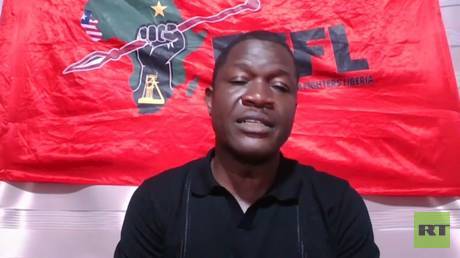
For further perspective on how the U.S. congressional shift affects Israeli and Iranian military calculations, watch Between Two Elections: What Is the Future of the War on Iran Under a New Congress and Knesset?. This broadcast examines the immediate policy friction between a newly elected Democratic Congress and a deadlocked Knesset over the trajectory of the Iran conflict.