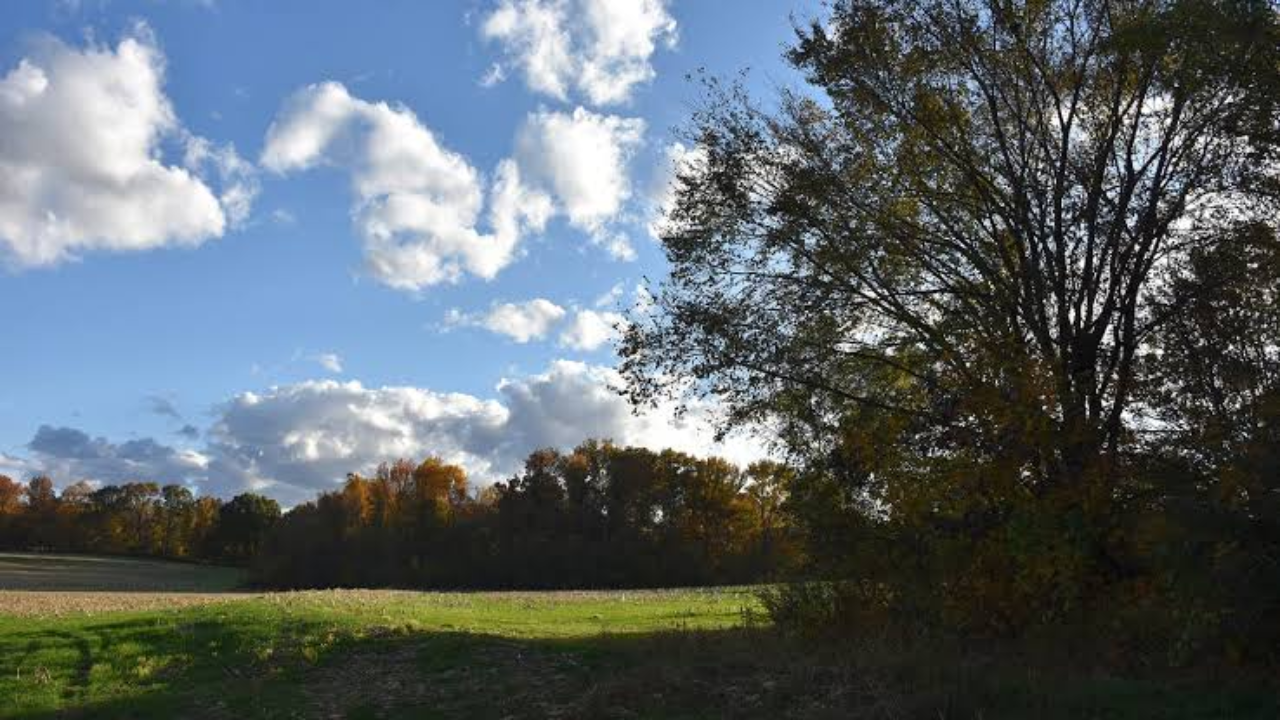
The Distortion of Short-Term Capital Horizons
Standard capital allocation models operate under strict temporal compression. Modern equity markets, venture capital funds, and commercial real estate syndications are structurally bound to three-to-seven-year liquidity cycles. This institutional short-termism creates massive valuation anomalies in asset classes where the yield curve requires decades to inflect. When an asset's primary value driver is biological succession rather than immediate transactional velocity, conventional market pricing mechanisms fail entirely.
The acquisition executed in 1988 by Ohio attorney Neil McKown for 155 neglected acres illustrates this market failure. By purchasing severely degraded, uncultivable, or stripped acreage at distressed liquidation values, the buyer secured an option on biological recovery with a near-zero cost basis. While typical financial portfolios chase quarterly yield compression, long-horizon land acquisition operates on an entirely different economic curve. The return profile is non-linear, dormant for decades, and then violently upward-sloping as ecosystem functionality is restored. If you enjoyed this post, you might want to look at: this related article.
To understand how an initial low-cost, high-liability asset converts into a high-value ecological and financial holding, one must deconstruct the underlying economic mechanics: the acquisition cost function, the biological production function, the externalities of capital patience, and the terminal valuation of ecosystem services.
The Cost Structure of Distressed Land Acquisition
Distressed real estate pricing is driven by liquidity constraints and immediate liability mitigation. Land that has been heavily logged, strip-mined, or eroded carries negative carrying costs in the eyes of conventional developers. Property taxes persist, yet the asset generates zero cash flow. Furthermore, regulatory liabilities associated with environmental degradation or erosion create severe discount factors for corporate or institutional owners. For another perspective on this event, check out the latest coverage from MarketWatch.
When McKown acquired 155 acres in 1988, the transaction price reflected absolute terminal distress. The economic rationale for acquiring such an asset relies on three specific parameters:
- Basement Valuation: The acquisition price approximates the scrap value of the dirt, stripped of any developmental or timber premium. Downside risk is mathematically bounded by zero.
- Asymmetric Optionality: The asset costs little to hold in terms of cash flow, provided property taxes are manageable, yet it holds infinite upside if regulatory, environmental, or biological variables shift in favor of green space.
- Low Opportunity Cost: Because the land is priced as a write-off, the capital locked up in the purchase does not impair an investor's liquidity unless oversized leverage was applied.
The financial architecture of this trade rejects traditional discounted cash flow modeling because the cash flows are non-existent for the first two decades. Standard DCF models penalize cash flows that occur thirty years in the future through compounding discount rates, rendering long-term conservation mathematically worthless under traditional finance theory. This systemic flaw in financial valuation models is precisely why private individuals operating outside institutional mandates routinely capture outsized long-term value.
The Biological Production Function
Unlike manufacturing or software, where output is a linear function of capital expenditure and labor hours, land restoration operates via biological compounding. Trees do not grow faster simply because capital is injected into the soil beyond a certain biological threshold. Instead, restoration is constrained by ecological succession rates, nutrient cycling, and hydrological recovery.
In 1988, the 155 acres were functionally sterile or heavily degraded. The initial phase of any such project requires stopping the degradation loop. This involves halting erosion, stabilizing watersheds, and preventing invasive species colonization. The economic inputs during this phase are purely labor-intensive: physical planting, boundary monitoring, and basic infrastructural maintenance.
As time progresses, the system transitions from an energy sink to an energy producer. The biological production function follows an S-curve:
- Phase One (Years 1 to 10): Linear Investment, Minimal Visible Return. Capital and labor inputs are high relative to ecological output. Soil microbiome regeneration takes precedence over canopy growth. Mycorrhizal networks re-establish underground, making the surface metrics appear stagnant to the casual observer.
- Phase Two (Years 11 to 25): Exponential Canopy Closure and Biomass Accumulation. Once root systems penetrate compacted subsoil and establish stable nutrient loops, growth rates accelerate exponentially. Tree circumference and vertical height compound annually. Carbon sequestration rates spike.
- Phase Three (Years 26 to 38+): Mature Ecosystem Stabilization and Yield Inflection. The forest transitions from a high-growth juvenile state to a self-sustaining climax community. Timber value, wildlife habitat density, and aesthetic valuation reach maturity.
The economic takeaway is clear. The investor does not manufacture value; they underwrite the time required for biological compounding to occur without interruption.
The Economics of Uninterrupted Stewardship
In institutional real estate, holding a property for 38 years incurs massive management fees, partnership friction, and pressure for capital recycling. Private ownership eliminates agency costs entirely. The single-owner model provides a strategic advantage that public corporations or private equity funds cannot replicate: zero liquidity pressure.
Institutional funds face redemption cycles from limited partners. If a fund lasts ten years, it must liquidate assets regardless of market conditions. An individual acting as a sole proprietor across nearly four decades sidesteps the forced-liquidation trap.
This uninterrupted horizon alters the risk profile of land management:
- Erosion of Regulatory Friction: Over a 38-year window, local and regional zoning priorities frequently shift from industrial or agricultural extraction toward conservation easements, watershed protection, and carbon offset incentives. Assets held long enough often intersect with favorable public policy changes.
- Capital Efficiency of Natural Regeneration: Many modern corporate restoration projects rely on high-capex engineering solutions—massive earth-moving equipment, imported topsoil, and intensive irrigation systems. Patient private stewards rely on natural succession. By letting native seed banks and wildlife vectors do the heavy lifting, the capital expenditure per acre remains near zero, maximizing return on invested capital over the long term.
The Mispricing of Natural Capital
Modern balance sheets fail to capture the real economic value embedded in mature ecosystems. Traditional accounting values land based on comparable sales of cleared, buildable lots or immediate agricultural output. A forest with high biodiversity, established carbon sinks, and complex hydrological functions is often valued identically to an adjacent tract of logged timberland.
This structural mispricing creates an arbitrage opportunity for long-horizon buyers. Over 38 years, the hidden balance sheet of natural capital expands silently:
- Hydrological Value: Restored acreage acts as a sponge, filtering groundwater, recharging local aquifers, and mitigating downstream flood risks. While these are often categorized as externalities, they translate directly into regional ecological stability and enhanced property desirability.
- Biodiversity and Habitat Carrying Capacity: The return of apex predators, specialized pollinators, and migratory bird species shifts the ecological classification of the land from a dead zone to a protected refuge.
- Timber and Biomass Value: Even without commercial clear-cutting, the standing timber inventory represents a multi-generational store of value that can be selectively harvested or left to appreciate as high-grade veneer timber.
When measured strictly through the lens of transaction multiples, the 155 acres acquired in 1988 have appreciated not merely through local real estate inflation, but through the wholesale creation of a complex biological asset class that did not exist at the point of purchase.
Strategic Execution for Long-Horizon Land Acquisition
For allocators seeking to replicate or model this type of asymmetrical asset appreciation, traditional real estate underwriting metrics must be completely inverted. The strategy requires a specific operational framework:
- Target Structural Distress: Look for land parcels burdened by environmental stigma, previous industrial misuse, or geographic isolation that depresses near-term liquidation value.
- Minimize Carrying Drag: Ensure property taxes and maintenance overhead can be serviced out of current cash flow without requiring the land itself to generate income during its first two decades.
- Remove Human Interference: In ecological restoration, the highest-ROI action is frequently inaction. Ceasing chemical application, stopping mechanical tilling, and preventing grazing allows natural succession to operate at zero marginal cost.
- Extend the Holding Period Indefinitely: Treat the asset as an intergenerational trust rather than a tradable security. The exit strategy must be decoupled from market timing, allowing the biological compounding curve to reach its natural inflection point.
Allocate capital toward the unquantifiable variables of time and biology, and the market will eventually reprice the asset to reflect its true productive capacity.