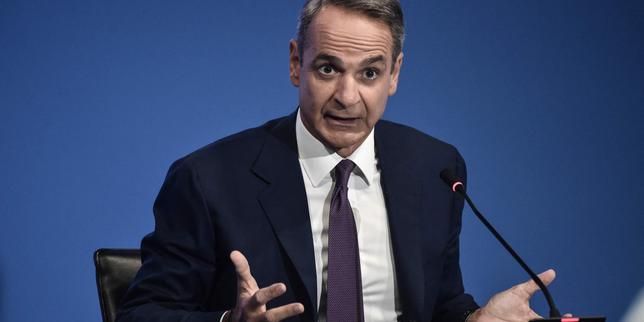
Promises of financial relief rarely land softly in a country recovering from a decade of bruising austerity. When Prime Minister Kyriakos Mitsotakis stepped up to the podium at the Thessaloniki International Fair to roll out a multi-billion euro package of tax cuts and wage adjustments, he expected gratitude. Instead, he met a wall of public cynicism. Greek households aren't celebrating just yet.
You cannot easily convince a population grappling with soaring supermarket prices and suffocating rental costs that a gradual tax trim will solve their daily financial anxiety. The disconnect between government projections and reality on the ground highlights a deeper trust deficit. People want structural transformation, not temporary sweeteners designed to weather political cycles.
The Anatomy of the Relief Package
The financial package tabled by the administration carries a hefty price tag, hovering between two and three billion euros depending on the fiscal year tracked. At its core, the policy targets specific pressure points: families raising three or more children, farmers facing volatile operational costs, and private-sector workers caught in a perpetual loop of low wages.
Under the approved framework, families with three children enjoy a zero tax rate on earnings up to twenty thousand euros. Farmers receive targeted tax breaks to keep rural production alive. Social security contributions face incremental reductions, and minimum wage trajectories point toward higher thresholds in the coming years.
On paper, these initiatives sound promising. They check every box of orthodox fiscal stimulus. Yet citizens look at their monthly utility bills and see a completely different story. Energy costs remain volatile, and basic food items consume an outsized portion of household incomes. When rent in urban centers devours half a paycheck, minor income tax adjustments feel like putting a band-aid on a fracture.
Where Political Opposition Finds Its Foothold
Opposition parties seized upon these vulnerabilities immediately. Critics argue that the government measures amount to little more than pre-election maneuvering aimed at shoring up flagging support before voters head to the ballot boxes. Every provision faces intense scrutiny in parliament, with fierce debates erupting over investment funds and state contributions.
When lawmakers split sharply on mechanisms like child savings plans or state-backed financial participation, the public watches closely. This partisan friction reinforces the narrative that economic policy is driven by political survival rather than genuine societal repair. Trust evaporates when voters suspect that every euro promised comes with hidden electoral strings attached.
The Housing Crisis and Foreign Capital Disconnect
One of the sharpest friction points involves the Greek real estate market. Foreign demand has turned Athens and popular islands into unaffordable zones for local families. While the government introduced measures like a steep fifteen percent property-transfer tax for non-EU buyers to curb speculative purchasing, many believe the intervention came too late.
Young couples cannot find apartments to rent or buy without spending ruinous percentages of their income. Property tax extensions for primary residences in small communities offer relief to rural areas, but they do nothing to solve the acute housing shortage plaguing major cities. When shelter becomes a luxury luxury item, tax cuts on secondary goods lose their psychological impact.
Navigating the Wage Stagnation Trap
Statistics tell an unforgiving story about the labor market. A staggering percentage of private-sector employees earn below one thousand euros a month. Even with minimum wage adjustments pushing upward toward mid-range targets, inflation eats away at purchasing power before paychecks even clear the bank.
Workers feel trapped in a low-wage, high-cost economy. Employers struggle with high operational overheads and heavy tax burdens, making rapid wage hikes difficult without risking business viability. The government attempts to bridge this gap through social security reductions, but the relief trickles down too slowly for workers living paycheck to paycheck.
Balancing Fiscal Discipline with Social Demands
Athens walks a tightrope. European fiscal surveillance demands strict budgetary discipline, leaving little room for unbridled populist spending. Every fiscal promise must pass muster with international creditors and EU watchdogs who remember the painful lessons of past debt crises.
This constraint explains why the relief packages feel measured and incremental rather than sweeping and transformative. Mitsotakis must project financial responsibility to markets while convincing local voters that their daily struggles matter. Satisfying both audiences proves nearly impossible. Markets demand caution, while citizens demand immediate salvation.
The Road Ahead for Economic Reform
True economic recovery requires more than tactical tax adjustments. It demands a complete overhaul of productivity, judicial efficiency
Why Greece's Latest Tax Promises Fail to Fix the Real Problem
business
Walk down any neighborhood street in Athens or Thessaloniki on a Tuesday morning, and you'll hear the same conversation. People aren't talking about macroeconomic growth numbers or quarterly fiscal surpluses. They are talking about supermarket receipts that look like mortgage payments. When political leaders step up to announce sweeping aid packages and tax relief measures, the public response isn't applause. It's a heavy sigh.
Greece finds itself caught in a strange economic paradox. On paper, the macro indicators look stable. Tourism is breaking records, foreign investment trickles in, and government debt-to-GDP ratios are monitored closely by Brussels. Yet, the average citizen feels poorer than they did five years ago. Prime ministerial podiums regularly feature promises of targeted tax cuts, housing subsidies, and inflation relief checks. So why are these announcements greeted with such profound skepticism? The answer lies in a deep structural disconnect between state-level bookkeeping and street-level survival.
The Cost of Living Trap
Let's look at the numbers that actually matter to people. Prices for basic goods, electricity, and telecommunications have climbed steadily over the past few years, locking into place at elevated rates while wage growth crawls at a snail's pace. When a government introduces temporary tax reductions or modest one-off bonuses, it treats a chronic illness with an aspirin.
Families aren't looking for temporary relief that expires in six months. They need structural breathing room. A five-percent reduction on select retail items doesn't mean much when your monthly rent has doubled because landlords prefer short-term tourist rentals over long-term leases. The tax reliefs offered from the top often get absorbed instantly by baseline expenses before anyone has a chance to feel the benefit.
To understand why these packages fail to convince the public, you have to examine how taxes are structured in the country. Indirect taxes, particularly value-added tax, remain among the highest in Europe. These taxes hit lower- and middle-income earners disproportionately because a working-class family spends almost all of its disposable income on taxable essentials. When politicians offer targeted income tax tweaks while leaving high indirect taxation untouched, the math simply doesn't work for the average household.
The Housing Crisis Elephant in the Room
You cannot talk about Greek economic discontent without talking about housing. For generations, homeownership was a cornerstone of Greek society. Today, buying an apartment in central Athens or popular neighborhoods of Thessaloniki is a distant dream for anyone earning a local salary.
Government programs aimed at supporting young buyers or incentivizing property renovation sound good in press releases. In practice, they often pump more liquidity into a distorted market, driving prices and rents even higher. When landlords know foreign buyers with golden visas or digital nomads with remote-foreign salaries can pay top dollar, local wages cannot compete.
Tax relief on property maintenance doesn't help the renter facing an eviction notice or a thirty-percent hike upon lease renewal. When state measures ignore the root causes of the housing shortage, they feel detached from reality. People living out of packed suitcases or struggling to pay shared utility bills view these policies as tone-deaf exercises in public relations.
Wage Stagnation Versus European Realities
Greece has spent well over a decade rebuilding its economy after the catastrophic debt crisis that began in the late two thousands. The sacrifices made by the workforce were historic. Salaries were slashed, pensions were cut, and labor protections were stripped away under international bailout programs.
Workers were told that these bitter pills would cure the system and pave the way for a prosperous future. Years later, many of those emergency wage cuts have never fully reversed, even as inflation pushes the cost of living close to Western European averages. Meanwhile, local salaries remain anchored near the bottom of the European Union scale.
When the prime minister announces tax reliefs, workers hear an implicit message: We aren't going to fix your base wage, but here is a small discount on your tax bill instead. It's a transactional approach that fails to restore dignity or long-term financial security. People don't want state handouts or complex tax deductions; they want a fair wage for a hard day's work that allows them to save money, raise children, and plan for the future without constant anxiety.
Why Skepticism Has Become Default
Trust in economic policy doesn't vanish overnight. It erodes gradually through years of over-promising and under-delivering. Every time an administration rolls out a shiny new fiscal package with grand titles, citizens hold their breath, look at their next utility bill, and realize nothing fundamental changed.
The political class often misinterprets this skepticism as a communication problem. They assume that if they explain the measures better, or package them with slicker graphics, the public will cheer. That diagnosis is wrong. The issue isn't marketing. The issue is substance.
When structural reforms focus on superficial adjustments rather than tackling oligopolies in energy, retail, and banking, the results are predictable. Prices stay high, competition stays low, and consumers pay the price. Until economic policy shifts from temporary mitigation to permanent structural empowerment, every future announcement of tax relief will be met with the exact same weary skepticism. Real economic health isn't measured by how many tax loopholes a government closes or opens in a fiscal bill. It's measured by whether a young person can afford to move out of their parents' house, fill their pantry, and look at tomorrow without dread. Until policies reflect that basic truth, the podium promises will keep falling flat.