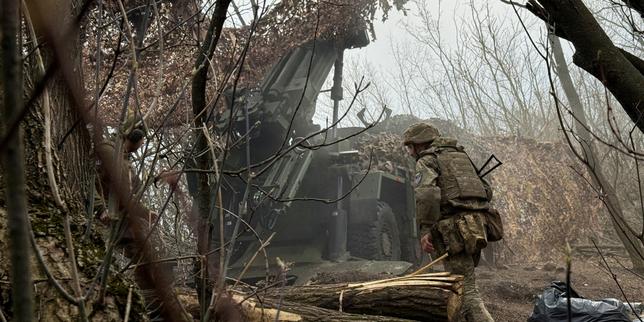
The current Russian offensive strategy relies on a high-velocity consumption of human capital to compensate for a deficit in tactical flexibility and precision-guided munitions. Reports from European Union intelligence suggesting record-breaking casualty rates are not merely indicators of tactical failure; they represent a deliberate, albeit high-risk, operational choice known as "attritional optimization." By saturating the front with disposable infantry units, Moscow forces Ukrainian defensive positions to reveal their locations and exhaust their limited ammunition stockpiles. This creates a specific mathematical reality: the Russian Federation is trading human life for territorial inches, betting that its mobilization capacity can outlast Western industrial throughput.
The Mathematics of Mass-Based Attrition
To analyze why Russian losses have reached record levels, one must look at the Cycle of Force Generation. The Russian military has shifted away from the professionalized "Battalion Tactical Group" (BTG) model that failed in the early stages of the invasion. In its place, a tiered infantry structure has emerged:
- Disposable "Storm" Detachments: Composed of recruited prisoners or under-trained mobilized personnel. Their primary function is to trigger defensive fire, identifying the coordinates of Ukrainian heavy weaponry.
- Specialized Fire Support: Once the defensive positions are mapped, Russian artillery and drone units attempt to suppress them.
- Consolidation Units: Better-equipped troops move in only after the disposable wave has either succeeded or been entirely neutralized.
The record loss figures reported by the EU reflect the extreme lethality of the first tier. This is not "meat wave" warfare in the primitive sense; it is a calculated expenditure of low-value assets to preserve high-value technical assets. The structural bottleneck for Russia is not the number of available bodies, but the ratio of trained officers capable of managing these disparate groups. When this ratio collapses, the efficiency of the "Storm" detachments drops, leading to the exponential casualty spikes observed in recent months.
The Industrial Constraints of Defense Defense
The casualty numbers are a lagging indicator of a deeper struggle: the Elasticity of Defensive Persistence. Ukraine’s ability to inflict these losses depends entirely on the "Kill Chain Efficiency." This efficiency is governed by three variables:
- Intelligence Latency: The time between detecting a Russian assault group and relaying coordinates to artillery.
- Amuunition Caliber Parity: The availability of 155mm shells to intercept massed infantry before they reach the trench line.
- Drone Density: The number of First-Person View (FPV) drones available to hunt individual armored vehicles and personnel.
When Russia loses record numbers of soldiers, it indicates that Ukraine's Kill Chain is currently optimized. However, high casualty rates for the attacker do not automatically equate to victory for the defender. If the defender exhausts their "Deep Magazine" (stored munitions) to achieve these casualty rates, the attacker may still achieve a breakthrough once the defender's rate of fire drops. The EU’s focus on Russian losses must therefore be weighed against the industrial replenishment rate of Ukrainian interceptors.
The Economic Cost Function of Russian Mobilization
A common misconception is that Russia has an infinite supply of manpower. While the demographic pool is large, the Economic Opportunity Cost of mobilization is becoming a critical constraint. Every soldier removed from the civilian workforce to die in the Donbas is a lost unit of productivity in a labor-market already tightened by sanctions and emigration.
Russia is currently managing this through a high-wage recruitment model, offering bounties and salaries that far exceed regional averages. This creates an internal inflationary pressure. The "Cost Per Casualty" for the Russian state includes:
- Initial recruitment bonuses.
- Death benefits (the "Lada" economy).
- Long-term healthcare for a growing population of disabled veterans.
- Loss of tax revenue from the productive sector.
As casualty rates hit record highs, the fiscal burden of maintaining the front-line mass increases. The Russian economy is effectively being cannibalized to fund the military's attritional requirements. The threshold of failure is not moral or psychological—it is a budgetary limit where the cost of replacing a soldier exceeds the marginal territorial gain that soldier provides.
Technical Degradation and the Armor-to-Infantry Ratio
The spike in personnel losses is inversely correlated with the availability of modern armored vehicles. In 2022, Russian assaults were characterized by heavy tank and BMP presence. As high-end equipment has been destroyed, Russia has shifted toward "Light-Skin" mobility—using motorcycles, golf carts, or simply advancing on foot.
The lack of armored protection explains the record-breaking lethality of Ukrainian strikes. Infantry without mechanized support are vulnerable to fragmentation and small-arms fire at much greater ranges. This represents a Technological Regression of the Russian military. They are fighting a 21st-century war with a mid-20th-century tactical manual because their industrial base cannot produce T-90Ms fast enough to replace losses. Consequently, the burden of the assault has shifted from steel to flesh.
The Fallacy of Sunk Cost in Military Strategy
Western analysts often expect high casualty rates to trigger domestic unrest in Russia. This overlooks the Information Asymmetry within the Russian Federation. By decentralizing the recruitment process—focusing on impoverished ethnic minority regions and the prison system—the Kremlin has insulated the urban middle class in Moscow and St. Petersburg from the immediate reality of the war.
The record losses are effectively "hidden" through a fragmented reporting system. Families are often left in bureaucratic limbo, with soldiers listed as "Missing in Action" rather than deceased, which delays the payment of benefits and suppresses official death tolls. Until the casualty rate impacts the primary political power centers, the military leadership is likely to view these losses as a manageable operational expense.
Strategic Imperatives for the Next Phase
The current trajectory suggests that Russia will maintain this high-loss posture as long as they perceive a window of opportunity before Western F-16s and increased shell production reach the front. The record numbers are an attempt to force a decision through sheer mass.
To counter this, the tactical priority must shift from "Territorial Defense" to "Systemic Neutralization."
- Interdiction of Logistics: High casualty rates mean Russia needs a constant stream of reinforcements. Targeting the transit hubs and training camps in the rear is more effective than killing infantry at the zero line.
- Electronic Warfare (EW) Supremacy: As Russia relies more on cheap drones to support its infantry-led assaults, the side that dominates the electromagnetic spectrum will dictate the survival rate of the "Storm" detachments.
- Resource Counter-Mobilization: The West must match Russia’s "War Economy" by securing long-term contracts for artillery and drone production. Attrition is a race to zero; the winner is whoever has the "One Plus" capacity.
The record-breaking loss of Russian soldiers is not a sign that the war is ending. It is a sign that the war has entered its most brutal phase: a test of which society can better absorb the shock of industrial-scale slaughter. The Russian Federation has bet its future on the belief that it can bleed longer than the West is willing to watch. Overcoming this requires more than just acknowledging the numbers; it requires dismantling the logistical and economic engines that make such losses sustainable for the Kremlin.