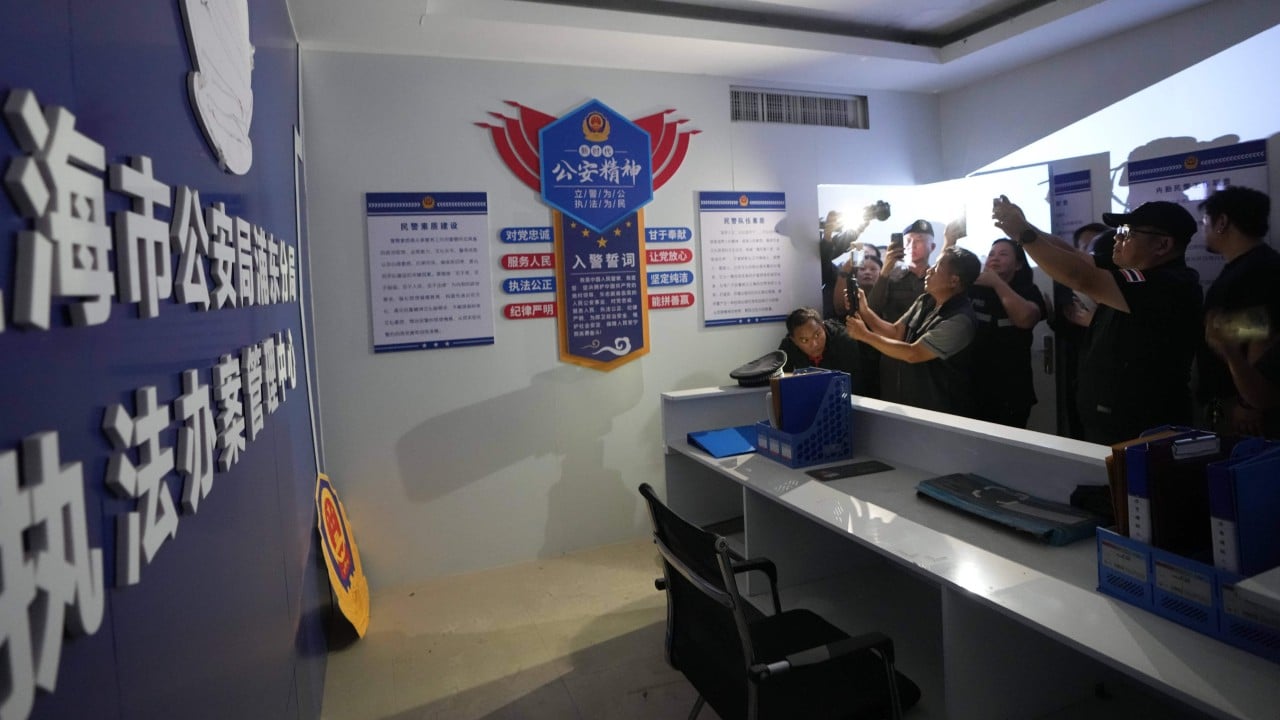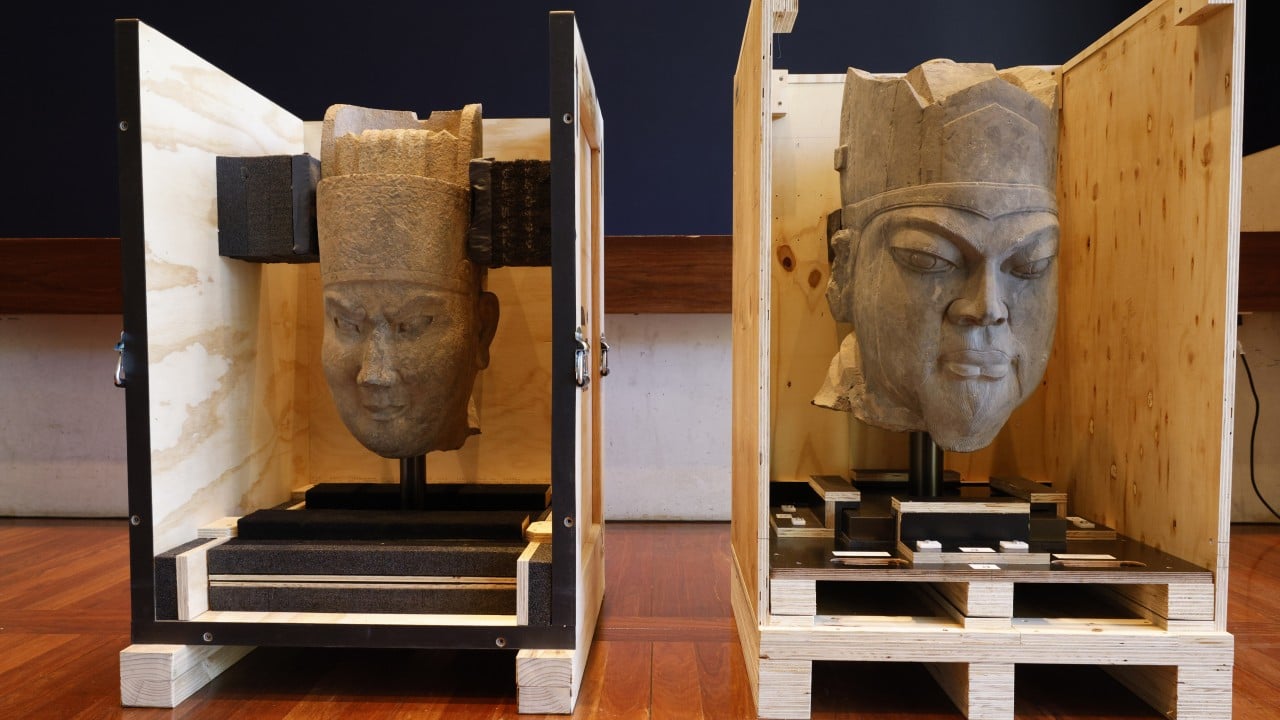
Thirty years is a long time to sit in limbo. That is exactly how long two ancient carved stone heads spent in Australia before finally heading back to China.
You might see a headline like "Australia returns ancient stone heads to China after more than 30 years" and shrug. Just another diplomatic photo-op. Two officials shaking hands over old rocks while cameras flash in Canberra or Beijing.
If that is what you think, you are missing the entire point.
This handover is not just polite cultural housekeeping. It is the messy, complicated reality of how looted antiquities cross borders, how museums and private collectors hold onto grey-market artifacts for decades, and why international repatriation laws move at a glacial pace. When Australia formally handed those stone sculptures back to Chinese authorities, it closed a chapter that started in the chaotic 1990s art market and ended with modern forensic provenance tracking.
Let's break down what actually happened, why it took three decades, and what this tells us about the global trade in stolen history.
What Actually Happened With the Ancient Stone Heads
In late 2023 and continuing through recent diplomatic handovers between Canberra and Beijing, Australian authorities repatriated looted Chinese cultural relics that had been illegally exported decades earlier. Among the most prominent pieces in these returns are ancient carved stone heads—specifically Buddhist and funerary sculptures dating back over a thousand years to dynasties like the Northern Qi and Tang.
Here is the basic timeline of how these artifacts end up halfway across the world.
During the late 1980s and early 1990s, China experienced a massive wave of tomb raiding and temple looting. Rural archaeological sites were poorly guarded. Criminal syndicates hacked heads off stone statues because a detached head fits easily into a suitcase or a shipping crate, whereas a two-ton stone torso does not. Those severed heads were smuggled through Hong Kong and sold to Western dealers, private collectors, and auction houses with forged paperwork claiming they had been in private collections since before 1970.
Once an artifact enters a country like Australia under dubious paperwork, getting it back is brutal.
Australia is a signatory to the 1970 UNESCO Convention on the Means of Prohibiting and Preventing the Illicit Import, Export and Transfer of Ownership of Cultural Property. The Australian government enforces this through the Protection of Cultural Objects on Loan Act and the Protection of Movable Cultural Heritage Act 1986. Under these laws, if an object was illegally exported from its country of origin after the law took effect, Australian authorities can seize it.
The catch? Proving when it left China.
Smugglers don't keep receipts. When Australian border officials, federal police, or museum curators flag a suspicious stone head, investigators have to prove two things. First, that the piece is authentic. Second, that it left China illegally rather than being sold legally generations ago. That forensic work takes years of collaboration between Chinese archaeologists, Australian law enforcement, and art historians.
Why Repatriation Takes More Than 30 Years
People always ask why governments can't just pack stolen art into a box and ship it home the week it is discovered. I used to wonder the exact same thing until I looked closely at how cultural property litigation actually works.
It is a legal minefield.
Suppose a private collector in Sydney or Melbourne bought a Tang Dynasty stone head in 1992 from a reputable-looking dealer in London or Hong Kong. They paid tens of thousands of dollars. They have an invoice. Under traditional property law in many common-law jurisdictions, a "good faith purchaser" has legal rights, even if the item was originally stolen three steps up the supply chain.
If the Australian government simply walks into someone's house and confiscates a statue without ironclad proof of illicit export, the government gets sued. And they lose.
To build an airtight case, investigators have to match the stone head to a specific headless statue still standing in a cave temple in Henan or Shanxi province. Think about how hard that is. You are trying to match crystalline grain patterns in limestone, chisel marks on the neck break, and regional sculptural styles across thousands of miles without modern 3D scanning—at least, not until recent years.
There is also the diplomatic reality. Cultural repatriation rarely happens in a vacuum. When diplomatic relations between Australia and China froze during trade disputes a few years back, high-level cultural handovers stalled. When relations thawed, cultural diplomacy became an easy, visible way for both nations to signal goodwill. Timing in international law is almost always political.
The Brutal Reality of Severed Stone Sculptures
If you visit major museums in New York, London, Paris, or Sydney, you will see dozens of disembodied stone Buddha heads mounted on sleek black pedestals. Museum lighting makes them look serene. Peaceful. Complete.
They aren't complete. They are crime scenes.
In Chinese Buddhist art—especially from the Northern Wei, Northern Qi, and Tang dynasties—sculptors carved monumental figures directly into cliff faces at sites like the Longmen Grottoes or Xiangtangshan. Nobody ever carved a standalone stone head. Every single detached head you see on a pedestal was violently chiseled off a larger body by looters using crowbars and saws.
When looters hack off a head, they destroy the surrounding relief carvings, shatter the neck, and erase the historical context of the entire shrine. A headless statue left behind in a cave loses its iconographic identity. You can no longer tell which Bodhisattva it represented or how it interacted with the other figures in the alcove.
Returning a head after 30 years fixes the legal injustice, which is great. Honestly, though, it rarely fixes the physical damage. Sometimes the original body was destroyed decades ago. Other times, the stone is too weathered to support the weight of reattaching the head. Museums in China often display the returned head next to a digital reconstruction or a cast of the original torso so visitors can actually understand what was lost.
How Australia Handles Looted Antiquities Today
Australia has quietly become one of the stricter jurisdictions in the Asia-Pacific region when it comes to cracking down on illicit antiquities, largely because the country got burned badly in the 2010s.
You might remember the Subhash Kapoor scandal. Kapoor was a Manhattan art dealer who sold millions of dollars in looted Indian stone sculptures to major museums worldwide—including the National Gallery of Australia (NGA) in Canberra. The NGA spent over $5 million on a bronze Dancing Shiva that turned out to have been stolen from a temple in Tamil Nadu.
That scandal humiliated the Australian museum sector. It forced institutions across the country to audit their entire collections, rewrite acquisition policies, and cooperate aggressively with foreign governments.
Since then, Australia's Department of Infrastructure, Transport, Regional Development, Communications and the Arts—which oversees movable cultural heritage—has worked closely with the Australian Federal Police (AFP) and Australian Border Force to intercept suspect shipments and negotiate voluntary returns.
In recent years, Australia has returned:
- Looted fossils and dinosaur eggs to China
- Stolen bronze and stone religious sculptures to India and Cambodia
- Ancient funerary objects and stone carvings removed from Chinese tombs
Most of these returns don't involve dramatic FBI-style raids. Instead, private collectors realize their prized "investment" is legally radioactive. Once an artifact is flagged as potentially looted, no major auction house like Sotheby's or Christie's will touch it. You can't sell it. You can't insure it properly. You can't donate it for a tax write-off.
At that point, surrendering the piece to Australian authorities for repatriation to China is the only exit ramp left.
What Collectors and Museums Still Get Wrong
If you collect antiquities, work in logistics, or just follow international art news, there is a massive misconception floating around about provenance. Many buyers still assume that if an object has been outside its country of origin for 30 or 40 years, a statute of limitations kicks in and the title becomes clean.
That is flat-out wrong.
Under both Chinese cultural relic protection laws and international bilateral agreements, state-owned cultural relics excavated illegally never lose their sovereign ownership. Time does not launder a stolen artifact. Whether it sat in a Melbourne living room since 1991 or a warehouse in Zurich since 1985, if it was hacked out of a Chinese temple or dug out of a tomb without state authorization, China retains legal claim over it.
Another mistake people make is trusting "old collection" labels. Dealers in the 1990s routinely printed fake provenance cards claiming an object came from a "private European collection formed in the 1920s." Today, Chinese researchers use isotope analysis on stone, archival photographs taken by early 20th-century explorers like Édouard Chavannes and Osvald Sirén, and high-resolution 3D scans of damaged cave walls to disprove those fake histories in minutes.
If an early 1920s photograph shows a statue still intact with its head attached inside a Chinese cave, any dealer claiming that head was in Paris in 1915 is instantly exposed as a fraud.
How to Verify Cultural Artifacts Before Buying or Importing
Whether you are an independent collector, an estate liquidator, or someone who inherited old Asian art from a relative, handling undocumented antiquities requires real caution. Ignorance of export laws won't protect you from seizure at customs.
If you ever deal with historical stone carvings, ceramics, or bronzes from China or Southeast Asia, follow these steps immediately:
- Demand verifiable pre-1970 documentation. An invoice from 1994 is worthless. You need dated photographs, exhibition catalogs, export permits, or published academic references proving the object was legally outside China before the 1970 UNESCO cutoff date.
- Check the Art Loss Register and Interpol databases. Before buying or shipping any high-value cultural item, run a search through the Art Loss Register and check Interpol's Stolen Works of Art database to ensure it isn't flagged internationally.
- Consult Australian cultural heritage authorities before importing. If you are bringing historical items into Australia, review the import rules under the Australian Government Movable Cultural Heritage guidelines so you don't accidentally violate bilateral import restrictions.
- Contact provenance researchers if you inherit suspect pieces. If you find undocumented stone sculptures in an estate, reach out to university art history departments or museum provenance teams rather than trying to quietly flip them online. Voluntary surrender avoids legal penalties and gets the artifact back where it belongs.
Thirty years is an absurd amount of time for two stone heads to spend away from home, yet in the world of antiquities trafficking, three decades is barely a blink. The real win here isn't just that China got two ancient sculptures back—it's that the loopholes allowing looted history to hide in plain sight are finally closing.