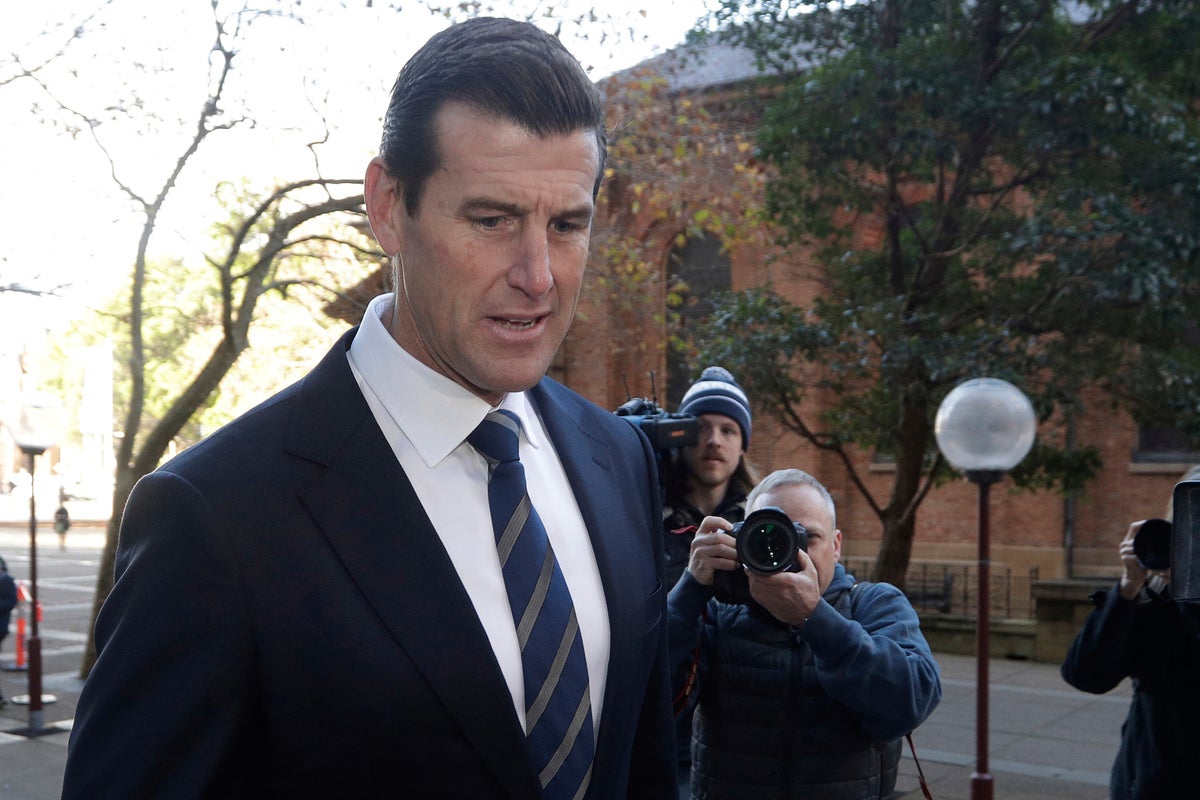
The recent arrest and charging of a former Australian Special Air Service Regiment (SASR) soldier with the war crime of murder marks a grim milestone in Australian legal history. While the headlines focus on a single individual, the real story lies in the institutional inertia and the deliberate "fog of war" that shielded elite operators from accountability for nearly two decades. This isn't just about a single incident in a wheat field in Uruzgan Province; it is about a systemic failure of command and a culture that valued mission success over the laws of armed conflict.
For years, the Australian Defence Force (ADF) operated under a veil of secrecy that was rarely pierced by the media or internal oversight. The delay in justice wasn't an accident. It was the result of a complex interplay between a high-tempo operational cycle, a "warrior culture" that grew increasingly insular, and a legal system that was never designed to prosecute its own heroes in real-time.
The Myth of the Perfect Warrior
The Australian SASR has long been held up as the gold standard of special operations. They were the first choice for politicians looking for "surgical" interventions in Afghanistan. However, this reliance created a dangerous power dynamic. When you send the same small group of men on twenty rotations to the same valleys, they stop being soldiers and start being the law.
The culture within the Regiment became a closed loop. New recruits were socialized into a world where the "operator" was beyond reproach. Loyalty to the brotherhood superseded loyalty to the Geneva Conventions. This isn't a theory; it was the core finding of the Brereton Report, which detailed "credible information" of 39 unlawful killings by Australian special forces. The delay in charges stems directly from this wall of silence. Witnesses were often other soldiers who felt that "snitching" was a greater sin than summary execution.
The military police were frequently sidelined. Investigations were often handled internally by the very units involved, leading to "sanitized" reports that checked the boxes but ignored the blood on the ground. It took the persistence of whistleblowers and a handful of investigative journalists to break the seal.
The Legal Labyrinth of War Crimes
Charging a soldier with murder under the Commonwealth Criminal Code is a logistical and legal nightmare. Unlike a domestic homicide, the crime scene is a foreign war zone, often controlled by hostile forces. Evidence degrades. Memories are clouded by the trauma of combat.
The Australian Federal Police (AFP) and the Office of the Special Investigator (OSI) faced the monumental task of rebuilding cases from events that occurred ten or fifteen years ago. They had to navigate:
- Inadmissible evidence: Much of the information gathered during military inquiries cannot be used in a criminal court due to self-incrimination protections.
- Foreign witness testimony: Locating Afghan villagers who survived the raids and ensuring their safety while they testify against elite foreign soldiers.
- The "Heat of Battle" defense: Defense lawyers will argue that split-second decisions in a chaotic environment shouldn't be judged by civilians in a quiet courtroom.
This legal friction explains why the wheels of justice have turned so slowly. The OSI had to start from scratch, conducting forensic audits of body-worn camera footage—where it existed—and tracking down digital footprints that the ADF had largely ignored.
Accountability and the Chain of Command
The most uncomfortable truth of this crisis is the silence of the higher-ups. While a corporal or sergeant might pull the trigger, the environment that allowed it was built by majors, colonels, and generals. For a decade, the "bad apples" theory was used to protect the "orchard."
The Brereton Report was clear that senior officers bore "moral command responsibility," yet the criminal charges have so far only targeted the lower ranks. This creates a bitter resentment within the veteran community. The perception is that the "brass" gets a pass while the "grunts" get the dock. If the ADF is to truly reform, the investigation cannot stop at the boots on the ground. It must look at the officers who ignored the rumors, the intelligence analysts who looked the other way, and the politicians who demanded results without asking about the cost.
The Role of the Media as a Catalyst
Without the work of journalists who risked jail time under national security laws, these charges would never have been laid. The "Afghan Files" leak was the turning point. It forced the government’s hand. Before that, the ADF’s standard response to allegations was a flat denial or a referral to an internal inquiry that inevitably went nowhere.
We are now seeing the fallout of a decade of suppressed truth. The Australian public, which has historically viewed the ANZAC tradition with near-religious reverence, is being forced to reconcile that myth with the reality of modern counter-insurgency. War is ugly, but the deliberate execution of non-combatants is not "war"—it is a crime.
The current prosecutions are just the beginning. There are dozens of other cases currently under investigation by the OSI. Each one will be a grueling, years-long process that will keep the wounds of the Afghanistan war open for the foreseeable future.
Beyond the Courtroom
The damage to Australia’s international reputation is significant. For a nation that frequently lectures others on the "rules-based order," these allegations are a profound embarrassment. They have been used as propaganda by adversaries to undermine Western moral authority.
Fixing this requires more than just a few convictions. It requires a fundamental shift in how the ADF manages its elite units. The "special" in Special Forces cannot mean "exempt from the law." This means:
- Mandatory rotation: Preventing the "tribalism" that occurs when teams stay together too long.
- External oversight: Robust, non-military observers with the power to investigate incidents in real-time.
- Psychological screening: Moving beyond physical toughness to assess the moral clarity of operators under extreme stress.
The prosecution of an Australian soldier for war crimes is a failure of the system, but the fact that the prosecution is happening at all is a sign that the system might finally be trying to heal itself. The coming trials will not be easy to watch. They will involve gruesome details and will challenge the nation's sense of self. But the alternative—continued silence—is a far greater threat to the integrity of the Australian Defence Force and the country it serves.
Justice delayed is often justice denied, but in the case of Uruzgan, it is the only way to ensure the rot doesn't spread further. The military must accept that transparency is not a threat to national security; it is the foundation of it.
Stop looking for a comfortable ending to this story. There isn't one. The trials will proceed, more secrets will spill, and the myth of the flawless warrior will continue to dissolve under the weight of the evidence.