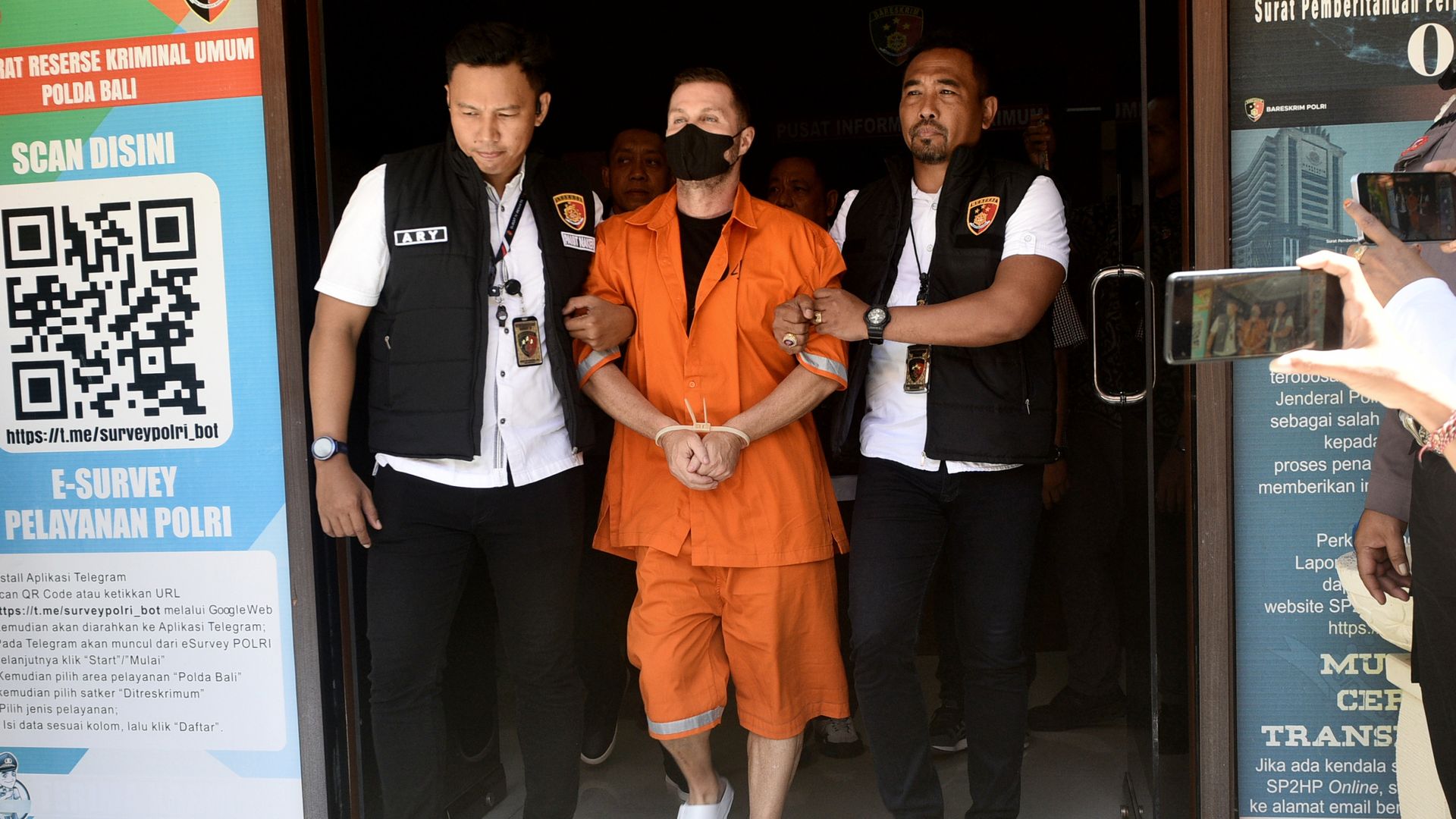
The headlines are predictable. They read like a script from a low-budget police procedural. A "kingpin" is snatched from a luxury villa in Bali, handcuffed in the tropical sun, and paraded before cameras before being bundled onto a plane back to Scotland. The authorities take a victory lap. The public feels a momentary sense of justice. The media treats it as a crushing blow to organized crime.
It is a total fantasy.
If you believe that extraditing a single individual from an Indonesian beach is going to dent the flow of high-purity cocaine or the stability of international money laundering networks, you aren't paying attention. The "crime boss" narrative is a convenient lie that law enforcement and journalists tell to make a chaotic, hydra-headed market look like something they can actually control.
The Kingpin Fallacy
We have been obsessed with the "top-down" model of organized crime since the days of Al Capone. We want to believe there is a CEO, a board of directors, and a clear chain of command. Why? Because a hierarchy can be decapitated. If there is a boss, you can arrest him and the business dies.
In the modern era of encrypted comms and decentralized logistics, the "boss" is often just a high-level logistics coordinator with a flashy Instagram account. The arrest of a Scotsman in Bali isn't the fall of a kingdom; it’s a temporary vacancy in a freelance marketplace.
When a major player is removed, the market doesn't contract. It reacts.
- The Power Vacuum Effect: Removing a dominant force often triggers localized violence as mid-tier players scramble for territory.
- The Darwinian Selection: By arresting the guys who get caught, the state effectively trains the remaining criminals to be smarter, quieter, and more technologically sophisticated.
- Redundancy: Modern cartels operate like Amazon Web Services. If one server goes down, the traffic is rerouted instantly.
I’ve watched these cycles for years. The names change. The tan lines are in different places. The flow of contraband remains identical or increases.
Bali is Not a Hideout, It’s a Boardroom
The media loves the "fugitive on the run" trope. They paint a picture of a man looking over his shoulder, hiding in the shadows of Denpasar. Let’s get real. If you are a high-level operator in international trade—legal or otherwise—you are in Bali because the infrastructure is perfect for remote management.
High-speed internet, a massive transient population to blend into, and a local legal system that, historically, has been more "flexible" than the High Court in Edinburgh. These guys aren't hiding; they are living their best lives while managing spreadsheets.
The extradition process itself is a theater of the absurd. It takes months, sometimes years, of diplomatic horse-trading. By the time the "boss" hits the tarmac at Prestwick or Glasgow, his replacement has already been in the job for six months. The business has already pivoted. The "assets" have been moved through three different shell companies in the Seychelles and laundered into crypto-real estate.
The EncroChat Ghost
Law enforcement is still dining out on the 2020 hack of EncroChat and SkyECC. Yes, it provided a treasure trove of data. Yes, it led to hundreds of arrests. But we are now in 2026. The technical advantage has shifted back to the private sector.
The authorities are playing a permanent game of catch-up. For every "crime boss" they pull out of a villa, ten more are migrating to quantum-resistant encryption or proprietary, closed-loop hardware that doesn't rely on central servers. They aren't using the apps you’ve heard of. They are building their own.
Follow the Money? You’re Too Late
The "lazy consensus" says that if you follow the money, you find the man. In reality, the man is irrelevant. The money is now a series of automated protocols.
We see the police seizing "millions in assets"—usually cars, watches, and a few bank accounts. These are rounding errors. The real capital is parked in decentralized finance (DeFi) protocols where there is no "boss" to arrest and no central office to subpoena.
If you want to disrupt organized crime, you don't look for a guy in a designer shirt in Bali. You look at the professional enablers: the accountants, the lawyers, and the offshore providers who treat cartel wealth like any other family office fund. But catching them isn't as sexy as a televised arrest on a tarmac.
The Brutal Truth of Supply and Demand
The "Scottish crime boss" narrative ignores the most uncomfortable fact in this entire equation: Scotland has a massive, insatiable demand for the products these groups provide.
We spend millions on extradition, thousands of man-hours on surveillance, and billions on the "war" on these networks. Yet, the price of the product on the street rarely fluctuates. If you were running a legitimate business and your entire C-suite was arrested, your stock price would crater and your supply chain would collapse. In the criminal world, the "stock price" stays flat and the "customers" never leave.
Extradition is a bureaucratic success, not a tactical one. It satisfies a primitive need for retribution. It makes for a great "gotcha" moment in the Sunday papers. But as a strategy for public safety? It’s a drop of water in an ocean of high-grade narcotics.
The Cost of the Performance
We need to stop celebrating these arrests as "pivotal moments." They are maintenance. At best, they are a minor tax on the cost of doing business.
The downside of this contrarian view? It’s bleak. It suggests that the current model of policing is fundamentally mismatched against the fluidity of globalized crime. It suggests that we are burning resources on the symptoms while the disease thrives.
If you want to actually hurt these organizations, stop looking for the "boss." Start looking at the logistics of the ports. Start looking at the software engineers who build their platforms. Start looking at the "legitimate" financial systems that wash the cash.
But as long as we are distracted by the spectacle of a man in handcuffs in the tropics, the real players remain invisible. They aren't in Bali. They are in the rooms you don't have access to, laughing at the headlines.
The guy in the Bali villa wasn't the engine. He was just the hood ornament. And you can replace a hood ornament in an afternoon.
Stop clapping for the arrest. Start asking why the market didn't even blink when he left.