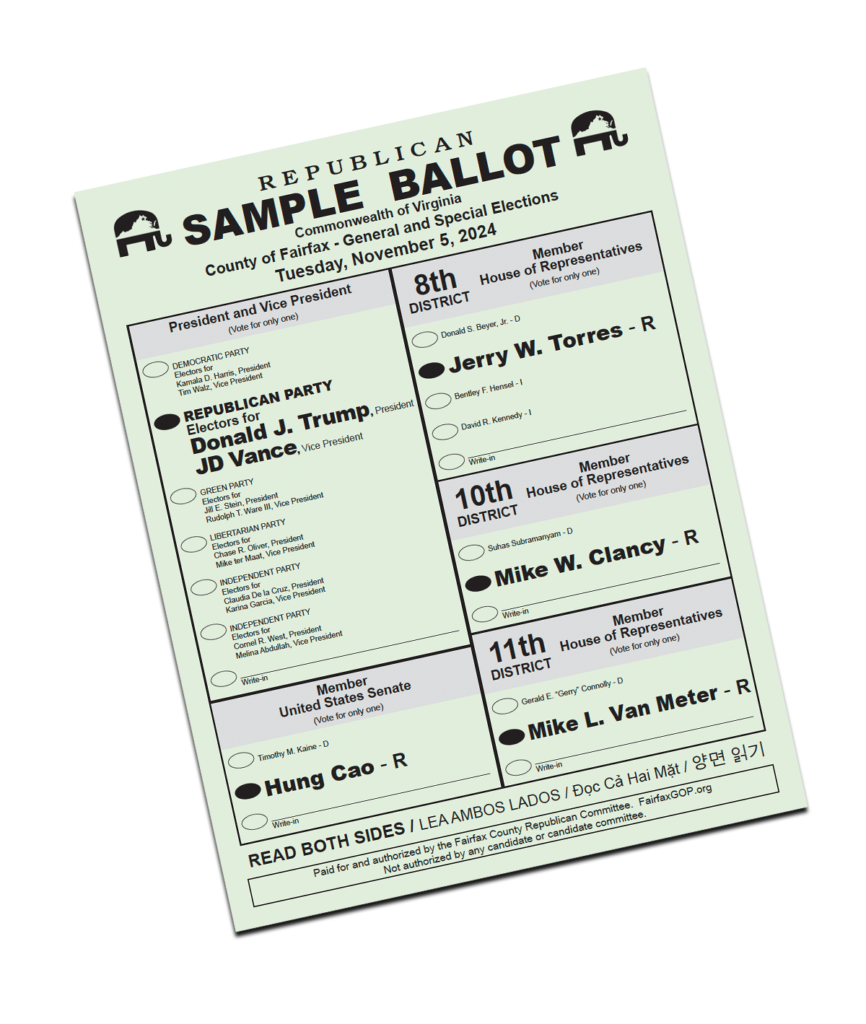
In the early autumn of 1920, inside a small municipal hall in upstate New York, a man named Sakharam Ganesh Pandit picked up a wooden pencil and marked a paper ballot.
He was an Indian citizen. He was also a registered American voter.
To understand how this happened—and why the story of an Indian national casting a vote in a U.S. election is both a historic reality and a modern legal impossibility—you have to strip away the dry bureaucratic jargon of immigration law and look at the raw, volatile human desire to belong.
Today, the rules sound rigid and absolute. The Federal Election Campaign Act and state voter eligibility statutes make one thing unmistakably clear: casting a vote in a U.S. federal election as a non-citizen is a federal crime. It carries the threat of immediate deportation, steep fines, and permanent exile. Yet, every single election cycle, search bars light up with the exact same query: Can an Indian citizen vote in the U.S.?
The short answer is no.
The long answer involves a century-old saga of naturalization battles, racial classifications, supreme court drama, and a handful of men who dared to claim a voice in a country that had not yet decided if they were human enough to own property, let alone elect a president.
The Scholar Who Bended the Rules
To ground this abstract legal tangle in reality, picture Pandit in 1914. He had arrived in America as a scholar of Sanskrit and Eastern philosophy, settled in California, and decided he wanted to build a life on American soil. At the time, U.S. naturalization law was governed by a single, archaic phrase originating from the Naturalization Act of 1790: citizenship was reserved for "free white persons."
Pandit was dark-skinned, cultured, and relentlessly sharp. He knew that ethnologists of his era classified upper-caste North Indians as "Aryan"—a group technically cataloged in 19th-century scientific literature as Caucasian.
He didn't make a grand political speech. He simply filed his petition in court.
He argued logic. If Caucasian equals white, and an Indian scholar is Caucasian, then by the strict letter of the law, he was eligible for naturalization.
A local judge looked at Pandit, listened to his eloquent, impeccably delivered testimony, and agreed. Sakharam Ganesh Pandit took the oath of allegiance. He became a U.S. citizen. And with that certificate of naturalization came the sacred, fundamental right of every American citizen: the right to walk into a polling booth, step behind the curtain, and cast a vote.
He wasn't alone. Between 1910 and 1923, roughly seventy Indian nationals successfully navigated this bizarre legal loophole. They became American citizens, bought farmland in California's Central Valley, built lives, and voted in local and national elections. They were Indian by heritage, culture, and nationality, yet they held the ballot in their hands.
Then the political tides turned.
The Day the Right Was Stolen Back
In 1923, the U.S. Supreme Court handed down a landmark ruling in United States v. Bhagat Singh Thind.
Thind was an Indian independence activist who had served in the U.S. Army during World War I. He argued the exact same Caucasian legal defense that Pandit had used. But this time, the High Court changed the rules of the game.
Justice George Sutherland wrote the majority opinion. He acknowledged that while high-caste Indians might be "Caucasian" in the eyes of scientific classification, the term "white person" in the naturalization statute had to be interpreted according to the understanding of the "common man."
And to the common man, the court decided, an Indian was not white.
Overnight, the legal ground dissolved beneath the feet of dozens of Indian-Americans. The federal government didn't just stop future naturalizations; it moved retroactively to cancel the citizenship of Indians who had already been naturalized.
Imagine waking up on a Tuesday morning to discover that your passport is invalid, your land ownership is illegal under the Alien Land Laws, and your name has been purged from the voter registry. Your voice, registered in the voting booth just months prior, was legally erased.
Sakharam Ganesh Pandit refused to surrender. When the federal government tried to cancel his citizenship, he fought them all the way to the U.S. Court of Appeals using the legal principle of res judicata—arguing that the government could not reopen a final judgment that had been decided years earlier without appeal.
He won. Pandit kept his citizenship. He remained one of the extraordinarily rare Indian nationals from that era who retained the legal right to vote in the United States.
The Modern Illusion
Fast forward to the present day. The historical loopholes have long been closed. The Luce-Celler Act of 1946 restored the right of Indian immigrants to naturalize, and today, hundreds of thousands of Indian-born individuals become naturalized U.S. citizens every decade.
Once naturalized, their right to vote is absolute.
Why, then, does the headline of an Indian national voting in a U.S. election still emerge in modern news cycles and spark intense public debate?
Because modern immigration is a long, grueling waiting room.
Consider a hypothetical engineer named Vikram. He lives in San Jose. He has lived in the United States for eighteen years on an H-1B visa and a green card queue. He pays local property taxes, state income taxes, and federal income taxes. His children were born in California and speak with American accents. He cares deeply about the school board elections, the local infrastructure bonds, and the national economic policy.
Yet, legally, Vikram cannot vote.
He is an Indian national residing in the U.S. If he marks a ballot—even by accident, even if a well-meaning volunteer hands him a voter registration form at the DMV—he commits a felony.
The confusion in modern headlines usually boils down to three specific scenarios:
First, naturalization timing. An individual born in India, holding Indian nationality for most of their life, completes the naturalization process. The moment they swear the oath, they become a U.S. citizen. To a distant observer or an international news outlet, the headline reads: Indian National Votes in U.S. Election. In reality, they voted as a freshly minted American citizen who retains deep cultural and national ties to their birthplace.
Second, municipal voting exemptions. A tiny handful of jurisdictions in states like Maryland have historically allowed non-citizen residents to vote strictly in local municipal elections—such as town councils or school boards. However, this never applies to federal elections, and state laws across the country have increasingly banned the practice altogether.
Third, administrative error or illegal casting. Federal audit reports consistently show that non-citizen voting in U.S. federal elections is exceedingly rare—fractional percentages of a fraction of a percent. The consequences are simply too catastrophic for visa holders and green card owners to risk their entire lives for a single vote.
The Weight of the Pencil
When Sakharam Ganesh Pandit stood in that upstate New York voting booth in the 1920s, he wasn't just choosing a governor or a president. He was asserting his existence. He was proving that a human being cannot be taxed, regulated, governed, and evaluated without having a say in the system that claims power over him.
The journey from Indian national to U.S. voter has never been a simple administrative procedure. It is a century-old narrative sculpted by courtroom battles, shifting racial definitions, legislative overhauls, and personal resilience.
Every time a naturalized citizen of Indian origin steps up to a voting booth today, they inherit the ghost of that fight. They carry the weight of a right that was argued, granted, stolen back, and eventually reclaimed.
The wooden pencil in the hand of a voter may feel light, but the history beneath it is immeasurably heavy.


