The bass does not just hit the eardrums. It rattles the ribcage. It starts somewhere deep in the asphalt of Kingston, vibrates through the floorboards of a Brooklyn brownstone, and settles into the marrow of a generation that left home but never quite let home leave them.
Walk down Flatbush Avenue in New York during the humid peak of June. The air smells of exhaust, roasting corn, and coco bread. If you listen closely, past the sirens and the shouting, there is a rhythmic, hypnotic thumping. It is Dancehall. It is the raw, unfiltered heartbeat of Jamaica, exported to the world. For decades, this music has been the soundtrack of survival for millions of immigrants. Yet, for a long time, the gatekeepers of mainstream culture treated it like a disruptive neighbor—something to be turned down, contained, or ignored entirely.
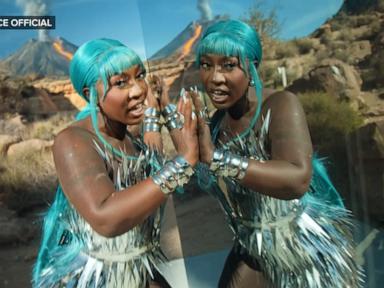
Then came Grace Hamilton. The world knows her as Spice.
For over twenty years, she has stood at the epicenter of this sonic empire, commanding stages with a fierce, unapologetic energy that defied anyone to look away. But her story is not just about hit records or flashing stage lights. It is about the heavy, often invisible burden of cultural preservation. As Caribbean American Heritage Month rolls around each year, the speeches from politicians grow loud, and the festivals fill the parks. Behind the colorful parades, however, lies a deeper, more complex reality about what it means to carry an entire culture on your back while navigating a world that wants the rhythm but fears the roots.
The Concrete Roots of a Sonic Revolution
To understand the weight Spice carries, you have to understand the soil she grew from. Dancehall was never meant to be polite. It was born in the marginalized communities of Jamaica, a fiercely competitive, socio-political commentary wrapped in heavy baselines and rapid-fire patois. It was the voice of the streets.
When Caribbean immigrants began moving to the United States in massive numbers during the late twentieth century, they brought this music with them like a protective amulet. It was a piece of home they could carry in a suitcase. But America in the eighties and nineties was not always welcoming. Immigrants faced a dual identity crisis: they were trying to assimilate into the American economy while fighting desperately to keep their children from losing their heritage.
Consider a hypothetical teenager in 1995, let us call him Marcus, growing up in the Bronx. At school, Marcus speaks perfect, standardized English to fit in and avoid the mockery of his peers. But the moment he steps across his family’s threshold, the air changes. The smell of curry goat fills the kitchen, and his father is blasting early Dancehall tapes. For Marcus, that music is a bridge. It is the only thing connecting his reality in New York to the stories of a tropical island he has only seen in photographs.
Spice became the queen of that bridge. As a woman in a notoriously male-dominated genre, she did not just enter the room; she broke the door off its hinges. She spoke directly to the struggles, the sexuality, and the resilience of Caribbean women. She gave voice to a demographic that had been doubly marginalized—first as immigrants, and second as women within their own patriarchal culture.
The Unseen Price of the Crown
Heavy is the head that wears the blue wig. Spice’s signature look—vibrant, colorful, larger-than-life—is more than a fashion statement. It is armor.
When an artist becomes the living embodiment of a culture, their personal life ceases to be their own. Every song, every interview, and every public appearance is scrutinized. If she is too raw, mainstream American media labels her as uncouth or unmarketable. If she tones it down, her core audience accuses her of selling out, of abandoning the raw authenticity that made her an icon in the first place.
This tension highlights the broader struggle of the Caribbean American experience. It is the exhausting tightrope walk of double consciousness. Immigrants are constantly asked to compartmentalize themselves. Be professional at work, but be colorful and entertaining at the carnival. Contribute to the economy, but do not make too much noise.
The reality of cultural legacy is that it requires constant maintenance. It does not just survive on its own. It survives because people like Spice endure the grueling tour schedules, the harsh critiques, and the systemic barriers of an music industry that often prefers to relegate Caribbean music to a sub-genre, a novelty category to be trotted out once a year during a designated heritage month.
More Than a Calendar Page
There is a distinct danger in heritage months. They risk turning rich, complex histories into a checklist of achievements and food festivals. June arrives, the flags wave, the politicians make their proclamations, and then July hits, and the curtain falls.
But culture is a living, breathing organism. It does not pause for eleven months out of the year.
The influence of Caribbean culture on modern American music is staggering, yet frequently uncredited. From the syncopated rhythms of Reggaeton to the foundational structures of Hip-Hop itself—which owes its very existence to the Jamaican sound system culture brought to New York by DJ Kool Herc—the DNA of the Caribbean is embedded in the global cultural landscape.
When Spice speaks about legacy, she is not talking about trophies or plaques. She is talking about respect. She is talking about ensuring that the next generation of artists from the islands do not have to fight the same exhausting battles for recognition that she did.
The true value of celebrating this heritage lies in recognizing the ongoing struggle for equity. It is about understanding that the vibrant music enjoyed at a summer festival is born from a history of resistance, colonial trauma, and an unbreakable will to survive.
The Rhythm Moving Forward
The sun begins to set over Brooklyn, painting the sky in bruises of purple and orange. The traffic on Flatbush Avenue slows to a crawl, but the music does not stop. A new track shifts into rotation, the bassline dropping so low it feels like a physical presence in the street.
A young girl, no older than seven, stands on the sidewalk holding her mother’s hand. She hears the music, her feet instantly catching the syncopated beat, her body moving with an innate, instinctual familiarity. She does not know the history of the sound system yet. She does not know the sacrifices made by the women who came before her to ensure this music could be played loudly, proudly, and without apology in the middle of an American city.
But she feels it.
That is the legacy. It is not captured in a standard interview, a political speech, or a corporate press release. It is passed down through the vibration of the pavement, an unbroken current of identity traveling from one heartbeat to the next, refusing to be quieted.