The air in Discovery Bay doesn't taste like the rest of Hong Kong. It lacks the sharp, metallic tang of brake dust and the heavy, humid exhaust that clings to the back of your throat in Central or Tsim Sha Tsui. Here, the silence is a physical presence. It is a curated, expensive quiet, broken only by the rhythmic hum of electric golf carts and the occasional screech of a kite circling the hills of Lantau Island. For forty years, this car-free sanctuary has been the ultimate middle-class rebellion against the frantic pace of the city.
But silence is increasingly expensive to maintain.
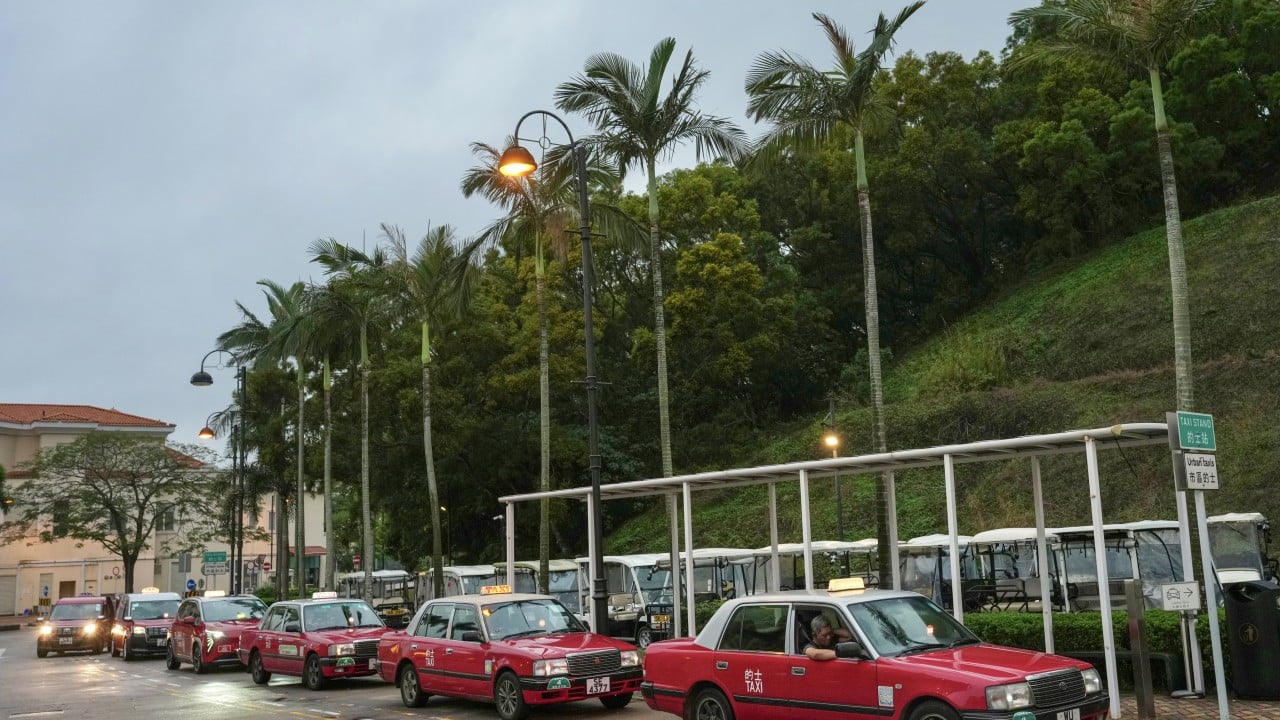
Hong Kong Resort Company Limited (HKRI), the developer that breathed life into this corner of Lantau, has officially pushed the button on a plan that would fundamentally rewrite the social contract of the community. They have submitted a proposal to the Town Planning Board to allow city taxis full, unrestricted access to the neighborhood’s private roads. To an outsider, it sounds like a minor administrative tweak. To a resident, it feels like the opening of a floodgate.
Consider a hypothetical resident named Elena. She moved here five years ago, trading a cramped apartment in Mid-Levels for a place where her seven-year-old could ride a bike without looking over his shoulder every ten seconds. For Elena, the golf cart—clunky, slow, and absurdly overpriced—is a symbol of safety. She accepts the inconvenience of the ferry schedules and the internal shuttle buses because the trade-off is a neighborhood that feels like an island, even though it is tethered to the mainland by a tunnel.
When Elena hears "full taxi access," she doesn't hear "convenience." She hears the roar of combustion engines on North Lantau Highway spilling into her driveway. She hears the end of the quiet.
The Concrete Reality of a Private Enclave
The developer’s argument is rooted in the cold logic of modern urban planning. They point to an aging population that needs door-to-door medical transport. They highlight the growing demand for flexibility in a city that moves at the speed of light. Currently, taxis are relegated to a small, peripheral area near the North Plaza. If you live in the leafy, winding roads of the older phases, a taxi is a distant luxury. You take the bus or you walk.
HKRI frames the proposal as an "enhancement of transport services." They argue that by allowing taxis to roam the inner arteries of the resort, they are simply bringing Discovery Bay into the 21st century. It is a pitch focused on utility. It addresses the friction of daily life—the heavy groceries, the pouring rain, the late-night return from the airport.
But the friction is exactly what the residents bought into.
The proposal includes more than just a few red-and-blue cars. It suggests a wholesale reimagining of how people move through the 650-hectare estate. It’s not just about the taxis; it’s about the infrastructure required to support them. Every road widened, every curb adjusted, and every new parking bay carved out of the greenery represents a chip taken away from the original vision of a pedestrian-led paradise.
The Invisible Stakes of the Golf Cart Economy
To understand the ferocity of the backlash, you have to look at the money. In Discovery Bay, a golf cart is not just a vehicle; it is a high-stakes asset. Because the number of permits is strictly capped, the price of a second-hand golf cart can soar toward 2 million Hong Kong dollars. That is more than the price of a luxury Italian sports car in many parts of the world, all for a plastic box that tops out at 20 kilometers per hour.
If taxis become the primary mode of transport, the utility of the golf cart plummets. If the utility plummets, the value of the permit—a significant portion of some residents' net worth—could evaporate.
There is a deep, unspoken anxiety beneath the environmental and safety concerns. It is the fear of a devalued lifestyle and a devalued investment. Residents who spent decades paying into the exclusivity of the "DB bubble" now face the prospect of their private roads becoming public thoroughfares. They see a developer who, having sold every possible apartment, is now looking to squeeze more value out of the infrastructure, perhaps at the expense of the people who already live there.
The developer, however, remains steadfast. They suggest that the current system is straining under the weight of a growing population. The shuttle buses are crowded. The golf carts are an environmental mixed bag when you consider the lead-acid batteries and the space they occupy. From a purely logistical standpoint, taxis are an efficient, on-demand solution that requires zero capital investment from the developer itself.
The Human Cost of Efficiency
The debate often ignores the psychological weight of the "gate." Discovery Bay is one of the few places in a hyper-dense metropolis where the boundary between "the world" and "home" is clearly defined by the entrance of a tunnel.
Imagine another resident, someone like Mr. Chan, who has lived in the Terrace houses since the 1990s. He remembers when the tunnel didn't exist and the only way in was by sea. For him, every step toward integration with the rest of Hong Kong is a step toward losing the identity of the place. He worries about the "urban heat island" effect—not just the literal temperature rise from more engines, but the metaphorical heat of a faster, louder, more aggressive society.
Taxis in Hong Kong are known for their efficiency, but not necessarily for their gentleness. The vision of a red taxi weaving through the narrow, hilly roads of Headland Drive, competing for space with children on scooters and elderly residents on their morning walks, is enough to keep people like Mr. Chan awake at night.
The backlash has been swift and organized. Petitions are circulating. Town hall meetings are packed with voices that are usually quite polite but are now strained with frustration. They point to the "24-hour" nature of taxi access. It’s not just a daytime convenience; it’s a nighttime intrusion. The headlights cutting through the dark, the slamming of doors at 3:00 AM—these are the small, domestic tragedies that the developer’s proposal lists as "improved connectivity."
A Fragile Equilibrium
What happens when a private dream meets public necessity?
Discovery Bay is currently a case study in the tension between preservation and progress. The developer is looking at the long game. They see a future where Discovery Bay is more integrated with the Greater Bay Area, where it serves as a premium hub for commuters who want the beach and the boardrooms. To them, the "resort" is a product that must be updated to stay competitive.
The residents see a home.
The Town Planning Board now sits as the arbiter of this tension. They must weigh the technical merits of the proposal against the lived experience of thousands. They have to decide if the "public interest" includes the right to a specific kind of quiet that was promised decades ago.
There is a certain irony in the timing. As the rest of the world tries to move toward "15-minute cities" and pedestrianized zones to combat climate change and mental health crises, one of the world's most successful examples of that model is fighting to let the cars back in.
The developer has made their move. The papers are filed. The maps are drawn. Now, the community waits to see if their sanctuary will remain an island of calm or if the roar of the city is finally, inevitably, coming for them.
If you stand at the pier tonight, you can still hear the waves against the pylons and the distant, muffled sound of a golf cart climbing the hill toward the reservoir. It is a delicate symphony, one held together by rules and permits and a shared belief in a slower way of life. But in the distance, through the tunnel, the lights of the city are flickering, and the engines are idling, waiting for the green light to enter.
The silence is holding its breath.