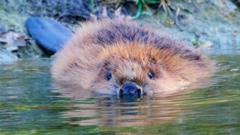
Beavers are back. After four centuries of absence, these buck-toothed architects are finally chewing through the red tape and returning to our local river systems. It isn’t just a feel-good story for nature lovers or a quirky headline about big rodents. It's a massive shift in how we manage land, water, and the looming threat of flash floods. For 400 years, we’ve tried to control nature with concrete and pipes. Now, we're letting a mammal with orange teeth do the heavy lifting for us.
The return of beavers to the county marks a radical departure from traditional conservation. We aren't just protecting a species; we're hiring a biological workforce. If you think this is just about "saving the cute animals," you're missing the point. These creatures are hydrological engineers. They build dams that slow down water, trap silt, and create complex wetlands that act as massive sponges during heavy rain. In an era where "once-in-a-century" floods seem to happen every three years, the beaver's return is the most practical infrastructure project we've seen in decades.
The 400 Year Gap and Why It Matters
Humans hunted beavers to extinction across much of the UK and Europe by the 16th century. We wanted their fur for hats and their castoreum for medicine and perfume. We wiped them out so effectively that we forgot what a healthy river actually looks like. Most of us grew up looking at straightened, dredged, and narrow streams, thinking that was "nature." It wasn't. It was a drainage ditch.
Without beavers, our rivers became chutes. Rain hits the hills, enters the stream, and rushes downstream at top speed, blowing out banks and flooding towns. By reintroducing them, we’re reintroducing "leakiness" to the landscape. A beaver dam isn't a solid wall like a Hoover Dam. It’s a permeable filter. It holds back the peak flow of a storm, releasing it slowly over days instead of minutes. This keeps the stream flowing during droughts and prevents the catastrophic surges that wreck homes.
Nature's Best Water Filters
The science is pretty clear on this. Research from groups like the Devon Wildlife Trust and the University of Exeter has shown that beaver activity significantly improves water quality. When water hits a beaver pond, it slows down. This causes suspended sediment—all that brown muck and agricultural runoff—to sink to the bottom.
Nitrates and phosphates from farm fertilizers are a huge problem for our rivers. They cause algae blooms that kill fish. Beaver ponds act as giant settling tanks where bacteria break down these chemicals. You basically get a free sewage treatment plant every few hundred yards. I've seen the data from the River Otter trial. The water leaving a beaver site is consistently cleaner than the water entering it. That’s not a theory. It’s a measurable fact.
More Than Just Dams
Don't make the mistake of thinking beavers only build dams. They dig canals too. These small channels radiate out from their main ponds, allowing them to travel safely and transport wood. These canals create a massive variety of "micro-habitats."
- Insects thrive in the still, shallow water.
- Amphibians find perfect breeding grounds away from fast currents.
- Birds like herons and kingfishers follow the explosion of life.
- Fish—contrary to some myths—actually benefit. Young salmon and trout find refuge in the slow pools, growing larger and stronger before heading to sea.
Addressing the Common Misconceptions
Whenever beavers come back, people get nervous. Farmers worry about flooded fields. Anglers worry about fish migration. These concerns are valid, but they're often based on a lack of understanding of how modern reintroductions work.
First, beavers don't eat fish. They're strict herbivores. They want willow, aspen, and aquatic plants. Second, they don't block fish passage. Most beaver dams are overtopped during high flows when fish are moving, or they have enough gaps for fish to wiggle through. In North America, salmon and beavers have co-existed for millions of years. It’s a proven partnership.
As for flooding, it’s all about management. We now have "beaver toolkits" used by organizations like The Beaver Trust. If a dam is in a truly bad spot—like flooding a road or a high-value crop—technicians can install a "flow device." This is basically a hidden pipe through the dam that keeps the water at a set level. The beaver keeps building, but the water doesn't rise any further. It’s a simple, low-tech fix that lets us live alongside them without losing property.
Why This Is the Best SEO Move for Conservation
From a strategic standpoint, the beaver is the perfect "flagship species." They're charismatic and their impact is visible. You can see the change in the landscape within months. This isn't like protecting a rare lichen that no one can find. This is a transformation you can watch in real-time.
For the county, this reintroduction is a massive win for biodiversity targets. It’s also a huge draw for eco-tourism. People want to see these animals. They want to walk through "wilder" spaces. By leaning into this story, local authorities are proving they can handle complex environmental challenges with creative solutions rather than just throwing more gravel and plastic at the problem.
What Happens Next for the County
The initial release is just the start. We need to monitor the spread and ensure that landowners have the support they need. This isn't a "set it and forget it" situation. It requires active communication between conservationists, farmers, and the public.
If you live near the release sites, keep your eyes open at dawn and dusk. Look for "gnawed" sticks that look like they’ve been through a giant pencil sharpener. Look for the muddy slides where they enter the water. You’re witnessing a 400-year-old cycle restarting.
It’s time to stop thinking of our rivers as plumbing and start seeing them as living systems. The beavers are doing their part. We just need to stay out of the way and let them work. If you want to get involved, check out your local Wildlife Trust or join a citizen science project monitoring water quality. The data we collect now will prove that these animals belong here for the next 400 years too.
Support the local monitoring programs. Document what you see. Share the reality of how these animals change the land. We’ve spent centuries breaking the world; it’s about time we let a professional help us fix it.