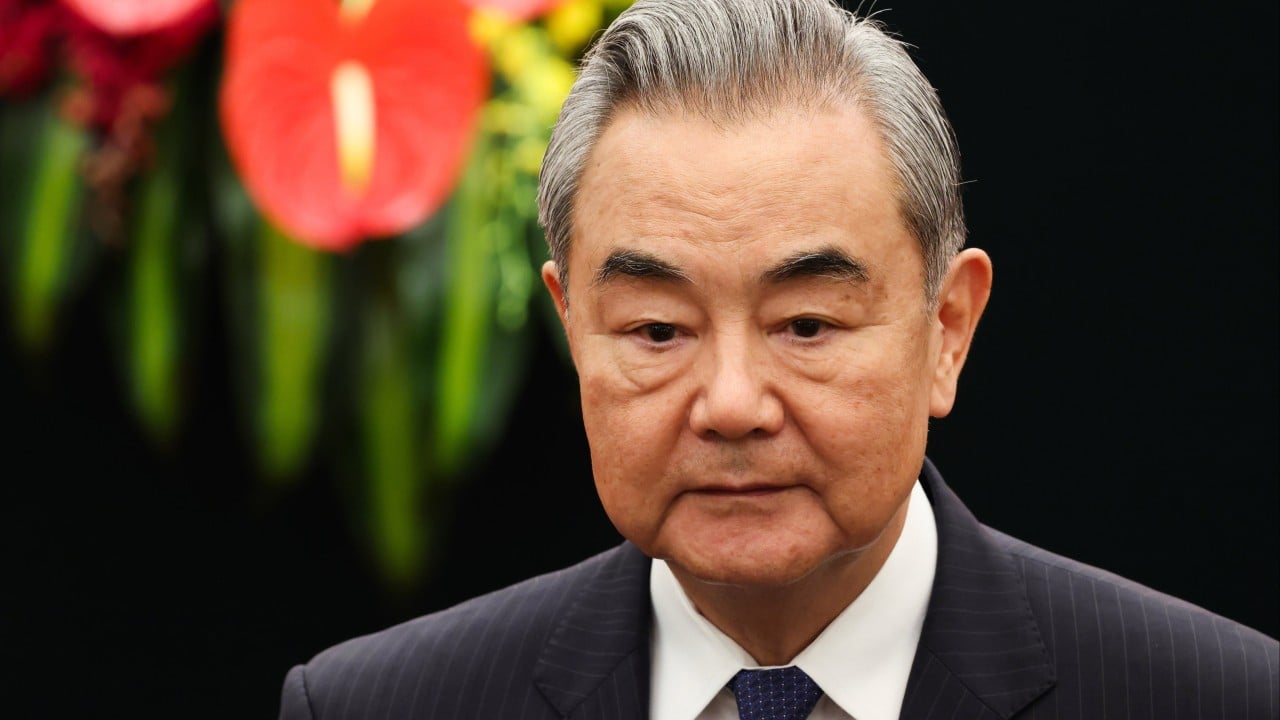
Diplomatic itineraries rarely happen by accident. When a senior foreign minister packs their bags for a multi-nation tour spanning strategic checkpoints from the Caspian basin to the Adriatic Sea, observers tend to look past the routine handshakes and search for the underlying leverage. China’s top diplomat embarking on a targeted diplomatic swing through Azerbaijan, Croatia, Montenegro, and Bulgaria represents far more than a standard diplomatic courtesy tour. This coordinated outreach exposes a deliberate, long-term strategy to cultivate alternative footholds inside Europe’s geopolitical perimeter, testing the durability of Western alliances at their most vulnerable seams.
To understand why Beijing is investing high-level political capital into these specific capitals right now, one must look past traditional trade statistics and examine the mechanics of diplomatic influence. Azerbaijan anchors the energy security architecture of the Southern Gas Corridor, offering a vital transit conduit bypassing Russian territory. Meanwhile, Croatia and Montenegro control key maritime ports and infrastructure nodes along the Mediterranean and Adriatic corridors, while Bulgaria occupies a critical frontier position within the European Union and the Black Sea basin. By engaging these four distinct jurisdictions in a single diplomatic sweep, Beijing is systematically cultivating bilateral channels that bypass Brussels and Washington, creating localized diplomatic ballast against an increasingly unified Western containment strategy. If you liked this piece, you should look at: this related article.
The Energy and Transit Equation in the Caucasus
Baku has never played a minor role in Eurasian geopolitics. Sitting at the crossroads of Eastern Europe and Western Asia, Azerbaijan controls immense hydrocarbon reserves and sits squarely on the middle corridor of the Trans-Caspian International Transport Route. This route has transformed from a secondary logistics backup into a primary artery for moving goods between Asia and Europe without relying on Russian rail networks.
When Beijing dispatches high-level envoys to Baku, the conversation inevitably centers on infrastructure integration and supply chain security. European nations spent the past several years scrambling to diversify their energy supplies away from Moscow, inadvertently creating an opening for alternative suppliers and investors to secure long-term influence. Azerbaijani leadership understands this dynamic intimately, leveraging its strategic geography to extract maximum diplomatic latitude from both Eastern and Western suitors. For another angle on this development, see the recent update from Al Jazeera.
Beijing recognizes that controlling logistics translates directly into geopolitical leverage. By aligning infrastructure investments with local ambitions—such as modernizing port facilities and expanding rail links—Chinese state-backed entities embed themselves into the economic fabric of transit states. This approach avoids the overt political conditionality often attached to Western financial assistance, making it an attractive proposition for governments eager to modernize without altering their domestic governance models.
Navigating the European Periphery
Moving westward from the Caucasus into the Balkans reveals a different set of strategic calculations. Croatia and Montenegro occupy critical geographic positions on the shores of the Adriatic, serving as maritime gateways to Central and Southeastern Europe. While Croatia remains firmly anchored within the European Union and NATO, Montenegro navigates a complex path of EU accession complicated by internal political turbulence and significant foreign debt exposure.
For years, Western policy circles warned about the dangers of debt-trap diplomacy, pointing to high-profile infrastructure projects across the Western Balkans. Yet local leaders often view foreign capital not as a trap, but as a rare lifeline to finance projects that domestic budgets or European bureaucracy could never support. When a bridge, highway, or port expansion materializes through foreign financing, the immediate economic benefit often outweighs abstract concerns about long-term strategic alignment.
Croatia’s calculus differs due to its strict adherence to EU regulatory standards, yet Zagreb maintains pragmatic economic ties with global trading partners. Beijing’s diplomatic outreach to Zagreb acknowledges this reality, focusing on commercial partnerships, maritime logistics, and green transition technologies. By maintaining high-level dialogue with EU member states that border the bloc's troubled southeastern flank, Beijing demonstrates that its diplomatic footprint is not limited to developing economies, but extends directly into the heart of Europe's geopolitical frontier.
The BlackBeijing Quietly Redraws the Map Across the Balkans and Caucasus
news, business
When a top Chinese diplomat packs a suitcase for a multi-nation tour through Azerbaijan, Croatia, Montenegro, and Bulgaria, standard geopolitical coverage usually defaults to polite handshakes and vague declarations about mutual respect. That is a mistake. This specific itinerary reads less like a diplomatic courtesy tour and more like an executive audit of asymmetric supply chains, debt architecture, and strategic ports on the soft underbelly of Europe.
Look closer at the map. You are watching a systematic attempt to bypass the traditional power centers of Brussels and Berlin by cementing economic anchors in secondary European states. These four nations do not share a uniform foreign policy, nor do they share a common economic trajectory. Azerbaijan sits on the Caspian Sea as an energy titan balancing between Moscow, Ankara, and the West. Croatia and Montenegro command the Adriatic coastline, serving as critical maritime entry points. Bulgaria anchors the eastern flank of the European Union, positioned awkwardly between historical loyalties and modern trans-European infrastructure corridors.
Beijing is not visiting these capitals to talk about cultural exchange. The objective is structural integration.
The Energy and Transit Calculation in the Caspian
The first stop on the circuit reveals the primary economic vector. Azerbaijan is not just another oil and gas exporter. It is the literal bottleneck for the Middle Corridor, the overland and maritime transit route connecting China to Europe through Central Asia and the Caspian Sea, completely bypassing Russian territory.
Since the invasion of Ukraine turned traditional northern logistics routes through Russia into a geopolitical hazard zone, supply chain strategists in Beijing have scrambled for redundancies. The Middle Corridor solves that problem on paper, but in practice, it is plagued by infrastructural friction points, fragmented customs protocols, and variable port capacities on the Caspian.
By engaging Baku at the highest diplomatic levels, Beijing wants to accelerate modernization at the Port of Baku and secure priority shipping slots for Chinese cargo trains. This is about risk mitigation. If a container cannot move safely through Belarus and Poland, it must move through Kazakhstan, across the Caspian into Azerbaijan, and onward through Georgia and the Black Sea.
Energy security runs parallel to logistics. Europe is desperate for non-Russian gas supplies, and Azerbaijan has stepped into that vacuum with its Southern Gas Corridor. While Beijing is primarily a consumer rather than a buyer of Azerian gas for domestic use, Chinese state-backed engineering firms are deeply invested in the regional energy infrastructure. Controlling the pipes, the ports, and the digital logistics backbones means controlling the price of admission for goods moving between continents.
The Adriatic Gateway and the Debt Trap Reality
Moving from the Caspian to the Adriatic brings the diplomatic mission into the heart of Europe’s maritime logistics. Croatia and Montenegro occupy positions that keep shipping magnates awake at night.
Montenegro serves as a cautionary tale of what happens when infrastructure financing goes sideways. The infamous Bar-Boljare highway project, financed by the Export-Import Bank of China and built by state-owned contractors, nearly bankrupted the small Balkan nation a few years ago. The debt-to-GDP ratio spiked, forcing Podgorica to seek costly financial restructuring from Western institutions to avoid losing strategic sovereign assets.
Yet, despite the financial scars, the geopolitical gravity remains intact. Montenegro cannot simply wish away its geographic position on the Adriatic. Chinese commercial and logistical footprints persist, whether through port operations, renewable energy investments, or telecommunications infrastructure.
Croatia presents a different challenge entirely. As a member of both the European Union and the Schengen Area, Zagreb operates under strict Brussels regulatory oversight. Major infrastructure wins like the Pelješac Bridge, constructed by a Chinese state-owned consortium, proved that Chinese engineering firms can successfully execute large-scale public tenders inside the EU single market under strict European scrutiny.
That project shattered the illusion that Brussels could effectively wall off critical infrastructure from Chinese bids. When the lowest bidder wins a tender, and that bidder happens to be backed by sovereign Chinese capital and subsidized steel, European regulatory frameworks struggle to say no without stalling their own development timelines. The diplomat's stop in Zagreb is designed to protect those existing commercial footholds and explore new avenues for green energy and digital grid contracts, testing the limits of EU economic security directives.
Bulgaria and the Borderland Dilemma
The final leg of the tour, Bulgaria, represents a classic frontline state caught between competing spheres of influence. Sofia is part of the European Union and NATO, but its historical, cultural, and economic ties to the East run deep. Energy dependencies, particularly regarding nuclear power and legacy infrastructure, have historically given external actors significant leverage over domestic politics.
Beijing views Bulgaria as a vital node in the Belt and Road Initiative network extending up from the Aegean and Black Sea ports toward Central Europe. However, Sofia has grown increasingly cautious under pressure from Washington and Brussels to vet foreign investments in critical sectors tightly.
The diplomatic outreach here is not about signing massive new megaprojects today. It is about diplomatic maintenance. Beijing wants to ensure that Bulgarian policymakers maintain a neutral posture on trade restrictions, technological decoupling, and maritime security in the Black Sea. By keeping channels open, offering targeted investments in green technology, and leveraging commercial trade partnerships, China aims to prevent Sofia from becoming a leading voice for hardline economic containment within the European council chambers.
The Structural Realities Behind the Handshakes
To understand why this diplomatic tour matters, strip away the official press releases about friendship and cooperation. Look at the balance sheet of global logistics.
Traditional trade arteries are fracturing under the weight of geopolitical rivalry, tariff barriers, and sanctions. The old model of globalization—where capital and goods flowed seamlessly across borders regardless of political alignment—is dead. In its place, we have emerged into an era of fragmented corridors, where supply chains are secured by bilateral political compacts and physical control over chokepoints.
The nations on this diplomatic itinerary are middle powers or small states caught in the gravitational pull of larger empires. They need capital, infrastructure upgrades, and foreign investment to modernize their economies. Western institutions often attach stringent governance reforms, anti-corruption benchmarks, and lengthy bureaucratic delays to their funding packages. Chinese state capital arrives with fewer political lectures and faster execution timelines, even if the long-term structural costs can be severe.
This dynamic explains why these capitals continue to roll out the red carpet for visiting diplomats from Beijing, even as their foreign ministries issue statements of alignment with Brussels or Washington. They are hedging their bets in real time.
The diplomat's journey through Azerbaijan, Croatia, Montenegro, and Bulgaria is a masterclass in economic statecraft. It demonstrates that influence is not won solely through military alliances or ideological alignment. It is built one port, one highway, and one energy pipeline at a time, quietly rewriting the map of Europe while the capital cities of the West look the other way.


