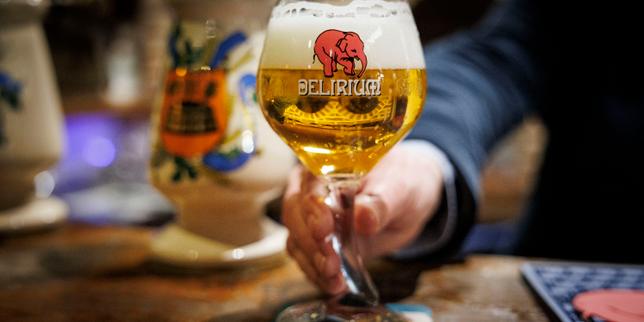
The Belgian brewing establishment is losing its collective mind over a new public health slogan. You have seen the headlines. The trade associations are crying foul, claiming that heavy-handed messaging will crush centuries of artisanal heritage, penalize moderate enjoyment, and treat a world-class cultural institution like an industrial chemical hazard. They are marching out trade ministers, rolling out economic impact charts, and arguing that adults deserve nuance rather than prohibitionist dog whistles.
They are missing the target entirely.
I have spent decades watching legacy industries panic over public relations shifts, and this defensive posture is not just weak; it is strategically bankrupt. Brewers are treating a structural behavioral evolution like a bad marketing campaign that just needs a better PR counter-offensive. They are fighting for the right to keep labels vague while the entire consumer landscape shifts beneath their feet.
Stop trying to protect the old vocabulary. The real threat is not a government health warning. The threat is that nobody cares about your heritage if your product does not fit the modern human operating system.
The Lazy Consensus of the Trade Lobby
The standard defense from the brewing sector runs on a predictable loop. The argument goes like this: beer is food, beer is culture, beer is an economic engine, and lumping a centuries-old Trappist triple in with industrial vodka insults the consumer. Therefore, warning slogans must be gentle, educational, and respectful of personal choice.
This is comfortable nonsense. It assumes that consumers make purchasing decisions based on rational risk assessments printed on the back of a bottle. They do not.
When a regulatory body updates a health warning, corporate lobbyists immediately calculate the cost in lost volume. They assume every percentage point drop in per capita consumption equals a permanent wound to the bottom line. That is a 20th-century mindset. Modern beverage economics are migrating away from volume and toward margin, functionality, and occasions.
Imagine a scenario where every beer bottle in Belgium featured a skull and crossbones. Sales of mass-market lagers might take a temporary hit, but the structural trend toward premiumization, low-alcohol craft options, and experiential drinking would accelerate. The real battle is not about what the warning says. It is about whether the liquid inside the glass justifies its existence in a culture that is drinking less, but demanding vastly more.
Why Slogans Do Not Matter
Let us look at the data that the industry conveniently ignores. Public health campaigns relying on text warnings fail to change the habits of heavy drinkers, and they bounce harmlessly off the consciousness of moderate consumers. A warning label is administrative white noise.
The Belgian brewers are staging a crusade against a paper tiger because fighting a government agency feels productive. It allows trade groups to send out press releases, hold closed-door meetings, and pretend they are defending the ramparts. Meanwhile, the actual market is voting with its feet.
Consumers are trading down on quantity and trading up on quality. They are calculating units of alcohol against sleep quality, workout recovery metrics, and morning cognitive performance. A health slogan does not change that math. Apple Watches and continuous glucose monitors do.
If you want to understand why alcohol consumption patterns are shifting across Europe, look at consumer behavior data regarding wellness and functional beverages. People are abandoning mediocre routine drinking not because a poster told them to, but because they have optimized their routines to exclude anything that makes them feel sluggish on a Tuesday morning.
The Counter-Intuitive Playbook for Modern Brewers
If I were advising a major brewing conglomerate or an independent guild tomorrow, I would tell them to stop wasting capital on political lobbying against warning labels. Instead, lean directly into the friction.
Here is the exact playbook to survive and dominate this regulatory environment:
- Embrace radical transparency: Do not hide ingredients or calorie counts. Put them front and center. When you obfuscate, you look defensive. When you over-disclose, you look like a market leader.
- Cannibalize your own portfolio: If you are not aggressively scaling zero-alcohol and ultra-low-alcohol variants that taste indistinguishable from the real thing, your business model has an expiration date. The fastest-growing segment in European brewing is not craft IPA; it is non-alcoholic complexity.
- Redefine the drinking occasion: Move away from volume-based marketing. Position beer as a culinary pairing or a wind-down ritual, not a party lubricant.
- Target the optimization crowd: Meet consumers where they are. Pitch lower-calorie, lower-ABV options to people who care about fitness, not by pretending your drink is a health food, but by respecting their intelligence.
The traditionalists want a return to the days when beer was just part of the background furniture of daily life. Those days are gone. Culture does not roll backward.
The Brutal Reality of Margin Over Volume
The legacy players are terrified of a shrinking market because their entire industrial apparatus is built on high-throughput, low-margin scale. If total volume drops by ten percent, their factories hurt.
That is a structural failure of their balance sheets, not a failure of public relations.
Smart operators are already decoupling revenue growth from volume growth. They are selling smaller volumes at higher prices to consumers who view alcohol as an occasional indulgence rather than a dietary staple. When your product is an occasional luxury, a government warning label matters about as much as a Surgeon General warning on a high-end cigar. Nobody buys a $15 artisanal sour ale because they forgot alcohol was intoxicating. They buy it for the profile, the craftsmanship, and the moment.
The Belgian brewing sector needs to drop the victim mentality. Stop crying over slogans. Fix your portfolio, own your ABV levels, and build products good enough to survive without government protection or PR shielding.
The market has already rendered its verdict on your old playbook. Adapt or get filtered out.