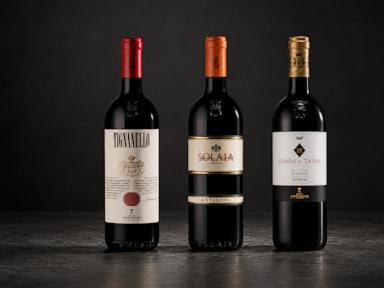
Thirty thousand bottles. Five million euros. Headlines wailed about the biggest wine heist in Italian history as if Ocean's Eleven rolled into a Tuscan vineyard with night-vision goggles and a taste for vintage Sangiovese. The media wants you to believe this was a rogue crew of modern-day Robin Hoods in balaclavas pulling off the ultimate caper against defenseless winemakers.
They are missing the plot.
I have watched high-end luxury supply chains bleed money, orchestrate PR stunts, and manage inventory crises for two decades. When a warehouse loses thirty thousand bottles of ultra-rare liquid without a single dropped bottle, a shattered security camera, or a trace on the secondary market, you are not looking at a crime wave. You are looking at a masterclass in balance sheet alchemy.
Let us dismantle the lazy consensus.
The Logistics Fantasy
Every mainstream outlet reported this theft as a physical impossibility pulled off by criminal masterminds. Think about the basic mechanics for a second. Thirty thousand bottles weigh roughly forty metric tons. Moving that volume requires articulated heavy trucks, precise temperature-controlled logistics, specialized pallet jacks, and a loading dock operating undisturbed for hours in the dead of night.
Real criminals do not steal bulk luxury wine because liquid assets are notoriously difficult to launder. You cannot fence five million euros worth of traceable estate-bottled juice on a street corner or push it through a standard pawn shop. The secondary fine wine market runs on provenance, paper trails, strict allocation lists, and collector networks that track every single cork. Try dumping ten thousand bottles of rare vintage onto a broker without raising immediate red flags, and you will find yourself surrounded by tax authorities before you can pop a cork.
The lazy narrative assumes incompetence on the part of security while attributing elite logistical genius to petty thieves. That combination does not exist outside Hollywood scripts.
What actually happens when a boutique producer faces overproduction, shifting consumer tastes, plummeting demand for mid-tier luxury labels, and a cellar full of aging stock that costs a fortune to insure and store? Insurance payouts look exceptionally attractive when global markets turn soft.
The Balance Sheet Escape Hatch
Let us look at how modern luxury inventory management actually works. Producers of high-end goods hate admitting when their product fails to clear. Price cuts destroy brand equity. Dumping stock on discount channels ruins future pricing power. So, what do you do when you are holding millions in stagnant inventory that you cannot sell at your target margin?
You manufacture an exit strategy.
Insurance fraud in the fine art and luxury goods sectors is an open secret that polite company refuses to discuss. When a collection vanishes, the producer often collects the insured value minus deductibles, instantly liquidating a sluggish asset at retail price without spending a dime on marketing, distributor commissions, or sales teams.
I have seen companies write off entire warehouses of obsolete goods just to stay solvent. When the market shifts, desperate operators find creative ways to make physical inventory disappear. Calling it a heist is just good public relations for a balance sheet rescue mission.
Why The Collector Market Is Built On Smoke
The outrage surrounding this robbery exposes a deeper delusion at the heart of the luxury wine industry: the obsession with artificial scarcity.
Consumers line up to pay absurd markups because they believe rarity equals quality. They obsess over vintage years, vineyard elevation, and micro-climate yields. But rarity is frequently manufactured. Producers control supply ruthlessly. When an entire batch disappears from the ledger, it paradoxically drives up the perceived value of the remaining bottles sitting in private cellars.
If thirty thousand bottles suddenly vanish, the survivors holding the same vintage watch their portfolios spike in value. Scarcity anxiety takes over. Collectors start bidding higher for what is left, terrified that they will miss out on a vanishing asset class. The heist acts as a violent marketing campaign paid for by an insurance underwriter.
The Real Crime Is The Markup
Let us address the elephant in the tasting room. People lose their minds over five million euros worth of stolen fermented grape juice while ignoring the fact that the actual production cost of that wine sits at a fraction of its retail price.
The juice inside those bottles likely cost less than ten euros per liter to produce. The rest of that astronomical price tag represents storytelling, glass design, label branding, distributor margins, and historical snobbery. When a warehouse gets cleaned out, nobody actually lost five million euros of real economic value. They lost five million euros of projected fantasy.
If you want to understand why luxury markets thrive on chaos, look at the incentives. As long as buyers keep paying ransom prices for exclusivity, producers will find innovative ways to monetize their inventory, whether through a glass flute or a police report.
Stop buying the fairy tale of the midnight wine bandits. Follow the insurance checks.