Two hundred and fifty thousand dollars.
That is the number that sits at the center of a quiet, startling ritual happening across desert highways in Dubai and coastal boulevards in California. A wire transfer leaves a bank account. A receipt arrives in an inbox. And for a sum that could buy a modest house outright in many parts of the world, a buyer secures a place in line for a car that has become as much a myth as a machine.
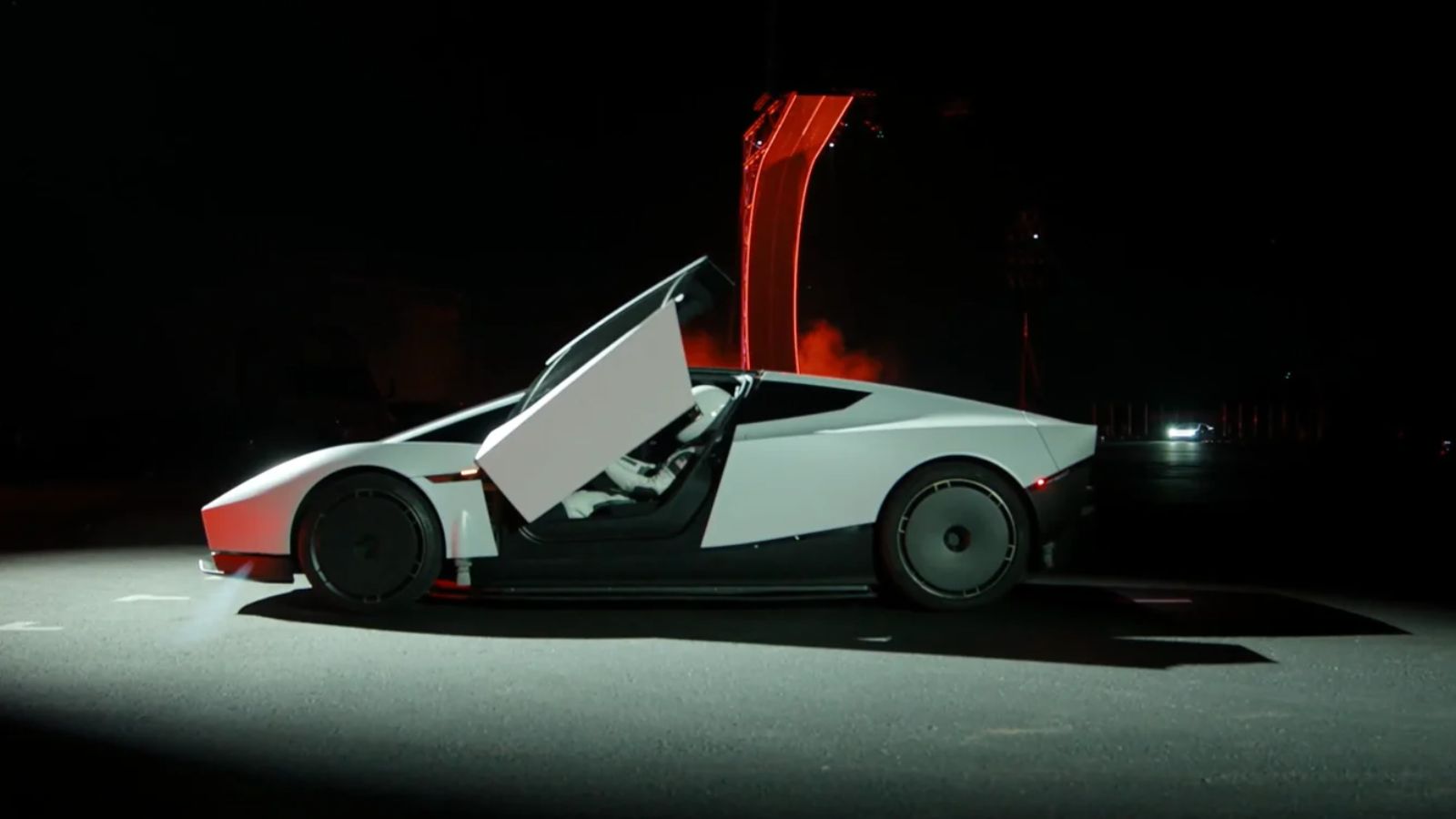
In the United States, reserving the next-generation Tesla Roadster requires a deposit equivalent to roughly Rs 2.37 crore—around $250,000 to $280,000 depending on exchange rates and configuration tiers. Across the Gulf in the United Arab Emirates, the reservation numbers translate to roughly Rs 2.6 crore. Strip away the currency conversions and the financial headlines, and you are left with a question that has haunted automotive obsessives for years: what are people actually paying for when they hand over six figures for a promise?
I remember the first time I felt the strange gravity of an electric supercar on a damp asphalt track outside Stuttgart. There was no low rumble idling through the floorboards. No gear lever clicking through mechanical gates. Instead, there was a high, clean whine—almost like a turbine spinning up inside a vacuum—and then a sudden, violent shove into the seatback that made my vision tunnel for half a second. My palms were sweating on the steering wheel, not from fear of losing control, but from realizing how abruptly the rules of speed had changed.
When you write about cars long enough, you stop looking at spec sheets the way a spreadsheet sees them. You start looking at the human impulse behind them. Why do grown adults with bank accounts large enough to buy almost anything still chase a fantasy that has been delayed, redesigned, teased, and whispered about for nearly a decade?
The Price of Waiting in the Fast Lane
Numbers in financial news tend to flatten reality. A headline says "Rs 2.6 crore in UAE" or "Rs 2.37 crore in US," and your brain registers a big figure before moving on. Yet behind every deposit is a very specific kind of human appetite.
Consider a hypothetical buyer—let us call him Tariq, a logistics entrepreneur splitting his time between Dubai Marina and Abu Dhabi. This is a purely hypothetical scenario meant to illustrate how high-net-worth buyers weigh risk and desire, not a report on any real individual. Tariq has owned Italian V12s, German grand tourers, and the fastest four-door sedans money can buy. To him, a sports car is not just transportation; it is a physical punctuation mark at the end of a long week on glass-and-steel trading floors. When he wires a deposit for a Tesla Roadster, he is not worried about whether his groceries will fit in the trunk. He is buying admission into an exclusive club of anticipation.
Across the ocean in the United States, picture a hypothetical software founder in Austin or Palo Alto—let us call her Hannah. Again, this is a hypothetical portrait built from recognizable buyer behavior rather than a specific person. Hannah grew up watching electric vehicles evolve from golf-cart curiosities into daily commuters. Putting down a deposit worth roughly Rs 2.37 crore is, for her, a vote on physics itself. She wants to know if silent electrons can bend time and space harder than burning gasoline ever could.
Both Tariq and Hannah face the same quiet tension. A deposit is not a key in the ignition. It is hope held in escrow.
Why would two buyers on opposite sides of the globe pay slightly different converted sums—around Rs 2.37 crore in the US versus Rs 2.6 crore in the UAE? Part of the answer lies in currency fluctuations, import structures, regional pricing adjustments, and how reservation tiers are structured across markets. When you convert US dollar deposits—historically set at $50,000 for base reservations and $250,000 for Founders Series allocations—into Indian rupees across different exchange rates and local market terms, those numbers shift noticeably. Even when the underlying ambition is identical, geography and exchange rates leave their fingerprint on the price tag.
Why Reservation Numbers Feel Like Rorschach Tests
If you have spent enough time around car enthusiasts, you know that reservation announcements never just spark excitement. They spark arguments.
One camp sees a deposit as proof of enduring demand. No matter how many years pass, no matter how crowded the performance EV market becomes with sleek rivals from Rimac, Porsche, Lucid, or legacy supercar houses, people are still willing to lock up serious cash just to hold a spot. To believers, that willingness is a pulse check on the brand's cultural magnetism.
The other camp looks at the calendar and feels a dull ache of skepticism. They remember the grand unveilings, the bold claims about sub-two-second acceleration, and the long stretches of silence when daily production models took priority over halo projects. Having been burned by hype before—not just in cars, but in tech launches and promised breakthroughs across the last decade—many buyers and observers ask a blunt question: when does patience turn into wishful thinking?
I have to admit, I feel both pulls myself. Part of me loves the sheer audacity of chasing extreme performance in an era where so many cars are turning into rolling appliances with giant touchscreens and muted steering feel. Another part of me knows how easily grand promises collide with manufacturing realities, battery chemistry limits, thermal management, and supply chain bottlenecks. Being honest about that tension is the only way to make sense of why this story refuses to go away.
Think of a reservation list like a theater line before the curtains rise. To use a metaphor: the ticket stub in your pocket does not guarantee the play will open tomorrow night, yet standing outside with other people who love the theater makes the wait feel electric. That is a metaphor for the psychology of pre-orders, not a literal description of how automotive contracts work—legally, terms and refundability rules govern every booking.
What People Actually Ask When the Deposit Hits the Headlines
Whenever booking numbers for an ultra-high-profile electric roadster surface, the same practical questions tumble out around dinner tables and in group chats. People want to know what a deposit actually means, whether the money is safe, how the US and UAE figures compare, and whether buying a halo car still makes sense when faster or more practical EVs already exist on the road.
Let us trace those questions through the real stakes behind them.
First, a deposit is a reservation, not a finished transaction. Putting money down secures priority or allocation status under the automaker's stated terms, while the final vehicle price, delivery timeline, and specifications depend on production milestones and regional rules. Buyers who treat a deposit like a guaranteed delivery date next month set themselves up for frustration; buyers who treat it as an early stake in a long-term project understand the terrain much better.
Second, regional differences like Rs 2.37 crore in the US versus Rs 2.6 crore in the UAE remind us that global luxury goods never travel in a vacuum. Exchange rates move, taxes and duties vary, and market positioning shifts from country to country. A number that looks clean in one currency can look steeper or gentler once converted into another.
Third, there is the question of value in a world that already has blistering electric acceleration. If a modern performance sedan or hypercar can already launch off the line with terrifying speed, why does a two-seat roadster still command such intense fascination?
Because speed is not just a stopwatch reading. It is theater.
The Physics of Goosebumps
Imagine sitting inches from the pavement with the open sky above you. No roof. No muffler. Just wind rushing past your collar and the instant surge of torque hitting your spine before your brain has even finished registering that your right foot moved.
To understand why electric motors feel so disorienting compared to combustion engines, picture the difference between pushing a heavy cart by walking up to it and giving it a shove versus having a giant rubber band already stretched tight the moment you release it. That is an intuitive analogy for torque delivery, though in reality electric motors generate peak rotational force almost instantaneously from low rpm while internal combustion engines rely on air intake, fuel burn, and gear ratios to build power across a rev band.
For decades, car culture equated drama with noise. Exhaust crackles, shifting gears, and rising engine pitch told your ears what your eyes were seeing. Electric performance flips that script. It strips away the soundtrack and leaves pure force—quiet, eerie, and immediate. Some drivers miss the mechanical theater of a revving engine; others find the clean rush of electric power strangely addictive.
That divide sits right at the heart of the Roadster's mystique. It is not trying to be a sensible commuter car. It is a statement piece built around excess, speed, and engineering bravado.
Beyond the Spec Sheet: The Invisible Stakes
Why does a single car's booking price matter to people who will never wire Rs 2.37 crore or Rs 2.6 crore?
Because halo vehicles act as barometers for what is possible—and what is believable. When a company asks for quarter-million-dollar-level commitments, it is testing trust. Every delayed milestone erodes a little bit of patience; every fresh sign of momentum rebuilds it.
There is also a quieter economic story underneath. High-deposit reservations pull capital forward, signal confidence to suppliers and investors, and keep public attention locked on electric performance even when broader EV headlines focus on mass-market affordability, charging networks, or slower growth curves in certain regions. A flashy flagship car cannot solve everyday charging anxiety or make an entry-level EV cheaper for a family budget, yet it shapes the cultural image of electric driving in ways a sensible hatchback never will.
When I think back to that damp track outside Stuttgart, what stays with me isn't a top-speed figure or a zero-to-sixty number written on a press sheet. It is the silence right before the launch—that brief second where everything is still, and you know you are about to feel something sharp and unforgettable.
A reservation deposit is much like that silence before the pedal goes down. It holds all the tension of what might happen next, suspended between cold numbers on a screen and the human hunger to feel the road come alive.
Under a clear desert sky or along a salt-kissed coastal highway, a key fob is just a piece of plastic until the moment a driver presses the pedal and lets the wind take the rest.