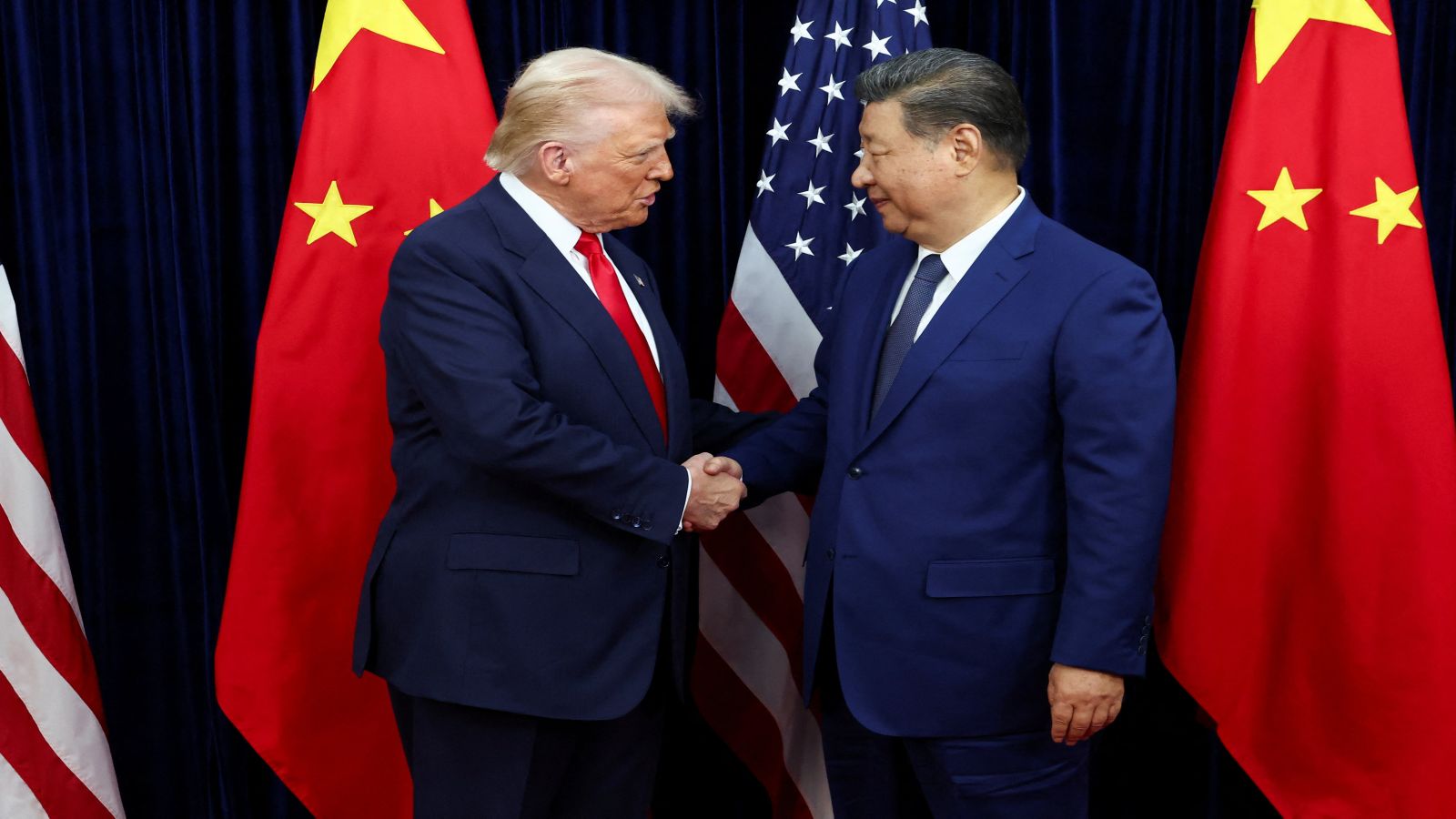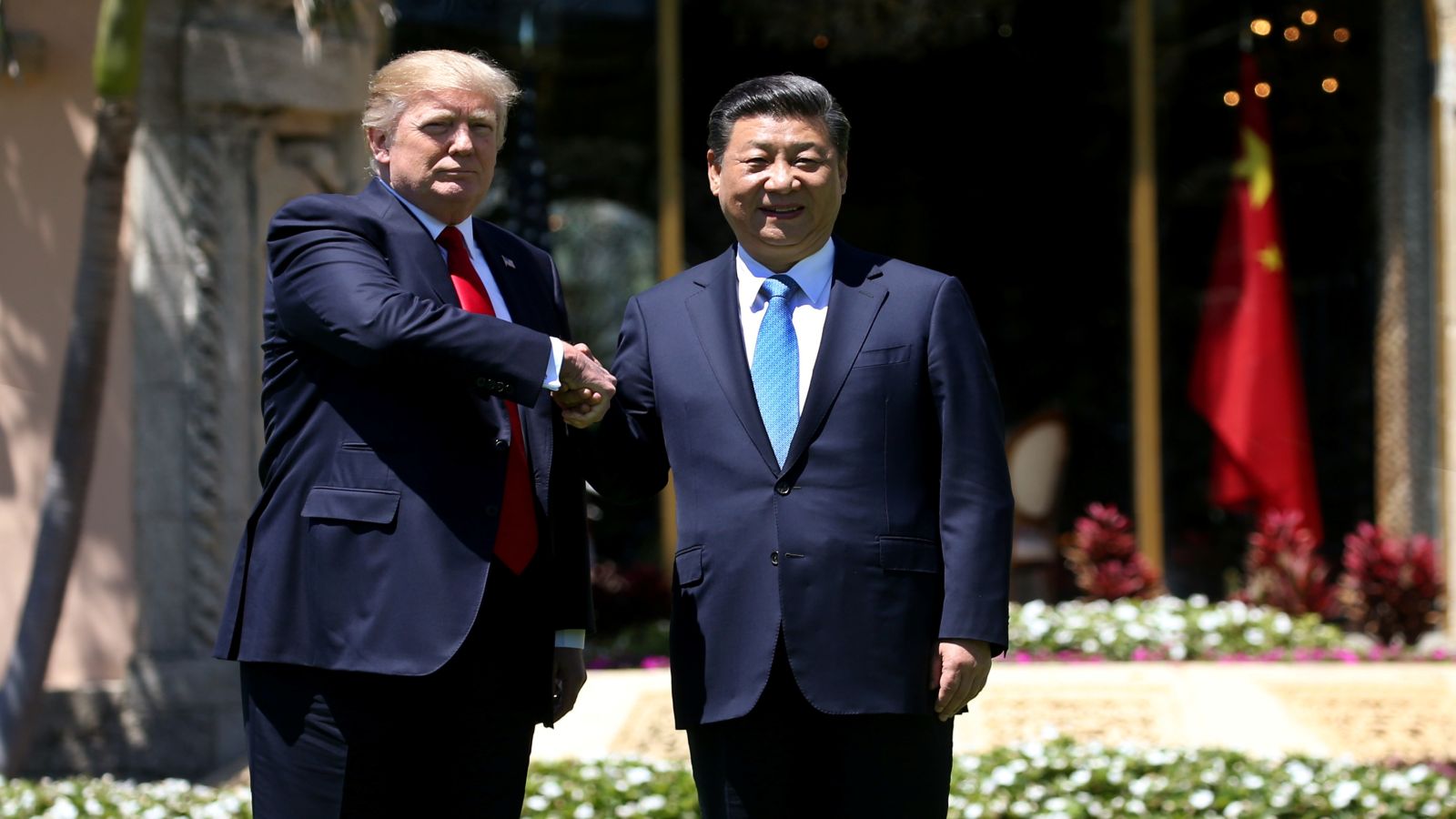
In the freezing glare of a Geneva conference room, a veteran trade negotiator watched two coffee cups grow cold. For three hours, neither man had touched his porcelain. On one side sat the architect of the world's largest export machine, a man whose tailored charcoal suit seemed carved from absolute certainty. On the other sat the populist who had staked his entire political identity on breaking that machine.
Between them lay a chasm of five hundred billion dollars in punitive levies, retaliatory tariffs, and broken supply chains. The air smelled of stale espresso and historical inevitability.
Then, the translator cleared her throat. The sound was microscopic in the vast, wood-paneled silence.
This is the story of how Donald Trump and Xi Jinping pulled back from the absolute brink of an economic abyss. Not through sudden affection, not through ideology, but through the cold, unyielding friction of reality. It is a story about the hidden architecture of global commerce, the invisible threads connecting a soybean farmer in Iowa to an assembly line worker in Shenzhen, and what happens when the unstoppable force of American political will collides with the immovable object of Chinese state capitalism.
The Morning the Freight Stopped
Picture a warehouse outside Ningbo. It is six in the morning, and the humidity hangs like a wet wool blanket over stacks of crated electronics. Six months earlier, forklift drivers here raced against the clock, loading containers bound for Los Angeles, Seattle, and Long Beach with frantic precision.
On this morning, the forklift engines are quiet.
The yard is half-empty, choked with rusting steel boxes that missed their export windows. The boss, a man named Chen who inherited the factory from his father, stands by the loading dock with a cigarette burning down to his knuckles. He isn't thinking about geopolitics. He isn't calculating the nuances of bilateral trade deficits or currency manipulation theories.
Chen is thinking about his payroll. His buyers in California just canceled their third consecutive quarterly order. The reason was simple, brutal, and scrawled across an invoice: a twenty-five percent tariff wall had suddenly turned his low-margin margins into a liability. To survive, Chen has to lay off forty percent of his floor staff.
Half a world away, in Des Moines, a parallel quiet settled over a family farm that had fed overseas markets for three generations. Grain bins, usually empty by winter, were bulging. Corn and soybeans had nowhere to go. Prices plummeted. The market was broken, not by bad weather or poor soil, but by executive orders signed in Washington and retaliatory decrees issued from Beijing.
Trade wars are fought with ink, but they are bled in cash by people who have never met a president.
The Arithmetic of Ego
To understand how the world's two largest economies stumbled into a trade war, you have to look past the cable news shouting matches and examine the math.
For decades, the global economic consensus operated on a quiet bargain. America consumed; China produced. Wall Street cheered the cheap manufactured goods that kept inflation low, while Main Street absorbed the slow-motion shock of hollowed-out industrial towns. By the time the political reckoning arrived, the imbalance was too loud to ignore.
Enter Donald Trump in 2017. He looked at the multi-hundred-billion-dollar trade deficit not as a complex symptom of global macroeconomic forces, but as an open ledger of theft. His diagnosis was blunt: China was cheating, stealing intellectual property, forcing tech transfers, and dumping state-subsidized steel.
His prescription was equally blunt: tariffs.
Tollbooths on the global highway.
Economists winced. Wall Street panicked. Traditionalists warned of a 1930s-style Smoot-Hawley rerun that would drag the global economy into a recession. But Trump understood a fundamental political truth that technocrats missed. The American electorate was tired of managed decline. They wanted friction. They wanted someone to flip the chessboard over, even if pieces scattered everywhere.
Across the Pacific, Xi Jinping faced a mirror-image domestic imperative. In Beijing, the legitimacy of the Communist Party rests on a singular, unwritten social contract: continuous economic growth and rising living standards in exchange for absolute political control.
When Washington slapped sweeping tariffs on Chinese exports, Xi could not simply fold. To back down under American pressure would shatter his carefully cultivated image of national strength and historical destiny. It would signal weakness to domestic rivals and fracture the narrative of China's unstoppable rise.
So, they escalated.
Tariff met counter-tariff. Tech blacklists met rare-earth export threats. The rhetoric grew apocalyptic. Commentators began whispering about a Thucydides Trap, a structural inevitability of conflict between a ruling hegemon and a rising power.
The Breaking Point
Markets hate uncertainty more than they hate bad news. By late 2019, the collateral damage of the standoff began to register where politicians feel it most: in the numbers.
Global manufacturing growth slowed to a crawl. Business investment froze worldwide. Stock markets luriled violently with every tweet from the White House and every state-media editorial from Beijing.
Consider the plight of multinational supply chains. Apple, Caterpillar, Ford, and thousands of mid-sized component makers found themselves playing a high-stakes game of corporate chess. Moving a factory out of China isn't like changing your phone carrier. It takes years, billions of dollars, and an intricate ecosystem of specialized suppliers that simply do not exist overnight in Vietnam or Mexico.
The costs were mounting, and both leaders sensed the political danger of presiding over a self-inflicted economic downturn right before crucial domestic milestones.
Behind closed doors, the diplomats went to work. Not the public-facing negotiators who postured for the cameras, but quiet intermediaries—business titans, retired diplomats, and economic pragmatists who understood that total decoupling was an economic fantasy.
They realized a fundamental truth: neither superpower could economically annihilate the other without committing financial suicide. America needed Chinese consumption and assembly capacity; China needed American agricultural exports and technological components.
Interdependence was a cage, but it was a shared cage.
The Truce That Wasn't a Peace
The eventual signing of the Phase One trade agreement in January 2020 was choreography masquerading as resolution.
Xi didn't come to Washington; he sent his top economic emissaryl, Liu He, to sit across from Trump in the gilded East Room of the White House. The optics were carefully managed. Trump touted the historic purchase commitments—China promising to buy an additional two hundred billion dollars in American goods, agricultural products, and energy. China agreed to minor concessions on intellectual property protection and financial services access.
Yet, the core structural issues remained untouched. Industrial subsidies weren't dismantled. State-owned enterprises kept receiving preferential treatment. The fundamental ideological battle over the future of global technology and governance was merely paused, not solved.
Critics called it a paper tiger. They pointed out that China’s purchase targets were wildly unrealistic, especially as a novel coronavirus began quietly spreading from Wuhan to the rest of the world, upending global trade equations entirely.
They were right about the economics. But they missed the psychological shift.
The truce proved that even the most stubborn adversaries possessed a red line. It demonstrated that economic nationalism had limits imposed by reality. The leaders peered over the edge of the cliff, felt the cold wind of a global depression, and decided to step back.
What We Learned in the Noise
Years later, the echoes of that tariff war still reverberate through modern supply chains. The illusion of seamless, frictionless globalization is dead. Companies now practice what they call China Plus One, diversifying manufacturing hubs across India, Vietnam, and Eastern Europe not out of political spite, but out of basic risk management.
Resilience has replaced pure efficiency as the holy grail of corporate strategy.
And the political landscape bears the permanent scars of that standoff. Bipartisan consensus in Washington now views Beijing through an unshakeable lens of strategic competition. The idea of welcoming China into the liberal international order with open arms and hoping it would naturally evolve into a western-style democracy has been permanently retired.
Back in Ningbo, factory owner Chen survived the storm by pivoting his production lines toward domestic consumers and Southeast Asian markets. His workforce is smaller now, leaner, and more automated. He doesn't watch American cable news anymore. He doesn't have to. He learned that when elephants fight, the grass gets trampled, but grass has a stubborn way of growing back through the concrete.
The tariff war did not end because Washington won or Beijing surrendered. It ended because both men looked into the mirror of global interdependence and realized that absolute victory is just another word for mutual destruction.
The conference room in Geneva is quiet again. The coffee cups have been cleared away. But the lesson remains etched into the balance sheets of nations and the quiet worries of men who sign paychecks in the dark.
Power has a price. And eventually, the bill always comes due.