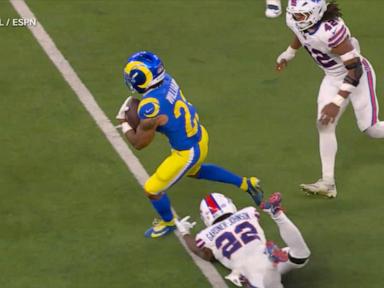
Overtime in the National Football League remains an unresolved crisis, and the dramatic clash between the Buffalo Bills and the Los Angeles Rams laid bare every structural flaw in how the sport settles its most intense contests. When two elite rosters trade blows through four quarters only to let an arbitrary coin toss dictate the architecture of sudden death, the spectacle shifts from a test of athletic superiority to an exercise in institutional stubbornness. Fans remember the scoreboard fireworks, the dizzying numbers posted by star quarterbacks, and the breathless pace of the final minutes. Analysts who watch the film see something far more unsettling. They see a system that rewards luck over resilience, masking the deeper fractures in how modern games are officiated, schemed, and concluded.
The contest itself delivered the kind of theatrical violence that television executives dream about. Buffalo and Los Angeles traded heavy punches on every possession, stretching defensive coverages to their absolute breaking points. Receivers found pockets in zone schemes that should not have existed; edge rushers bent the corner with a violence that left offensive tackles grasping at thin air. Yet beneath the pyrotechnics lay a stark reality. Both teams exposed vulnerabilities in each other's defensive philosophy that would have proven fatal against a more disciplined opponent. If you enjoyed this article, you should look at: this related article.
Consider the strategic deployment of personnel during the high-leverage moments of the fourth quarter. Modern play-callers treat fourth-down markers with the casual aggression of riverboat gamblers, abandoning conventional wisdom in favor of analytics-driven gambits. While this shift has injected necessary excitement into a league historically conservative with its arithmetic, it has also created a dangerous variance. When coaches rely entirely on probabilities rather than situational rhythm, the game loses its narrative coherence. Every play becomes an isolated mathematical problem rather than a chapter in a larger competitive story.
The officiating crew did little to steady the ship. Throughout the evening, tick-and-tie penalties disrupted the flow of drives, turning breathtaking athletic achievements into exercises in bureaucratic interpretation. Defensive holding calls on plays where the quarterback had already scrambled out of the pocket robbed the audience of legitimate defensive triumphs. When the officials become the central narrative axis of a marquee matchup, the league has a systemic problem. The rules are simply too complex, leaving too much room for subjective enforcement by crews struggling to match the sheer speed of the modern athlete. For another look on this development, see the latest coverage from CBS Sports.
Then came the extra period.
The structural absurdity of the overtime format stripped the game of its competitive dignity. Football is a game defined by the synchronization of offense, defense, and special teams. Yet under the current ruleset, a coin flip can render an entire defensive unit entirely obsolete. To watch a defense battle for sixty minutes, only to stand helplessly on the sideline while the opposing offense marches down the field for a game-ending touchdown without ever touching the ball, violates every tenet of sporting fairness. It is an archaic relic of a television era that prioritized rapid resolution over competitive integrity.
Tactical adjustments during the extra session highlighted the desperation inherent in the format. Coordinators abandoned balanced play-calling in favor of hyper-compressed route combinations designed to exploit tired linebackers in immediate space. Pass rushers, lungs burning from a full regulation game of chasing mobile signal-callers, could no longer maintain the leverage required to collapse the pocket. Fatigue is not an equalizer; it is an execution tax levied disproportionately on the defense.
The aftermath of such thrillers usually involves endless debate about quarterback legacies and coaching genius. Analysts dissect every decision made in the final two minutes as if it were a masterclass in tactical chess. This is a profound misreading of the situation. Greatness should not have to fight against a flawed framework to prove its worth. When a contest features this level of offensive brilliance balanced against such systemic vulnerability, the takeaway should not be celebration. It should be a demand for reform.
Fixing this requires abandoning the league's stubborn attachment to historical nostalgia. The postseason modified ruleset proved that a more equitable system is possible, yet the regular season continues to limp along with a format that invites controversy every single weekend. Until the league mandates that both units on both sides of the ball must take the field in overtime, these thrilling spectacles will always carry an asterisk of unfairness.
The whistle blows, the stadium empties, and the highlights loop on morning sports programs. But the structural cracks remain, widening with every game that ends in a coin toss rather than a definitive defensive stand.