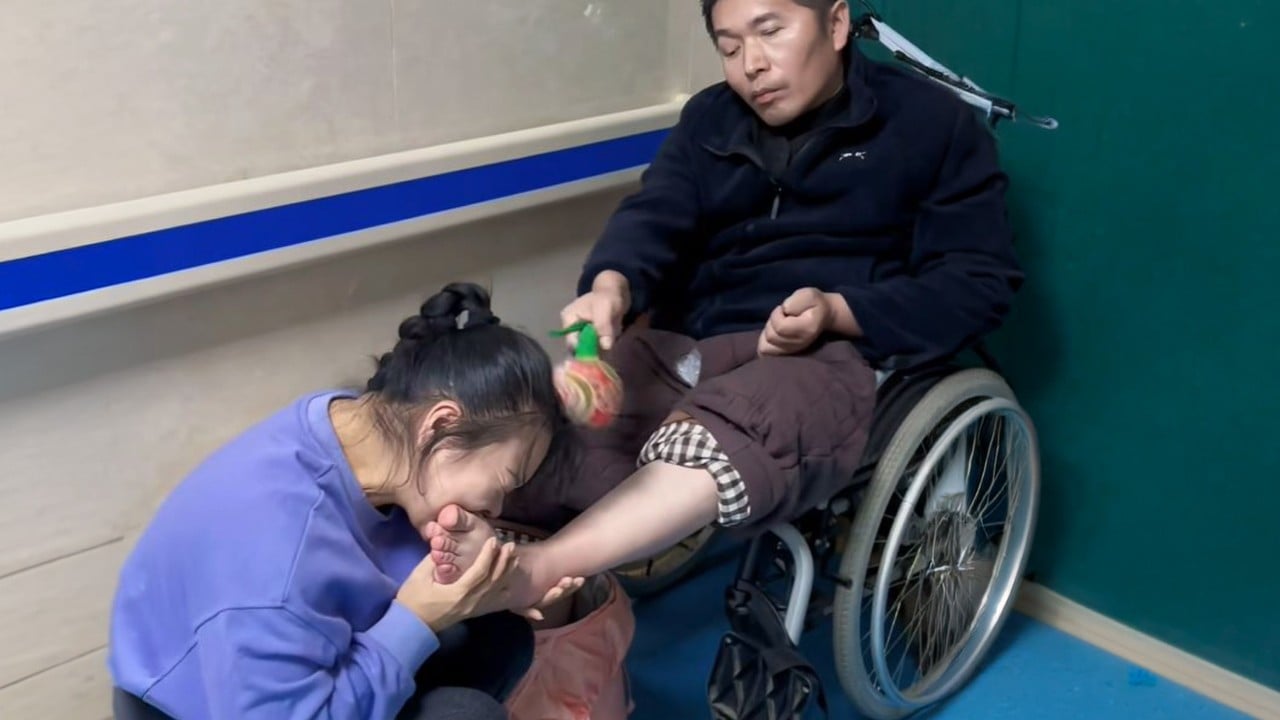
The internet loves a medical miracle. You have probably seen the headlines circulating about the man in China who allegedly woke up from a deep, vegetative state after his wife bit his toes, immediately telling her "I love you." It is the perfect viral recipe: romance, agony, devotion, and a sudden, cinematic triumph over brain death.
It is also almost certainly a profound misunderstanding of neurology. Building on this idea, you can also read: The Anatomy of Screwworm Myiasis: A Rigorous Defense Framework for Domestic Animals.
When mainstream media outlets regurgitate these stories, they do something highly damaging. They sell a fantasy of sudden, dramatic consciousness that treats the human brain like a faulty light switch. Just flip it hard enough—or bite a toe with enough desperation—and the lights click back on.
As someone who has spent years analyzing medical data and tracking how complex neurological conditions are reported, I can tell you that this "sleeping beauty" narrative is a myth. The reality of recovering from severe brain injuries is messy, non-linear, and completely misconstrued by the public. We need to stop applauding these sensationalized clickbait stories and start looking at the actual, uncomfortable science of consciousness. Experts at Psychology Today have shared their thoughts on this trend.
The Myth of the Sudden Awakening
Let's dissect the premise of the "bitten toe" miracle. The narrative implies the patient was completely inert, experienced a sharp pain stimulus, and instantly regained full cognitive and linguistic function.
Neurologically speaking, this is practically impossible.
When a patient is in a true vegetative state—now more accurately termed Unresponsive Wakefulness Syndrome (UWS)—the cerebral cortex, the part of the brain responsible for thinking, feeling, and language, is severely damaged. The brainstem, which regulates automatic functions like breathing and heart rate, remains intact.
Recovery from this state does not happen in a single, cinematic heartbeat. It is a grueling, agonizingly slow progression. Patients usually transition first into a Minimally Conscious State (MCS), where they might exhibit fleeting, inconsistent signs of awareness—tracking an object with their eyes, smiling at a loved one, or reacting to pain.
When this husband allegedly spoke immediately upon "waking," one of two things actually happened:
- He was already well into a minimally conscious state, and the painful stimulus merely triggered a localized, reflexive vocalization or a pre-programmed linguistic habit.
- The diagnosis of a vegetative state was wrong from the very beginning.
Misdiagnosis in this field is rampant. Studies by leading neuroscientists, including Dr. Steven Laureys of the Coma Science Group, have shown that up to 40% of patients diagnosed as being in a vegetative state actually have some level of minimized consciousness. They are awake, but they cannot move or communicate reliably.
The wife did not perform a miracle. She may have simply applied a noxious stimulus that broke through a motor block in a patient who was already partially aware.
Why Pain Works But Not the Way You Think
To understand why the toe bite caused a reaction, we have to look at the nociceptive system—the body's pain pathway.
Pain is one of the most primitive, deeply wired survival mechanisms we possess. When you pinch or bite a patient’s toe, that sensory signal bypasses the complex thought centers of the brain and heads straight through the spinal cord to the brainstem and the thalamus.
In clinical settings, neurologists use this exact mechanism every day. It is called a noxious stimulus. We apply pressure to the nail bed, pinch the trapezius muscle, or rub the sternum to test a patient's level of consciousness on the Glasgow Coma Scale (GCS).
- Level 1: No response.
- Level 2: Extension posturing (the brainstem is barely functioning).
- Level 3: Abnormal flexion.
- Level 4: Localization of pain (the patient actually moves their hand to stop the stimulus).
If a patient responds to a toe bite, they are demonstrating a neurological reflex or a localized response to pain. They are not being magically cured by the "power of love."
Imagine a scenario where a car's engine is completely seized up, but the horn still honks when you smash the steering wheel. That is what a localized response to a noxious stimulus is. The horn works, but the car still cannot drive. Expecting a patient to instantly articulate complex emotional phrases like "I love you" right after a reflexive response violates everything we know about neural plasticity and cognitive rehabilitation.
The Dangerous False Hope Sold to Families
This is not just an academic debate. The romanticization of these stories has brutal, real-world consequences for thousands of families sitting in intensive care units and long-term care facilities.
When the media broadcasts a story claiming a simple toe bite can cure a vegetative state, it creates a toxic blueprint for grieving relatives. I have seen families exhaust their life savings, destroy their own mental health, and refuse to let go of hopeless cases because they are waiting for that one magical, unorthodox trigger that the doctors "just don't understand."
It breeds distrust in legitimate medical professionals. It implies that the neurologists, with their MRIs, EEGs, and decades of training, are missing something obvious that a desperate spouse can fix with a bit of intuition and physical pain.
The truth is harsh: true recovery from prolonged disorders of consciousness is rare, and when it happens, it requires months or years of intensive, multidisciplinary rehabilitation. It involves neurostimulants like amantadine, repetitive sensory stimulation, physical therapy, and speech therapy. It does not happen because of a singular, dramatic shock to the nervous system.
The PAA Reality Check
People searching for information on these phenomena often ask the wrong questions because they are guided by Hollywood tropes. Let's dismantle the most common assumptions.
Can a coma patient feel pain?
Yes, depending on their exact neurological state. Patients in a minimally conscious state can experience pain and distress, which is why clinical guidelines demand proper pain management for them. Patients in a true vegetative state may exhibit autonomic responses to pain (increased heart rate, sweating) without the conscious, emotional perception of that pain. Using pain to "wake someone up" without medical supervision is reckless and potentially cruel.
What actually triggers an awakening from a vegetative state?
Time, brain swelling reduction, and targeted medical intervention. The brain has a limited capacity to rewire itself after an injury—a process called neuroplasticity. If axons are severed globally, no amount of shouting, shaking, or biting will repair those pathways. Recovery occurs when surviving networks slowly adapt and take over lost functions.
Is it possible to talk immediately after waking from a long coma?
No. Even if cognitive function magically returned instantly, the physical muscles required for speech—the larynx, the tongue, the diaphragm—atrophy rapidly after weeks of disuse. A patient who has been genuinely unresponsive for months cannot simply form clear, emotional sentences on day one. They require speech therapy just to swallow safely without aspirating.
Stop Looking for Miracles and Look at the Data
If we want to actually advance how we treat severe brain injuries, we have to stop treating neurological recovery like a fairy tale.
The contrarian truth here is that the wife’s actions did not heal her husband’s brain. If the story is true as reported, her husband was already recovering, or he was misdiagnosed from the start. The bite was merely the catalyst that exposed a level of awareness that was already present beneath the surface.
We must shift our focus away from looking for the "one weird trick" to wake up a damaged brain. Instead, we need to invest heavily in advanced diagnostic tools like functional MRI (fMRI) and quantitative EEG, which can detect hidden consciousness in patients who appear entirely vegetative. That is where the real revolution is happening—not in sensationalized tabloid journalism, but in the quiet, rigorous mapping of residual brain networks.
Stop waiting for the miracle bite. Trust the data, understand the anatomy, and accept that the human brain does not yield its secrets to shortcuts.