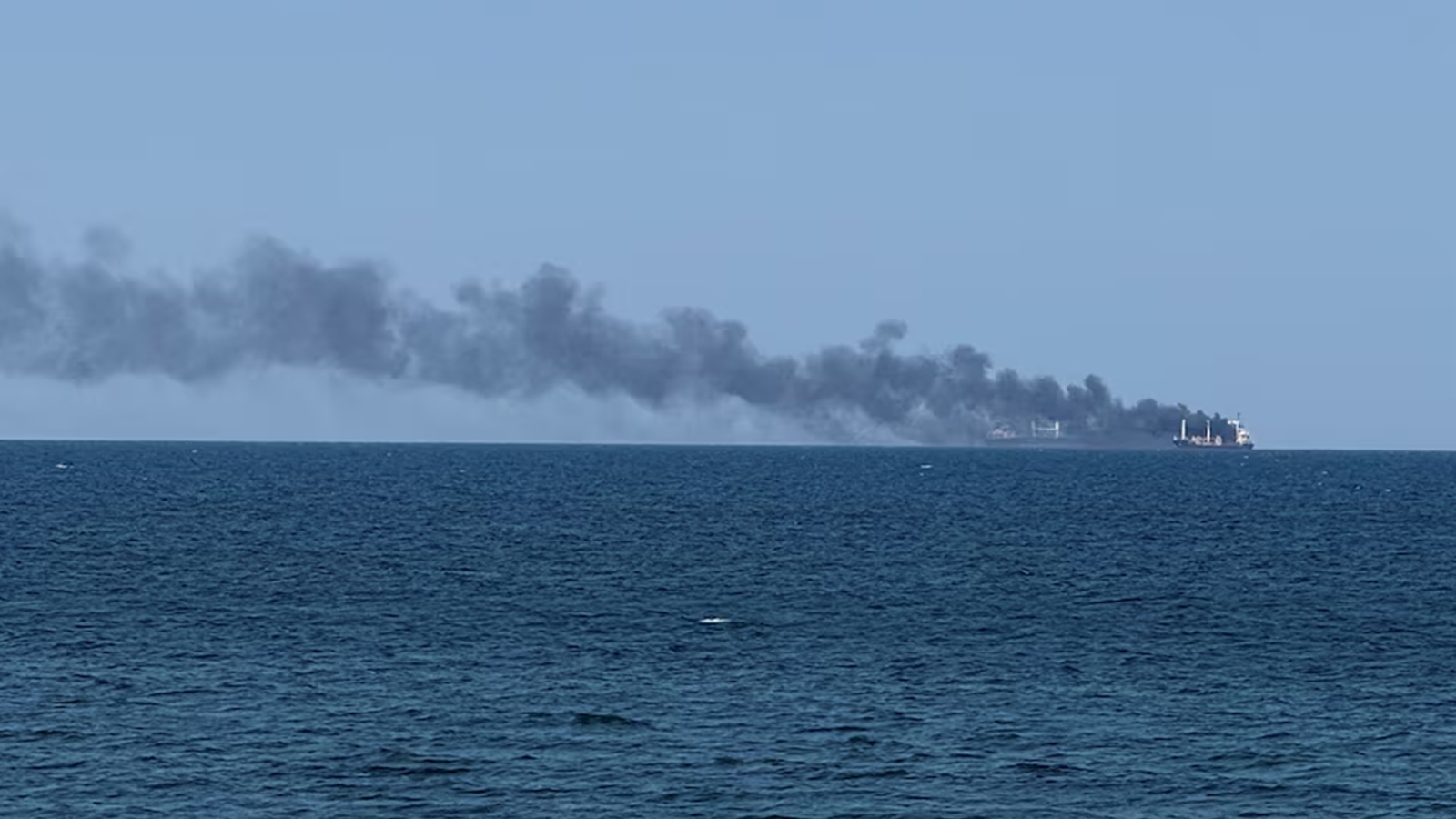
The standard headline flashes across every terminal on Wall Street and every news feed from London to Tokyo. An oil tanker takes a hit in the Strait of Hormuz. Authorities point fingers at a naval mine. Analysts rush to adjust crude futures, shipping insurance rates spike instantly, and pundits scream about supply chain blockades.
It is lazy. It is superficial. And it completely misunderstands how modern maritime chokepoints actually function.
Focusing on the physical metal in the water treats a symptom while ignoring the systemic disease. When a vessel blows up in the world's most critical energy artery, the real story is never about the explosive device itself. It is about the weaponization of logistics, the quiet rewriting of maritime insurance risk models, and a global energy grid so fragile that a single flashpoint can reprice the entire planet's manufacturing base overnight.
I have spent decades watching market participants panic over headline anomalies while completely missing the structural shifts happening beneath the surface. Let us tear apart the consensus narrative and look at the actual mechanics of what happens when the world's plumbing gets clogged.
The Myth of the Physical Blockade
The lazy consensus argues that physical hardware like sea mines or fast-attack boats can effectively seal off the Strait of Hormuz, starving global markets of petroleum.
History proves this thesis wrong. During the Tanker War of the 1980s, hundreds of ships were attacked, mined, or damaged in these exact waters. Did oil stop flowing? No. Volume dropped, but the economic incentive of crude at scale always punches through physical barriers. Tankers kept moving because the alternative—starving industrial economies of feedstock—carries a cost that no regional actor or superpower can sustain for long.
The real disruption does not come from stopping every ship. It comes from pricing them out.
When an incident occurs in Hormuz, the mechanism of terror is financial, not kinetic. Lloyd's of London and other major marine underwriters do not wait for a formal military investigation. They instantly reclassify the region. War risk premiums jump from a fraction of a percent to astronomical percentages of a vessel's hull value.
For a two-million-barrel Very Large Crude Carrier, that single administrative adjustment adds millions of dollars in overhead to a single voyage before the captain even weighs anchor. That is the actual weapon. You do not need to sink every tanker; you just need to make the balance sheet of moving oil terrifyingly expensive.
The Anatomy of a Chokepoint Panic
Let us examine the mechanics of how energy markets price risk.
When a disruption hits the Strait of Hormuz, traders immediately default to scarcity models. They calculate the daily throughput—roughly twenty percent of the world's petroleum supply—and multiply it by the panic factor.
This calculation contains a fundamental flaw. It assumes that regional inventory buffers do not exist and that alternative routing cannot absorb the shock.
Let us run a mental model to see how this plays out in reality.
Imagine a scenario where traffic through the strait halts entirely for forty-eight hours due to security protocols. The initial knee-jerk reaction on the futures exchanges sends Brent crude soaring by ten dollars a barrel. Refiners in Asia, heavily reliant on Persian Gulf sour crude, panic-buy spot cargoes from West Africa or the US Gulf Coast.
Within days, the physical reality catches up to the paper market. Strategic petroleum reserves release emergency inventories. Pipelines running overland—such as the East-West pipeline in Saudi Arabia bypassing the strait entirely to reach the Red Sea—ramp up utilization rates. The system routes around the damage like water finding a crack in a dam.
The market corrects because global supply chains are far more liquid and adaptable than the panic-driven headlines suggest. Yet, the cost of that adaptation is permanently baked into consumer prices.
The Quiet Winners of Regional Friction
Every time a security incident rattles the Persian Gulf, a specific set of players quietly profits.
Shipping conglomerates with modern, diversified fleets absorb the high-rate environment. Insurance syndicates rake in massive risk premiums while carefully managing their exposure. Non-Middle Eastern producers, particularly shale operators in North America and offshore drillers in South America, find their breakeven points suddenly looking remarkably attractive against a permanently elevated price floor.
The narrative wants you to believe that regional skirmishes are isolated operational anomalies. They are not. They are calculated friction points in a multi-polar economic competition where energy is the primary currency.
If you are trading energy or managing industrial supply chains based on the idea that a single mine or missile defines the crisis, you are looking at the scoreboard while the game is being played in the front office.
Stop reacting to the explosion. Start watching the insurance ledgers, the pipeline bypass capacities, and the quiet rerouting of global tanker fleets. That is where the real war is fought.