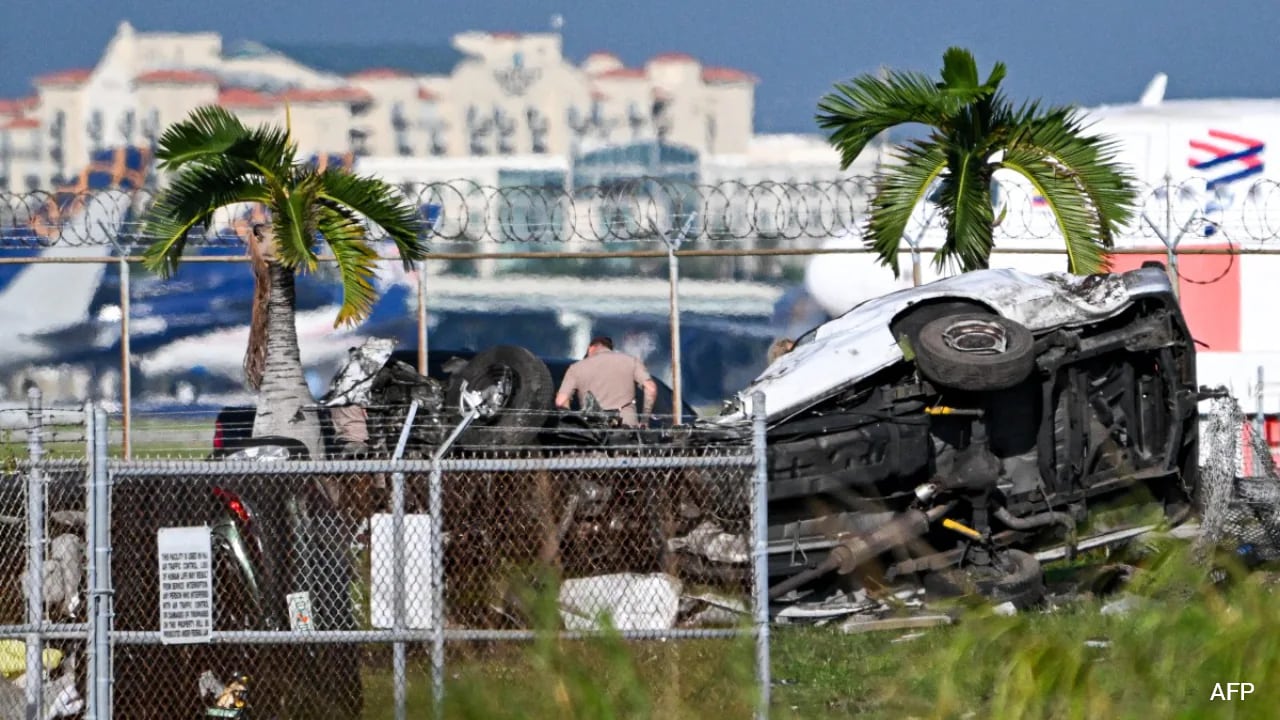
Every time a cargo jet overruns a strip of asphalt, the media runs the same tired script. We get grainy footage of tail sections sheared off, hand-wringing over weather patterns, and breathless commentary about runway friction coefficients. Investigators swarm the wreckage like ants, measuring rubber deposits and checking grooving depths.
It is a grand theatrical distraction.
Focusing purely on the physical tarmac after a modern air freight hull loss is like analyzing the pavement after a Ferrari crashes at two hundred miles per hour while ignoring that the driver was blindfolded and hopped up on sedatives. We love to blame the physical infrastructure because concrete does not talk back, file grievances, or unionize.
I have watched logistics firms burn millions chasing phantom safety upgrades while their operational backbones rotted from within. The lazy consensus of the mainstream aviation press is that freak weather, braking anomalies, and sudden mechanical gremlins cause these catastrophic excursions. That narrative is comforting. It implies bad luck. It implies that with just a slightly better drainage system or a fresh coat of rubber removal, everything will be fine.
The truth is much darker, and nobody in the corporate suite wants to talk about it.
The Myth of the Unforeseen Freak Accident
Let us dismantle the core falsehood driving current safety debates: the idea that runway overruns are sudden, unpredictable acts of god.
They are not. They are the predictable mathematical endpoint of systemic decay, compressed scheduling, and institutional exhaustion. When a multi-million-dollar freighter plows past the threshold lights, aviation traditionalists point to crosswinds, hydroplaning, or unexpected thrust reverser delays. They treat each crash as an isolated incident, a freak anomaly born of a bad afternoon.
This is an insult to basic probability.
Modern commercial aviation is arguably the most engineered enterprise in human history. Every landing is calculated, modeled, and simulated a thousand times before the landing gear ever kisses the ground. When a plane fails to stop, it means the margin of error had already been systematically chipped away over months, flight by flight, decision by decision.
To understand why modern freight keeps missing the stopping zone, you have to look at the economic incentives governing the cockpit and the dispatch office.
The Quiet Terror of the Compressed Schedule
Imagine a scenario where an air cargo captain lands a heavily laden widebody jet at two in the morning on a slick, rain-soaked strip. They have been awake for fourteen hours. Their crew duty time limits have been stretched to the absolute legal breaking point by dispatchers staring at quarterly delivery quotas. The weight manifest is sitting right at maximum structural limits because leaving behind three pallets means eating a financial penalty from an e-commerce giant that demands absolute speed.
The captain approaches the field. The tailwind is whispering right at the certified limit. The automated landing system suggests a diversion, but diverting costs fuel, disrupts sorting facilities in three different states, and triggers a cascade of automated reprimands from middle management.
So, the pilot presses on. They touch down a thousand feet long because floating down the runway saves the landing gear from a bone-jarring slam. They hit the brakes. The worn carbon disks scream. The hydroplaning starts, the margins vanish, and suddenly the media is interviewing local residents about a loud bang in the night.
We call it an accident. The system calls it Tuesday.
I have sat in operations rooms where dispatchers treat weather minimums like loose guidelines rather than hard laws of physics. The pressure to maintain the flow of overnight packages has created a culture where cautious decision-making is quietly penalized. If you divert, you are a liability. If you push the envelope and make it, you are a hero until the day you are a statistic.
Dismantling the People Also Ask Fallacy
If you search for answers following these major aviation incidents, the internet feeds you a steady diet of superficial questions:
- What causes a plane to skid off a runway?
- Are cargo flights less safe than passenger flights?
- How do pilots handle wet runways?
These questions are traps. They assume the failure is mechanical or technical.
To the first question—what causes a skid—the standard answer is low friction and high speed. But that is like saying gravity causes a building to collapse. The real question is why the aircraft was permitted to land at a weight and speed that demanded perfection from a compromised surface.
To the second question—are cargo flights less safe—the data is masked by clever accounting. Cargo lines often fly older airframes converted from passenger service, landing at odd hours into secondary airports with substandard lighting and shorter safety areas. They do not carry passengers, which means hull losses do not trigger the same immediate, visceral public outcry as a packed commercial airliner. But strip away the passenger count, and look at the sheer structural abuse these planes endure. The safety culture in pure cargo operations often lags years behind major legacy passenger carriers because the economic margins are razor-thin.
The Brutal Economics of the Cost-Cutting Trap
Let us talk about the heavy hitters in the logistics space. Corporations moving global freight operate on margins that leave zero room for idle capital. Planes parked for maintenance do not make money. Pilots resting properly cost payroll.
When you squeeze an industry until the pips squeak, safety stops being a culture and becomes a compliance checklist.
Compliance is dangerous. Compliance means you did the bare minimum required by the regulator to avoid a fine. It means your brakes are within the legal wear limit—not optimal, but legal. It means your tires have enough tread to pass inspection—not fresh, but legal. It means your crew has had the federally mandated sleep—even if sleep studies show circadian rhythm disruption leaves them functioning like they have had a few drinks.
This is where my approach diverges sharply from the mainstream safety establishment. We do not need more committee meetings on runway friction. We need to blow up the scheduling models that force exhausted crews to make split-second calculations under maximum stress.
The Uncomfortable Truth About My Contrarian Fix
My solution is not popular in the boardroom, and it will cost money.
Stop treating cargo aviation like an extension of long-haul trucking. The moment we accepted that overnight shipping was a fundamental human right, we signed the death warrant for a certain percentage of airframes and crews.
First, mandate identical safety thresholds for cargo and passenger operations. The current double standard, where cargo carriers operate under exemptions that allow heavier payloads, looser crew rest interpretations, and older navigation avionics, is an ethical stain on the industry.
Second, empower the left seat with absolute, unquestioned veto power that carries zero economic blowback. Right now, a captain who diverts due to weather or fatigue knows their career trajectory just hit a speed bump. Until diversion is rewarded as the ultimate act of professional airmanship rather than punished as a profit leak, pilots will continue trying to hero their way out of bad situations.
Third, ban the practice of maximum-weight arrivals on contaminated runways. Period. If the tarmac is wet, snowy, or rubber-slicked, and the stopping margins drop below a sensible safety factor, the plane goes elsewhere. Full stop. No exceptions for holiday delivery rushes.
We can keep pretending that every runway overrun is a freak event caused by a sudden gust of wind or an uncooperative braking system. We can keep measuring the depth of the grooves in the concrete while the people flying the planes are pushed to the brink of human endurance.
Or we can admit that the asphalt isn't failing us. We are failing the asphalt.
The next time a freighter goes off the end of the strip, do not look at the weather report. Look at the dispatch logs from three hours prior, check the crew’s rest history, and ask yourself who made the decision to save a quarter-million dollars at the cost of a broken fuselage.
The answers are right there in the ledger.