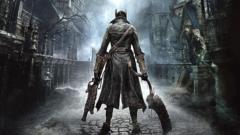
The internet is currently patting itself on the back because Sony finally acknowledged the existence of Bloodborne. After years of radio silence on a PC port or a 60 FPS patch, fans are clinging to news of a film adaptation involving Seán McLoughlin—better known as Jacksepticeye—as if it’s a life raft. It isn't. It's an anchor.
Most reporting on this project is lazy. It focuses on the star power of a creator with 30 million subscribers and the prestige of the source material. It assumes that "fan-led" projects are inherently superior to studio-driven ones. This is a fundamental misunderstanding of why Bloodborne works as a piece of software and why it will almost certainly fail as a piece of cinema. For an alternative look, see: this related article.
The industry is chasing the high of The Last of Us and Fallout, ignoring the fact that those games were essentially movies you played. Bloodborne is a nightmare you inhabit. You cannot film a nightmare; you can only document it. And no amount of YouTube clout can bridge that structural gap.
The Narrative Fallacy of Yharnam
The biggest mistake critics and fans make is treating Bloodborne’s story as a script. It’s not. It’s a mosaic. Related analysis on this trend has been shared by The New York Times.
In FromSoftware’s masterpiece, the "story" is told through item descriptions, environmental cues, and the rhythmic repetition of failure. You learn about Father Gascoigne not through a three-act monologue, but through the music box his daughter gives you and the blood-stained scarf found on a roof. This is diegetic storytelling at its most extreme.
When you translate this to film, you have two choices, both of which are disasters:
- The Lore Dump: You hire an actor to play a Hunter who walks around Yharnam while a sidekick explains the history of the Healing Church. This kills the mystery.
- The Pure Vibe: You make a silent, abstract horror film. This alienates the mass audience Sony needs to justify a $100 million budget.
The competitor articles suggest that having a "true fan" like Jacksepticeye involved ensures the "soul" of the game remains intact. I’ve spent fifteen years watching studios try to bottle "soul" by hiring consultants. It doesn't work. The soul of Bloodborne isn't in its character designs; it's in the player's agency. The moment you take the controller out of the hand, you’ve removed the tension. In a game, you are afraid because you might lose your Echoes. In a movie, you’re just watching a stuntman in a duster coat run through a Gothic set.
The YouTuber Paradox
Let’s address the elephant in the room: Jacksepticeye’s involvement.
Fans see this as a win for "the community." Industry insiders see it as a desperate attempt at guaranteed impressions. Using a content creator as a creative pillar for a massive IP adaptation is a strategy designed to bypass traditional marketing costs, not to improve the quality of the script.
I’ve seen production companies pull this stunt before. They leverage the creator's reach to build a "built-in" audience, only to find that a YouTube subscriber is not the same thing as a ticket buyer. There is a massive psychological difference between watching a 20-minute Let’s Play for free and driving to a theater to pay $20 for a feature film.
Furthermore, the creative demands of a film set are diametrically opposed to the skills required for digital content creation. A YouTuber is a personality; they succeed by being themselves, loudly and consistently. A film requires a cohesive vision where the individual must disappear into the machinery of the production. Unless Jacksepticeye is there merely to post "hype" tweets—which would be a cynical waste of his time—his presence creates a "too many cooks" situation in a kitchen that already has Sony’s corporate chefs breathing down the director's neck.
Why Gothic Horror Fails the Blockbuster Test
The industry is currently obsessed with the "cinematic universe" model. They want Bloodborne to be the start of something. But the aesthetics of the game—Lovecraftian cosmic horror blended with Victorian rot—do not scale well for a general audience.
Realize that $250-per-night hotel guests aren't the target demographic here. To make back its budget, a Bloodborne movie needs to appeal to the person who thinks Call of Duty is "too complicated." To reach that person, the studio will inevitably:
- Sanitize the Gore: Bloodborne’s entire mechanic revolves around being covered in viscera. A PG-13 rating (the holy grail for box office) would neuter the visual language.
- Humanize the Hunter: In the game, the protagonist is a blank slate. In a movie, they’ll need a tragic backstory, a love interest, or a "save the world" motivation that the game pointedly avoids.
- Explain the Eldritch: The ending of Bloodborne is intentionally opaque. It deals with the birth of gods and the transcendence of humanity. Hollywood hates ambiguity. They will explain the Great Ones until they are just generic aliens with too many eyes.
Stop Asking for "Faithful" Adaptations
"People Also Ask" columns are filled with queries like, "Will the Bloodborne movie be faithful to the game?"
That is the wrong question. A "faithful" adaptation of Bloodborne would be a two-hour loop of a man getting hit by a brick-wielding giant, dying, and waking up at a lamp.
The question you should be asking is: "Does Bloodborne gain anything by being a movie?" The answer is a resounding no. The Last of Us gained a broader emotional reach by focusing on the performances of Pedro Pascal and Bella Ramsey. Arcane expanded the thin lore of League of Legends into a Shakespearean tragedy. Bloodborne, however, is already at its peak. It is the definitive version of its own story.
When a game is built entirely around the liminal space between the player and the screen—the feeling of "Insight" changing the world around you—moving it to a passive medium isn't an "expansion." It’s a subtraction.
The Reality of the "Sony Synergy"
Sony isn't making this movie because they have a great story to tell. They are making it because their data shows that "Bloodborne" is a high-value keyword with zero current monetization outside of the occasional plushie.
They are following the Uncharted roadmap:
- Identify a dormant but loyal fan base.
- Attach a recognizable face.
- Deliver a 90-minute action flick that uses the IP as wallpaper.
- Profit from the "hate-watch" and the "hope-watch."
The "insider" truth that nobody wants to admit is that this film is likely a placeholder. It’s a way for Sony to keep the IP "active" without having to actually fund a sequel or a remaster—both of which are significantly more expensive and risky from a software development standpoint than a mid-budget horror film.
I’ve sat in meetings where IPs were "optioned" just to keep them away from competitors or to satisfy a shareholder report. The fact that a YouTuber is the primary talking point this early in the cycle suggests the project lacks a strong directorial voice or a compelling script. It’s marketing-first, filmmaking-second.
The Cost of the Hype Cycle
By celebrating this announcement, the community is inadvertently telling Sony that we don't need a PS5 Pro patch; we just need a brand. We are accepting a diluted, passive version of a masterpiece in exchange for the "validation" of seeing it on a big screen.
Imagine a scenario where the movie flops. Sony doesn't blame the script or the marketing; they blame the IP. They conclude that "Bloodborne doesn't sell," and the franchise is buried forever. That is the risk. The "lazy consensus" says any news is good news. The reality is that a bad movie can be the final nail in a franchise's coffin.
Bloodborne’s greatest strength is its refusal to explain itself. It demands that you work for your understanding. Cinema, by its nature, is a medium of showing and telling. If you show the Moon Presence in a 4K trailer set to a pop-remix of a Mozart track, you’ve already lost.
You don't want a Bloodborne movie. You want the feeling you had the first time you stepped into Central Yharnam. No YouTuber, no matter how many millions of subscribers they have, can give that back to you in a theater seat.
The Hunt is over the moment the cameras start rolling.