The asphalt radiates heat long after the sun begins its slow descent over Austin. On any given afternoon, the concrete veins of this Texas city pulse with the ordinary rhythm of life: delivery trucks idling at traffic lights, parents picking up children from school, the low hum of air conditioners fighting an unyielding summer. A driver checks their rearview mirror. They see flashing lights. It is a reflex older than driving itself—a spike of adrenaline, a quick mental inventory of vehicle registration, insurance cards, and past mistakes.
We pull over because we are conditioned to obey the signal. We trust, or at least hope, that the interaction will follow a predictable script. License, registration, a stern warning or a polite ticket, and then the quiet click of the turn signal as we merge back into traffic. Meanwhile, you can read similar events here: Why Mass Approval is a Relic and Trump Wields the Noise on Purpose.
On a quiet stretch of Austin pavement, that script tore apart.
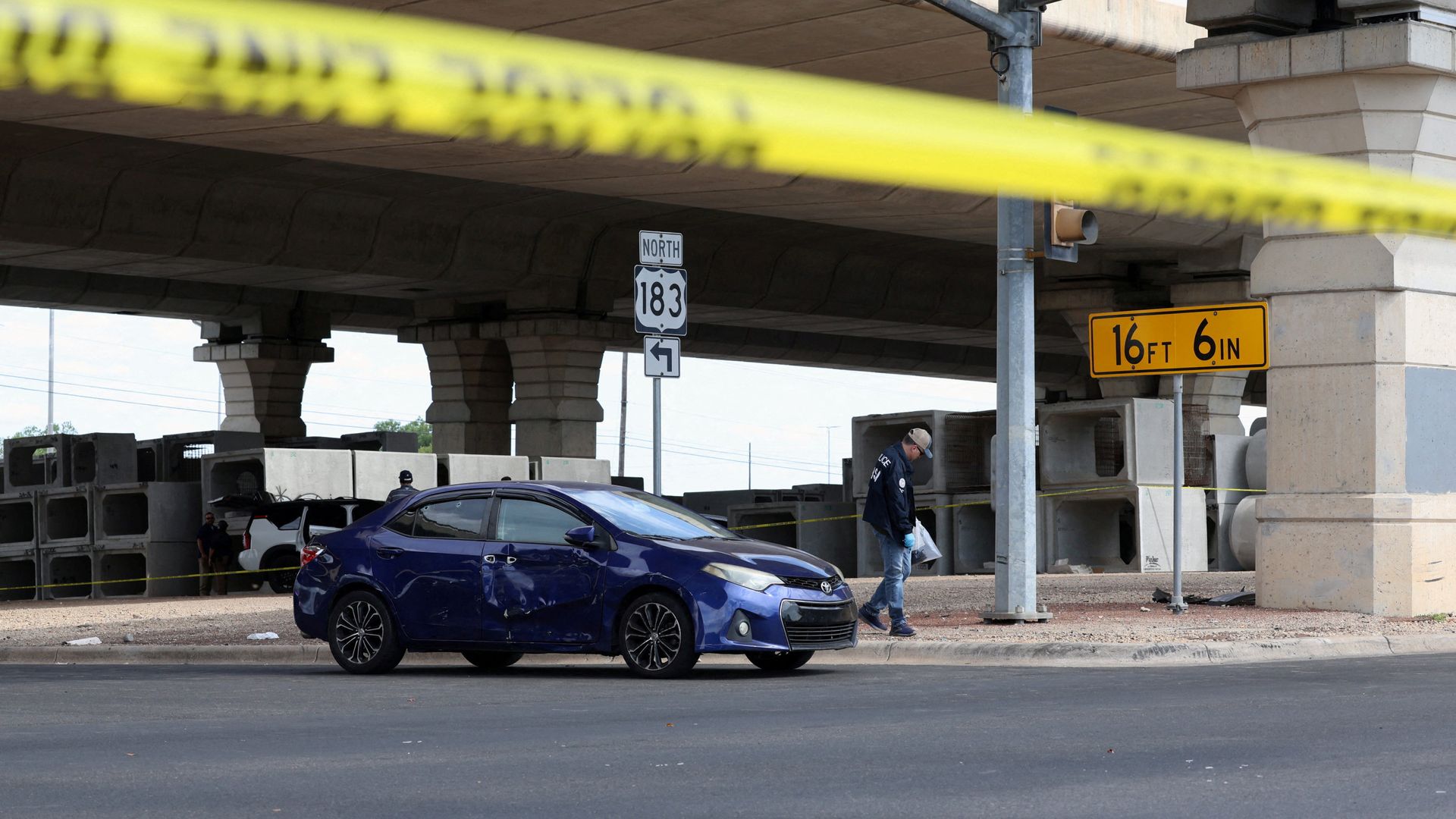
There were no local police cruisers with familiar municipal insignia. Instead, federal operatives from Immigration and Customs Enforcement converged on a vehicle. In a matter of heartbeats, what began as a routine traffic stop transformed into a violent theater of blood and sirens. Gunfire shattered the afternoon quiet. A man was wounded. Officials later released terse, antiseptic statements designed to contain the fallout, reduce liability, and satisfy the immediate demands of reporters. To explore the full picture, check out the recent analysis by Reuters.
Official statements are built to obscure the human terror at their core. They speak of operational parameters, tactical positioning, and perceived threats. They do not describe the smell of cordite mixing with exhaust fumes, or the deafening shockwave of a gunshot inside a confined space, or the raw, primal panic of a human being bleeding on the pavement while strangers in tactical gear shout conflicting orders.
To understand what happened on that Austin street, we have to look past the bureaucratic language. We have to examine the quiet, grinding friction that occurs when federal immigration enforcement intersects with the daily lives of millions of people who call American cities home.
The Anatomy of a Flashpoint
Every enforcement action begins long before the sirens wail. It starts in air-conditioned offices, through data analysis, surveillance logs, and inter-agency coordination. When ICE agents operate outside traditional detention facilities or processing centers, they navigate a complex landscape of local sentiment, legal gray areas, and heightened anxiety.
In Austin, a city known for its progressive posture and fierce independence, the presence of federal immigration authorities has long been a lightning rod. Local law enforcement agencies operate under explicit guidelines intended to maintain a degree of separation between municipal policing and federal immigration enforcement. The goal is simple in theory: to ensure that immigrant communities—documented and undocumented alike—can report crimes, call for emergency medical help, or talk to police officers without fearing that a routine call will result in deportation.
When federal agents conduct independent operations or specialized task force sweeps within municipal boundaries, that delicate firewall shakes.
Imagine sitting in the driver's seat of your car. You look in your rearview mirror and see armed individuals approaching your windows. They may wear vests marked with federal insignia, but in the blur of panic, badges and raid jackets blur into uniform symbols of threat. For someone with a tenuous grip on their safety, or someone whose entire existence is shaped by the chronic, low-grade terror of deportation, a traffic stop is not an administrative check. It is an existential crisis.
Now, shift the perspective. Step into the boots of the federal agent. You are operating in an environment where a significant portion of the local populace views your presence with hostility. You are executing orders, tracking targets, and carrying the heavy weight of a firearm and a badge. Every movement by a driver is scrutinized through the lens of survival. Is that hand reaching for license and registration, or is it reaching for a weapon? Does that sudden lurch mean compliance or assault? In the fraction of a second available for decision-making, the margin between a peaceful apprehension and a fatal shooting is measured in millimeters of hesitation.
This is the crucible where federal mandates collide with human vulnerability. It is a collision engineered by systemic policies that place armed enforcement officers into civilian traffic lanes, turning ordinary asphalt into a battleground of competing fears.
The Ripple Effect of a Single Bullet
When a gun discharges during a traffic stop, the physical wound is only the beginning of the rupture.
In hospital rooms across Austin, surgeons work to repair torn tissue, while investigators scour the scene for shell casings, and administrators draft press releases to manage the public relations storm. But the real shockwave radiates outward through families, neighborhoods, and communities who see themselves reflected in the wounded driver.
News travels fast through the digital veins of the city. A video snippet surfaces on social media—shaky, vertical, captured from a safe distance behind yellow police tape. Sirens flash against the twilight. Crowds gather, murmuring in a mixture of anger and disbelief. For immigrant families living in Austin, the incident reinforces a dark, persistent narrative: that safety is an illusion, that danger can materialize at any red light, and that the state possesses an unchecked monopoly on violence.
This climate of fear exacts a heavy toll. When people become afraid to drive to work, drop their children off at school, or visit grocery stores for fear of encountering federal checkpoints or sudden traffic stops, the social fabric frays. Small businesses lose customers. Medical clinics see drops in appointments. Children pick up on the acute stress of their parents, absorbing the tension like dry sponges.
The official response often frames these incidents as isolated anomalies—a regrettable tactical necessity in the enforcement of federal law. Yet, sociologists and legal scholars point out that when enforcement mechanisms routinely rely on high-stakes, public confrontations like highway traffic stops, violent outcomes cease to be statistical anomalies. They become structural inevitabilities.
The Illusion of Control on the Highway
Why traffic stops? Why intercept people in motion, inside metal cages hurtling down public corridors, rather than in controlled environments?
The answer lies in the logistics of modern enforcement. Highways and city streets are high-yield hunting grounds. Vehicles offer mobility, but they also offer confinement. A traffic stop allows federal agents to isolate a target, neutralize their ability to flee, and exert immediate control.
Yet, this tactical advantage comes with immense hazard. A moving vehicle is unpredictable. Traffic is chaotic. Bystanders are everywhere. When you introduce firearms and high-stress tactical maneuvers into the flow of civilian traffic, you introduce catastrophic risk to the public.
Consider the physics and the psychology combined. A driver is boxed in by unmarked or federal vehicles. Adrenaline floods their system. Fight-or-flight instincts override rational communication. The human brain under acute threat does not always process commands logically; sometimes, it freezes. Sometimes, it makes a frantic, self-protective movement that an armed officer interprets as aggression.
When the dust settles and the investigators reconstruct the timeline, they parse every millisecond of video footage. They measure the angle of the approach, the exact wording of the commands given, the precise moment the trigger was pulled. But no forensic report can account for the sheer human terror that drove both sides into that catastrophic intersection.
Living in the Shadow of the Badge
To live in Austin today is to inhabit a city of overlapping realities.
For some, federal enforcement actions are viewed as necessary measures to maintain the rule of law and secure national borders. They see agents performing a difficult, hazardous job under hostile conditions, tasked with enforcing laws enacted by elected representatives. From this perspective, the blame for a violent confrontation rests squarely on those who attempt to evade law enforcement or resist lawful orders.
For others, the presence of ICE agents conducting roadside raids and traffic stops represents an aggressive overreach that terrorizes communities and destabilizes civic trust. They see a system that militarizes daily life, turning routine commutes into potential flashpoints of violence.
Both viewpoints capture fragments of a broken system, yet both often fail to grasp the deeper tragedy: that the burden of this conflict is borne by individuals caught in the machinery of state power.
The man wounded on that Austin street has a name, a family, a history, and a future that was altered forever in the space of a heartbeat. Whether he recovers physically, the psychological scar remains. And for the city around him, the incident leaves a lingering question that cannot be answered by official press releases or police reports.
How long can a society rely on force, fear, and roadside confrontations to resolve deeply complex social and political failures without tearing itself apart from the inside out?
The Long Road Home
Night falls completely over Austin. The humidity breaks slightly, replaced by a cool breeze drifting in from the Hill Country. Traffic thins out on the highways. Taillights streak red and white across the overpasses, blurring into long ribbons of light under the amber glow of overhead streetlamps.
Drivers still stop at red lights. They still check their rearview mirrors when headlights flash behind them. But the reflex is no longer quite the same. For anyone who read the news, who watched the shaky smartphone footage, or who heard the sirens wail across the afternoon air, the highway carries a new weight.
Every turn signal clicked in the dark is a quiet gamble. Every approaching set of headlights carries a momentary shadow of doubt. We drive forward, navigating the concrete grid of our cities, trusting that the road ahead will lead us home, and hoping against hope that the violence of the world will stay safely behind the screen, never crossing the line to meet us where we live.