The cold in the Haut-Saint-François region of Quebec does not behave like a seasonal shift. It is a physical weight. By late February, the air has been stripped of every trace of moisture, leaving behind a clarity so sharp it feels as though the sky might shatter if you raised your voice. On a night when the thermometer drops toward -20°C, the wind stops being a breeze and becomes a scalding, invisible liquid.
This is the silence that met Ana Vitria de Oliveira da Silva as she stepped into the woods near the American border.
She was 22. She was from Brazil. In the photographs shared by her family after the coroner’s report was released, you see a face filled with the soft, unweathered optimism of youth. She wasn't an abstract statistic in a geopolitical debate. She was a daughter who had traveled thousands of miles, fueled by the specific, desperate momentum of someone searching for a doorway to a different life.
She found a wall of ice instead.
The Geography of Desperation
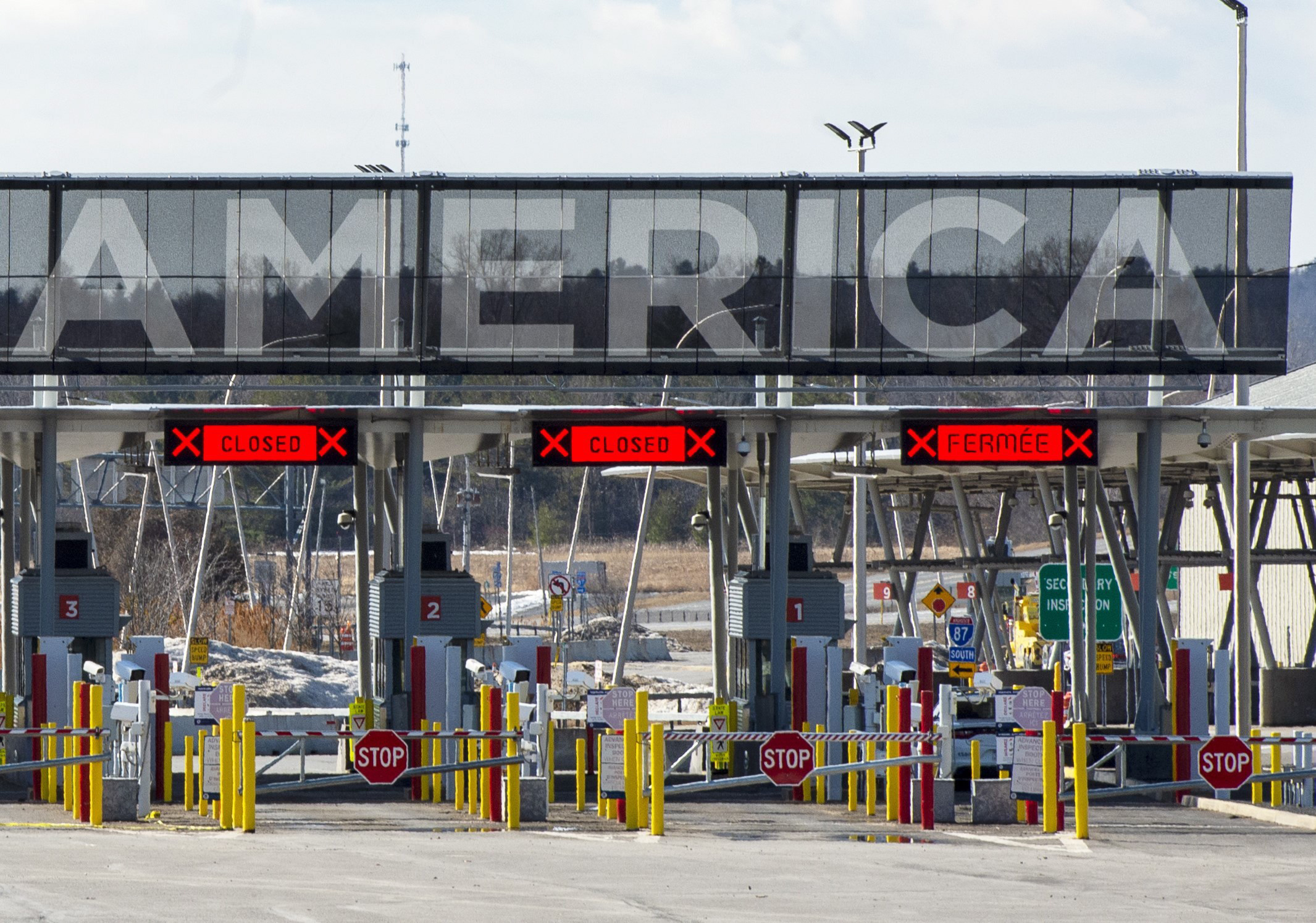
When we speak of borders, we often visualize lines on a map or concrete barricades. We think of policy, of the Safe Third Country Agreement, and of legal loopholes. But the reality of the border between Quebec and the United States is measured in footsteps through deep, unpredictable snow.
Ana Vitria was found in a wooded area near the municipality of Saint-Malo. To understand the gravity of her final hours, you have to understand the terrain. This isn't a cleared path. It is a dense, tangled thicket where the ground is uneven and hidden by drifts that can swallow a person to their waist.
Hypothermia is a deceptive killer. It doesn’t start with a scream; it starts with a whisper. As the body’s core temperature drops, the brain begins to misfire. Logic dissolves. There is a phenomenon known as "paradoxical undressing" where, in the final stages of freezing, the victim suddenly feels a burning heat. They begin to shed their clothes, convinced they are on fire when they are actually minutes away from the end.
Coroner Renée Roussel’s report was clinical, as reports must be. It noted the absence of foul play. It cited the cause of death as exposure to the cold. But between those lines lies the harrowing narrative of a young woman alone in a darkness so profound that the stars likely offered no comfort.
The Invisible Stakes of the Journey
Why does a 22-year-old woman risk a winter crossing in one of the harshest climates on earth?
The answer is never simple, yet it is always the same: the alternative was worse. We often view migration through the lens of "pull factors"—the allure of the American dream or Canadian stability. We rarely spend enough time looking at the "push factors." For Ana Vitria, the journey was a gamble where the stakes were her very existence.
Consider the logistical nightmare of such a trek. You are carrying your life in a backpack. You are likely wearing layers that are sufficient for a city walk, but entirely useless when you are stationary in the bush for hours. The moment sweat forms on your skin from the exertion of walking, you are in danger. Once you stop, that moisture turns to a layer of ice against your ribs.
The Quebec coroner highlighted that Ana Vitria was likely trying to cross into the United States. In recent years, the flow of migration has shifted. While much of the news focuses on those moving north into Canada, there is a steady, often overlooked stream of people moving south, trying to navigate the jagged bureaucracy of North American immigration by simply walking through the trees.
A Failure of Thermal Limits
Human beings are tropical animals. We are designed for warmth, for social clusters, and for shelter. Our biology is a fragile thing. When our internal temperature falls below 35°C, the heart begins to stumble. It struggles to push thickened blood through narrowing veins.
Ana Vitria was found on the morning of February 23. The search had been sparked by a call from her family, who had lost contact with her. Imagine that phone call. Imagine being in Brazil, where the sun is a constant, and realizing that your loved one is somewhere in a white wasteland you cannot even fathom.
The tragedy of her death isn't just a failure of equipment or preparation. It is a failure of a world that forces the vulnerable to choose between a slow death of opportunity at home or a fast death in the snow abroad.
The False Security of the Map
There is a terrifying disconnect between a GPS pin and the physical reality of the Quebec wilderness. On a screen, the border looks like a thin, manageable line. You might think, It’s only a few kilometers. I can walk that in an hour.
But the woods do not care about your map. In the dark, every tree looks like the one you passed ten minutes ago. The wind erases your tracks instantly. If you lose your glove, your hand becomes a wooden, useless thing in five minutes. If you trip and twist an ankle, the clock starts ticking toward a conclusion that no amount of willpower can stop.
The coroner’s report acts as a mirror to our current era. It reflects a time when the movement of people is restricted more tightly than ever, even as the reasons for that movement become more urgent. Ana Vitria de Oliveira da Silva wasn't a "migrant" in those woods. She was a person who was cold. She was a person who was likely terrified. She was a person who just wanted to reach the other side.
The Echo in the Forest
We often talk about "border security" as if it were a matter of sensors and patrols. We forget that the most effective barrier is the terrain itself. The mountains and the sub-zero temperatures of the North act as a silent, lethally efficient wall.
The death of Ana Vitria follows a grim pattern. We saw it with the Patel family in Manitoba, frozen just meters from the border. We see it in the Mediterranean. We see it in the Rio Grande. Each geography offers a different way to die, but the core story remains the same: the human spirit is willing to endure almost anything for the chance at a "better," even if that "better" is nothing more than a hope.
The report by Renée Roussel is now a permanent record. It is a document that will sit in a file, a cold summary of a warm life extinguished. It tells us that the wind was biting and the snow was deep. It tells us that a Brazilian woman died because her body could no longer maintain the fire required to stay alive.
But the report cannot capture the sound of the wind in the pines that night. It cannot capture the thoughts of a 22-year-old as she realized the lights of the nearest town were not getting any closer.
As the snow melts in Saint-Malo and the spring mud takes over, the physical traces of that February night will vanish. The woods will return to their indifferent green. But the shadow of that journey remains. It is a reminder that as long as we treat the movement of people as a legal problem rather than a human one, the borders will continue to claim those who have nothing left to lose but their breath.
The ground there doesn't just turn to glass; it becomes a tomb for those we failed to see until they stopped moving.