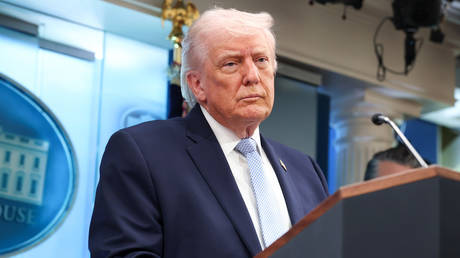
The notion that Donald Trump seriously intends to annex Canada has transitioned from a fever-dream social media theory into a persistent, if misguided, talking point. While recent reports and fringe political commentators suggest the former president has acknowledged the logistical impossibility of absorbing the Great North, the real story isn't about shifting borders. It is about a calculated use of aggressive rhetoric to reshape trade deals and energy security. The talk of annexation was never a literal policy goal; it was a blunt-force instrument designed to put Ottawa on the defensive.
To understand why this narrative gained traction, one must look at the mechanics of the United States-Mexico-Canada Agreement (USMCA). Trump’s history with Canada is defined by a singular fixation on trade deficits and what he perceives as unfair protectionism, particularly in the dairy and automotive sectors. By floating the idea of "merging" or "taking over" Canadian interests, the underlying message to the Trudeau administration—or its successor—is clear: the status quo is no longer guaranteed. Meanwhile, you can read other stories here: The Brutal Truth Behind Australia’s Failed War on Mice.
The Geography of Power
The United States and Canada share the longest undefended border in the world. It is a 5,525-mile stretch of interdependence that handles nearly $2 billion in trade every single day. Any serious discussion of annexation ignores the sheer administrative nightmare of integrating two distinct legal, healthcare, and parliamentary systems.
Canada operates on a federal parliamentary monarchy. The U.S. is a constitutional republic. Merging these would require a complete rewrite of both nations' founding documents. It is a non-starter. Instead of a literal land grab, the focus has shifted to "economic annexation." This involves the U.S. exerting such heavy influence over Canadian regulatory frameworks that the border becomes irrelevant for American corporate interests while remaining a barrier for Canadian sovereignty. To explore the full picture, check out the excellent report by The Washington Post.
Energy as the Real Prize
If there is a "why" behind the aggressive stance toward Canada, it lies beneath the soil of Alberta. The Canadian oil sands represent one of the largest crude reserves on the planet. For an administration focused on American energy dominance, Canada is not a neighbor to be conquered, but a resource hub to be managed.
The Pipeline Politics
The cancellation and subsequent debates over projects like Keystone XL showed the volatility of this relationship. When Trump talks about Canada, he is often talking about the flow of oil. The objective is to ensure that Canadian energy remains locked into the North American grid, preventing Ottawa from diversifying its exports to Asian markets. By maintaining a dominant position in the trade relationship, the U.S. ensures it remains the primary customer, effectively dictating the price of Canadian heavy crude.
Mineral Sovereignty
Beyond oil, the race for critical minerals—lithium, cobalt, and nickel—has turned Canada into a strategic battlefield. These materials are the backbone of the next century’s technology. The U.S. wants to ensure these minerals don't end up in Chinese supply chains. Threatening "annexation" or aggressive tariffs serves to remind Canada that its security and economic stability are tied to its willingness to align with Washington’s strategic goals against global rivals.
The Myth of the Fifty-First State
The cultural resistance to Americanization in Canada is often underestimated by observers in Washington. Canadian identity is frequently defined by its difference from the United States. From the single-payer healthcare system to stricter gun control, the social fabric of Canada is woven in a way that is fundamentally incompatible with current American political trends.
A forced or even a negotiated annexation would trigger an insurgency of bureaucracy. The Quebec question alone would paralyze the U.S. Congress. A province with its own language laws and a history of separatist movements is the last thing an American president wants to manage. The logistical reality of adding ten provinces and three territories—each with its own debt, infrastructure needs, and political leanings—would bankrupt the federal treasury and lead to a decade of legislative gridlock.
Trade as a Weapon
We are approaching the 2026 review of the USMCA. This is the real deadline. The talk of annexation is the opening salvo in a negotiation where the U.S. intends to demand massive concessions.
- Dairy Access: The U.S. wants to dismantle the Canadian supply management system that protects local farmers.
- Digital Services Taxes: Washington is prepared to retaliate against Canadian taxes aimed at American tech giants like Google and Amazon.
- Defense Spending: The U.S. is tired of Canada failing to meet the 2% NATO spending target while relying on the American nuclear umbrella.
By framing Canada as a "failed state" or a "potential territory," the rhetorical strategy shifts the "middle ground" of the negotiation. If the starting point is "I might take over your country," then "Give me 10% more of your dairy market" sounds like a reasonable compromise. It is a classic negotiation tactic played out on a geopolitical stage.
The Cost of Uncertainty
The danger of this rhetoric isn't that it will actually lead to a change in the map. The danger is the erosion of trust. Businesses crave stability. When the leader of the world’s largest economy suggests that the sovereignty of its largest trading partner is optional, investment chills.
Canadian firms are already looking to diversify. They are exploring deeper ties with the European Union and the Indo-Pacific. However, the gravity of the American economy is hard to escape. Canada sends 75% of its exports south. It cannot simply walk away. This creates a lopsided power dynamic that the U.S. is now exploiting with unprecedented bluntness.
National Security and the Arctic
As the ice melts, the Northwest Passage is becoming a viable shipping route. Russia and China are already moving pieces on the Arctic chessboard. The U.S. views Canadian claims to these waters with skepticism. Annexation talk may be a clumsy way of asserting that the U.S. will not allow Canada to manage Arctic security alone if it isn't willing to foot the bill.
If Canada cannot defend its northern flank, the U.S. will do it for them—with or without an invitation. This "Arctic Sovereignty" issue is perhaps the only area where a physical American presence on Canadian soil could actually expand. It wouldn't look like a flag-raising ceremony in Ottawa; it would look like American icebreakers and permanent bases in Nunavut.
The Deflation of a Talking Point
The recent admission that annexation is "unlikely" isn't a retreat. It is an acknowledgment that the shock value of the statement has reached its limit. The focus is now shifting back to the spreadsheets. The tariffs, the quotas, and the border fees are the real tools of integration.
Washington doesn't need to annex Canada to control it. Through the USMCA and various defense treaties, the U.S. already enjoys most of the benefits of Canadian resources and geography without the burden of providing for its citizens or managing its internal politics. The "annexation" was always a ghost—a distraction meant to keep the Canadian government off-balance while the real deals were being cut behind closed doors.
Sovereignty is rarely lost in a single day of conquest. It is eroded through thousands of small concessions made under the pressure of economic survival. Canada remains a sovereign nation, but its room to maneuver is shrinking. The U.S. hasn't moved the border, but it has certainly tightened the leash.
The next time a headline suggests a merger of these two nations, look at the trade balance. Follow the pipelines. Monitor the mineral shipments. The map remains the same, but the power dynamic has shifted irrevocably. The "unlikely" nature of annexation doesn't mean the threat has vanished; it means the method of control has simply become more sophisticated.



