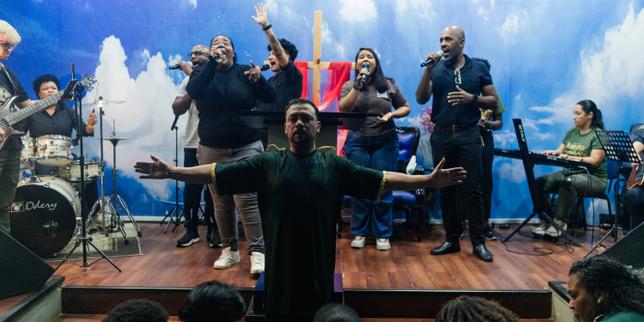
Walk into a Sunday service in São Paulo or Rio de Janeiro and you might hear a sermon that sounds less like the Gospel and more like a campaign rally. Plenty of believers hate it. They went to church to worship, pray, and find peace, not to get lectured on culture wars or handed a ballot checklist from the pulpit.
For years, outside observers treated Brazilian evangelicals as a single, lockstep voting bloc marching behind far-right candidates. That story is lazy. It's also wrong. Across Brazil, a growing number of pastors, theologians, and everyday churchgoers are openly frustrated by how hard-right politicians hijack religious language and church spaces for partisan gain.
When someone searches for why evangelicals in Brazil are pushing back against the politization of their worship, they're usually trying to make sense of a contradiction. How did a movement that grew by meeting people in working-class neighborhoods and favelas end up tied so tightly to right-wing populism, and why are so many believers now saying enough is enough?
How Evangelicals Became a Political Magnet in Brazil
To understand the backlash, you have to look at how fast Brazil's religious map shifted. Decades ago, Brazil was overwhelmingly Catholic. Over the last forty years, evangelical Christianity—especially Pentecostal and neo-Pentecostal denominations—expanded rapidly, particularly in urban peripheries where state services often felt distant or absent. Census data from the Instituto Brasileiro de Geografia e Estatística (IBGE) has tracked this long-term transformation from a predominantly Catholic country into a much more pluralistic religious society.
Politicians noticed the numbers immediately. A church congregation isn't just a room full of people; it's a tight-knit community built on trust, weekly gatherings, and shared moral vocabulary. Candidates from across the spectrum courted pastors and religious leaders, though conservative and far-right figures leaned hardest into culture-war themes like family structure, abortion, gender roles, and crime.
Here's the catch, though. Having conservative views on moral questions doesn't make every evangelical a far-right militant. Plenty of believers care deeply about social justice, poverty, racial inequality, and environmental stewardship. When a politician wraps harsh rhetoric or partisan grievances in Christian slogans, it rubs many devout people the wrong way.
I've followed Brazilian politics and religion long enough to see how tempting it is for commentators to reduce millions of people to a caricature. One common mistake people make is assuming that because a prominent megachurch pastor backs a right-wing candidate, every person sitting in the pews agrees. Real life is messier than that. A church member might pray for a candidate's family or agree on one issue while feeling genuinely sickened when the pulpit turns into a political stage.
Why Churchgoers bristle When Worship Turns Partisan
Ask devout Christians why the politization of worship bothers them, and you'll usually hear three complaints over and over.
First, there's spiritual fatigue. People dealing with inflation, unstable jobs, or safety worries go to church looking for grace and community. When every service turns into us-versus-them politics, the sanctuary starts feeling like another cable news shoutfest.
Second, there's a sense of betrayal. Many believers feel their faith is being used as a prop. When politicians quote scripture selectively to defend aggressive rhetoric or personal power, faithful Christians see a distortion of what Jesus taught. Saying "it's sad that religion is used by the far right" captures a feeling shared by people who don't want their faith turned into a political brand.
Third, there's worry about the church's witness in society. When non-believers or moderate citizens equate evangelicalism with authoritarian posturing or harsh exclusion, the church loses credibility as a place of healing and service. Pastors who care about long-term ministry know that short-term political hype can burn long-term trust.
Research from institutions like the Pew Research Center on religion in Latin America has consistently shown wide variation in how religious affiliation connects to political attitudes and social priorities. Even within the same country or denomination, believers don't all read politics through the same lens.
The Myth of the Monolithic Evangelical Vote
Let's be honest about something. Media coverage loves neat labels. "The evangelical bloc" is a convenient shorthand for reporters and analysts.
In practice, Brazilian evangelicals are divided by region, class, race, age, and denomination. Historic Protestant churches, independent congregations, Pentecostal churches, and neo-Pentecostal megachurches don't operate under one command center. Even within a single neighborhood, one pastor might urge congregants to vote with a conservative candidate while another emphasizes care for the poor or warns against confusing the Kingdom of God with any earthly government.
Political scientists who study Brazilian elections, including researchers affiliated with CEBRAP, have long pointed out that religious identity interacts with economic conditions, local networks, and media habits rather than dictating a single uniform vote. Still, the stereotype persists because loud voices get amplified.
There's also a legitimate debate inside churches about civic duty. Nobody serious claims faith is completely separate from public life. Caring about neighbors, honesty in government, and protection of the vulnerable all have public dimensions. The real argument isn't whether Christians should care about society. It's whether politicians should co-opt sacred spaces and demand blind loyalty in the name of God.
What This Tension Means for Faith and Politics
When religion gets pulled too tightly into partisan politics, both sides pay a price. Politics becomes apocalyptic—every election turns into a cosmic battle between good and evil, making compromise look like treason. Meanwhile, faith risks shrinking into a political identity badge.
For believers who push back against far-right instrumentalization of their worship, the goal isn't necessarily to become left-wing activists overnight. Plenty of them remain socially conservative or politically independent. What they want is breathing room—a church that focuses on prayer, scripture, charity, and spiritual growth rather than acting as a megaphone for partisan factions.
If you're trying to read news about Brazil or talk with people there about faith and politics, keep a few practical habits in mind:
- Watch who is speaking. A loud political endorsement from a high-profile leader or candidate doesn't automatically represent every congregation or every churchgoer.
- Separate moral convictions from party loyalty. Someone can hold traditional views on family or faith without endorsing every policy or personality on the right.
- Look at local community work. Pay attention to what local churches actually do on the ground—food drives, addiction recovery, youth programs—alongside whatever happens on social media.
- Check multiple sources. Read reporting from independent Brazilian outlets and academic researchers rather than relying on partisan social feeds that reward outrage.
Faith in Brazil has always been alive, loud, and deeply tied to everyday struggles. Pushing back against political manipulation isn't about abandoning belief; for many churchgoers, it's the only way to keep their faith honest.