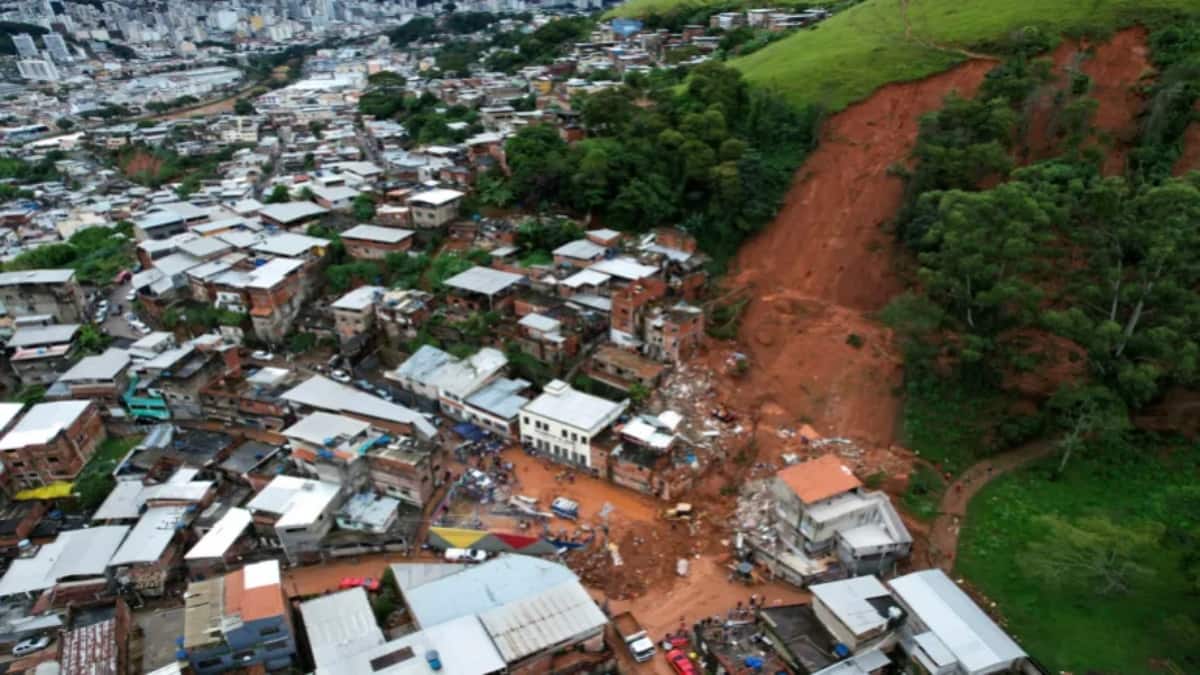
Rio Grande do Sul is underwater. Again. The numbers coming out of southern Brazil aren't just statistics anymore; they're a loud, muddy wake-up call that the region's climate has shifted into something far more dangerous. With the death toll hitting 46 and thousands displaced, we have to stop calling these "unprecedented" events. They are the new baseline.
The sheer scale of the destruction in Taquari Valley is hard to wrap your head around if you aren't standing in the thick of the sludge. Entire houses didn't just flood. They vanished. When the Taquari River breached its banks, it transformed into a conveyor belt for debris, smashing through towns like Muçum and Roca Sales with a violence that caught even the most prepared residents off guard.
I’ve watched how these stories usually play out in the media. There’s a flurry of coverage about the body count, a few shots of helicopters rescuing people from rooftops, and then the world moves on. But if you want to understand why this keeps happening, you have to look at the collision of geography, bad urban planning, and a warming atmosphere that holds more water than it used to.
The Geography of a Disaster
Southern Brazil sits in a volatile atmospheric crossroads. You’ve got hot air from the Amazon meeting cold fronts from the south. It’s a recipe for instability. But lately, the "recipe" has been dialed up to eleven. During this latest disaster, some areas saw more rain in 72 hours than they usually get in the entire month of September.
The Taquari Valley is shaped like a funnel. When heavy rain hits the highlands, all that water has only one way to go. It rushes down into the narrow valleys, gaining speed and power. By the time it reaches towns like Muçum, it isn't just a rising tide. It's a wall of water.
Governor Eduardo Leite didn't mince words when he called it the highest death toll for a climate event in the state's history. He’s right to be worried. The infrastructure we built thirty or forty years ago was never designed for this volume of liquid. We are bringing 20th-century drainage to a 21st-century storm. It doesn't work.
What the Headlines Missed About the Recovery
Most reports focus on the immediate rescue, but the real story is what happens when the water retreats. It leaves behind a thick, toxic layer of mud that hardens like concrete. It ruins electrical grids. It kills livestock that the local economy depends on.
In Muçum, where over a dozen people lost their lives, the town center looked like a war zone. It wasn't just "flash floods wreak havoc" as the dry headlines suggest. It was the total erasure of a community's sense of safety. People who lived their whole lives near the river, thinking they knew its limits, found out those limits no longer exist.
- Communication blackouts: When the towers go down, people can't call for help.
- Logistical nightmares: Mudslides cut off the main highways, meaning food and clean water have to be flown in.
- The psychological toll: Imagine cleaning the mud out of your living room for the third time in two years.
Stop Blaming Just the Rain
It's easy to point at the sky and say, "Well, it rained too much." That’s a cop-out. The severity of these floods is bolstered by how we treat the land. Deforestation along riverbanks—the "riparian forests" that are supposed to act as a sponge—means there's nothing to slow the water down. We’ve paved over wetlands. We’ve built neighborhoods in floodplains because the land was cheap.
If you look at the data from the National Center for Monitoring and Early Warning of Natural Disasters (Cemaden), the warnings were there. But warnings only work if people have somewhere to go and a way to get there. Many of the victims were elderly or lacked the transport to escape in time.
We also have to talk about the "blocking" patterns in the atmosphere. High-pressure systems over central Brazil often trap these rain clouds over the south, forcing them to dump everything in one spot. It’s like a garden hose left running on a single patch of dirt. Eventually, the ground just gives up.
The Cost of Staying Put
The economic hit to Rio Grande do Sul is going to be felt for years. This is one of Brazil's agricultural engines. When the fields are submerged and the silos are destroyed, the price of food goes up for everyone. It’s not just a local tragedy. It’s a supply chain shock.
Federal aid is trickling in, but it’s a band-aid on a gunshot wound. Rebuilding the same houses in the same spots is an exercise in futility. We need a radical shift in how southern cities are mapped out. That means moving entire neighborhoods to higher ground. It sounds expensive because it is. But it’s cheaper than burying 46 people every time a storm rolls in.
Steps for Survival and Change
If you live in a high-risk zone or want to help those who do, "thoughts and prayers" won't cut it. Real action is the only currency that matters now.
First, demand better local mapping. Most municipal flood maps are woefully out of date. They don't account for the increased rainfall intensity we've seen since 2020. You can't prepare for a threat you haven't measured.
Second, support the reforesting of riverbanks. It’s not just "green" posturing; it’s literal flood defense. Roots hold the soil. Trees break the water’s momentum.
Third, get serious about emergency kits. This sounds basic, but in the Taquari Valley, the people who survived were often the ones who had a "go-bag" and left the second the rain didn't stop. Don't wait for the official siren. If the water is rising and you’re in a low-lying area, get out.
The mud in Rio Grande do Sul will eventually dry, but the climate that brought it isn't going anywhere. We can either adapt our cities to handle the water or keep watching them get washed away. The choice is pretty clear, even if the water isn't.
Check your local flood risk through official geological surveys and start an emergency plan that doesn't rely on cell service. The next storm isn't a matter of "if," but "when."