Foreign ministries love a good joint statement. They spend months trading redlines, fighting over semicolons, and haggling over adjectives, all so they can emerge into the flashbulbs and declare that a room full of geopolitical rivals has achieved historic alignment.
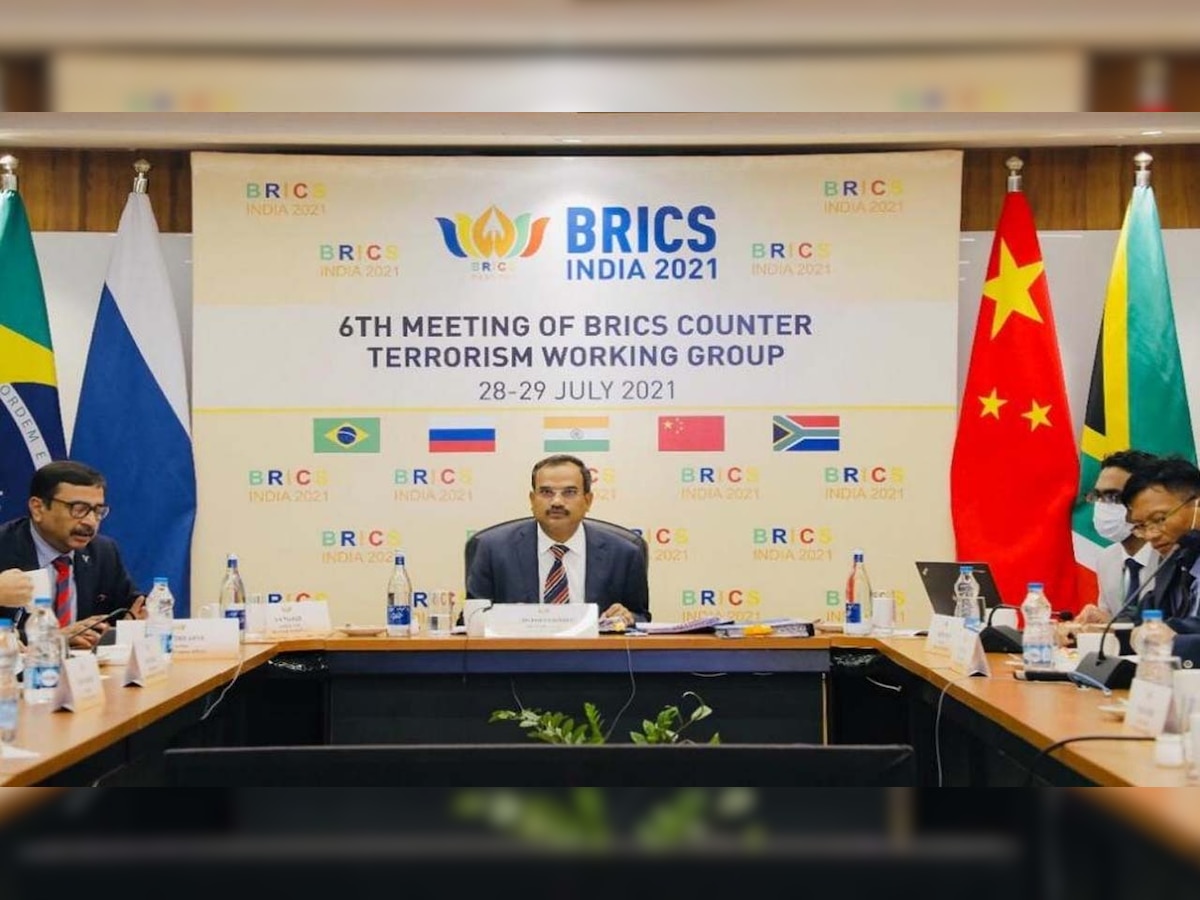
When India's External Affairs Minister S. Jaishankar hailed the recent BRICS consensus condemning terrorism following an attack, the media machine swung into predictable gear. Editorial boards treated it as a diplomatic triumph. Analysts framed it as a watershed moment for isolating state sponsors of terror. You might also find this connected coverage useful: Darkness Under the Mountain Where Two Nations Dig for Life.
It is none of those things. It is diplomatic wallpaper.
Celebrating a multilateral declaration against terrorism is like applauding a group of arsonists for signing a strongly worded petition against fire. You can get every single capital on earth to endorse a paragraph condemning murder in the abstract, and you will not have saved a single human life or stopped a single cell from moving funds across a border. As extensively documented in recent reports by The Guardian, the effects are widespread.
If you want to understand why international counter-terrorism declarations are failing, you have to stop listening to what diplomats say in air-conditioned convention centers and start looking at what intelligence agencies do in the dark.
The Consensus Trap
The fundamental flaw in treating BRICS communiques as security victories is a profound misunderstanding of how consensus documents are manufactured.
In multilateral bodies, consensus does not mean agreement. It means exhaustion. It means that after forty-eight hours of grueling, bad-faith negotiations, a bureaucrat from a country that quietly harbors terrorist financiers decides that letting a specific word stay in the text costs them nothing, so long as they can strip out any enforcement mechanism attached to it.
When a bloc like BRICS issues a condemnation, every single member signs off because the text is deliberately designed to be operationally empty. It contains no enforcement teeth. It imposes no sanctions. It triggers no automatic military or financial penalties. It is an expression of pious hope, drafted by diplomats whose entire professional survival depends on avoiding actual conflict.
I have sat in rooms where foreign policy elites congratulate themselves over a negotiated clause about regional stability while knowing full well that two signatories at the same table are actively funding opposing insurgencies fifty miles away. The disconnect between the text on the page and the reality on the ground is not an oversight. It is the entire point.
The Structural Hypocrisy
Let us look honestly at the makeup of the club. BRICS is not an alliance of shared values; it is an economic alignment of convenience built around nations with competing interests, conflicting territorial claims, and radically different definitions of who qualifies as a freedom fighter versus who qualifies as a terrorist.
When you build a coalition where one member protects proxy groups as a matter of state doctrine, another member maintains deep strategic and financial dependencies with those same sponsors, and a third member is trying to manage domestic security without upsetting lucrative trade deals, what kind of anti-terror consensus do you actually get?
You get linguistic mush. You get a sentence that condemns terrorism "in all its forms and manifestations" without ever naming the specific handlers, the specific banks, or the specific intelligence directorates orchestrating the violence.
A condemnation that refuses to point a finger at a specific address is an alibi, not an accusation. When Jaishankar and his counterparts sign off on these broad condemnations, they are offering diplomatic cover to nations that have mastered the art of plausible deniability. It allows the offending states to nod solemnly at a global microphone while continuing their clandestine operations unchecked.
Why Governments Sell the Illusion
Governments do not push these statements because they stop terrorism. They push them because they need domestic domestic optics.
Foreign policy establishments face a brutal political constraint. When a horrific attack occurs—whether in Pahalgam or anywhere else—citizens demand immediate, visible action. They want retaliation, isolation, and accountability. But actual retaliation carries economic costs, military risks, and geopolitical friction that leaderships are frequently unwilling or unable to bear.
So, governments substitute communication for action.
A joint statement from a major international summit is the perfect political sedative. It gives the evening news anchors a talking point. It gives the foreign minister a clip for social media feeds. It creates the comforting illusion that the international community has rallied around the flag, transforming a localized tragedy into a global crusade.
Meanwhile, the terrorist masterminds sleep soundly in safehouses funded by state treasuries, entirely unbothered by a BRICS footnote that does not freeze a single dollar of their assets or ground a single flight.
By treating these communiques as victories, governments actively disarm themselves. They create a metric of success based on ink rather than impact. Every hour spent negotiating a communiques paragraph about terror is an hour stolen from the unglamorous, grinding work of financial disruption, intelligence sharing, and targeted kinetic pressure that actually degrades terrorist networks.
The Mechanics of Real Deterrence
If you want to know what real counter-terrorism looks like, look away from the summit stage and look at the ledger books of international finance and signals intelligence.
Terrorism runs on three hard currencies: money, secure communications, and safe harbors. None of these are dismantled by consensus statements.
Money moves through correspondent banking networks, shell companies, and unregulated hawala channels. Halting it requires aggressive, unyielding pressure from financial intelligence units, secondary sanctions on complicit banks, and the willingness to cut non-cooperative jurisdictions off from the global financial system. When was the last time a multilateral BRICS communique threatened a major central bank with SWIFT expulsion for harboring terror financiers? Never, because consensus collapses the moment you name names and attach real costs.
Secure communications run on encrypted applications and compromised telecommunications infrastructure. Dismantling them requires technical penetration, cyber operations, and intense bilateral intelligence sharing between trusted partners who actually share threat perceptions—not large, bloated forums where intelligence leaks out the back door before the meeting concludes.
Safe harbors exist because sovereign states choose to protect proxy actors to achieve geopolitical leverage. The only thing that changes the calculus of a state sponsor of terrorism is credible, overwhelming deterrence—either through direct economic strangulation, military vulnerability, or the severe diplomatic isolation that comes from calling them out by name on the global stage, consequences be damned.
Asking a coalition that includes state sponsors of terror to sign a document condemning terror is a category error. It assumes that moral persuasion works on actors who treat violence as an instrument of foreign policy.
Dismantling the Myth
The danger of celebrating empty diplomatic wins is that it breeds strategic complacency. It tells the public that the job is being handled by the grown-ups in the room, lowering the political pressure required to take truly punishing measures.
When a nation falls victim to cross-border attacks, its leaders face a stark choice. They can either engage in the comforting theater of multilateral consensus-building—shaking hands with diplomats whose governments are double-dealing behind the scenes—or they can accept the lonely, high-cost reality of self-reliance.
History shows that terror networks are never crushed because their sponsors signed a communique in a resort city. They are crushed when targeted nations stop caring about diplomatic politeness, stop seeking broad international permission, and start imposing unilateral costs that make the sponsorship of violence more expensive than the benefits it provides.
Jaishankar is a sharp diplomat, and he knows precisely what these BRICS statements are worth. He knows they are diplomatic currency traded at a steep discount, useful only for tactical posturing in a crowded room. The tragedy is that the broader analytical class and the public mistake the tactic for the strategy.
Stop reading the communiques. Look at the money trails. Look at the intelligence sharing. Look at the border enforcement. If those are not changing, the rest is just noise designed to keep you quiet while nothing changes.
True security does not come from getting your enemies to sign a piece of paper condemning your pain. It comes from having the power, the focus, and the ruthlessness to ensure that causing that pain becomes a fatal miscalculation.
Until we measure diplomatic success by assets frozen, networks smashed, and handlers exposed rather than paragraphs adopted, we are simply rearranging deck chairs on a sinking ship of statecraft.
The next time a foreign ministry official steps up to a podium to announce a historic consensus against terror, do not look at the signatures on the page. Look at the border. Look at the bank accounts. That is where the war is won or lost. The rest is just ink.