The Architecture of Defiance
Money is ultimately a matter of trust backed by aircraft carriers. For decades, international trade operated on a singular, frictionless assumption: the United States dollar ruled every major commodity transaction, treasury bond market, and cross-border settlement channel. Nations outside Washington’s geopolitical orbit absorbed the cost of that dominance, holding vast dollar reserves to insulate their domestic economies from sudden currency shocks. That era is sputtering toward a close.
Behind closed doors in financial ministries from Beijing to Brasília, central bankers are methodically constructing an alternative plumbing system for global commerce. The goal is straightforward: bypass the Western-controlled messaging network known as SWIFT and settle transactions without touching a single dollar bill.
This is not a sudden, dramatic overnight collapse of the greenback. It is a slow-motion architectural shift. The coalition aims to link national digital currencies into a unified multilateral network, neutralizing the threat of economic sanctions and currency weaponization. Yet, the path forward is mined with technical incompatibility, deep-seated mutual suspicion, and the sheer inertia of existing global trade habits.
Why the Current System is Breaking
The weaponization of global finance reached a tipping point when Western allies froze roughly three hundred billion dollars of Russian central bank reserves following the invasion of Ukraine. That single executive action sent a chilling signal to every capital holding surplus foreign exchange reserves. If reserve assets could be seized via stroke-of-pen sanctions through the New York clearing system, holding dollars suddenly transformed from a safe financial decision into an acute national security vulnerability.
Emerging economies began asking an urgent question. What stops Washington from applying similar pressure over semiconductor supply chains, territorial disputes, or environmental policies?
This fear accelerated exploratory talks within the bloc regarding a shared digital currency platform. Analysts often mischaracterize this initiative as a direct, unified replacement for the dollar. It is far more pragmatic and dangerous. It is a series of bilateral and multilateral plumbing connections designed to allow countries to trade oil, minerals, and manufactured goods using local currencies backed by distributed ledger technology.
The Mechanics of the Alternative Network
At the core of the proposed technical framework lies a concept known as multi-CBDC bridging. Traditional cross-border payments require correspondent banking chains where commercial banks hold accounts with each other, adding days of delay and multiple fee layers. A distributed ledger system removes those middlemen.
Imagine a hypothetical transaction where an energy importer purchases crude oil. Instead of routing the payment through New York using dollars, the transaction executes instantaneously via a smart contract that converts local digital currency directly into the exporter's digital currency at algorithmic exchange rates.
- Direct Settlement: Eliminates correspondent banking delays.
- Sanction Resistance: Bypasses traditional Western messaging rails entirely.
- Reduced Transaction Costs: Lowers foreign exchange conversion fees for participating governments.
Pilot programs involving select central banks have already tested these rails under controlled conditions. The technical feasibility is no longer in serious doubt. The code works. The political will, however, is an entirely different matter.
The Friction Points Nobody Wants to Discuss
Technical capability does not automatically translate into geopolitical harmony. The coalition promoting this alternative financial architecture is a disparate collection of regional heavyweights with conflicting economic ambitions and historical grievances.
China wants to internationalize the renminbi, turning its own fiat currency into the dominant regional anchor. India views Beijing's ambitions with extreme caution, fearing a swap from Western financial dominance to Asian currency vassalage. New Delhi insists on bilateral trade settlements in rupees, a currency that lacks international liquidity and convertibility, creating massive trade imbalances that exporting nations refuse to hold long-term.
Furthermore, capital controls remain an absolute red line for several participating states. A truly liquid international settlement currency requires open capital accounts and deep, transparent debt markets. Nations like China maintain strict controls over capital outflows to prevent domestic asset bubbles and currency flight. Without deep capital markets, any alternative digital currency risks becoming a closed-loop barter system rather than a genuine global reserve alternative.
Sovereignty Versus Integration
Every central bank jealously guards monetary sovereignty. Agreeing to link digital currencies means trusting a shared ledger infrastructure where a technical glitch or consensus failure in one jurisdiction could cascade across the entire trading block.
- Monetary Policy Conflicts: Differing inflation targets make fixed exchange rate pegs untenable.
- Data Security Concerns: Sharing transaction ledgers exposes sensitive national trade data to geopolitical rivals.
- Liquidity Asymmetry: Imbalanced trade flows mean certain members accumulate surplus digital tokens with limited utility outside specific bilateral corridors.
These contradictions explain why progress remains agonizingly slow despite ambitious rhetoric at annual summits.
The Long View on Global Reserve Currency Status
Dominant currencies do not disappear overnight. The British pound remained the primary invoicing currency for decades after the United Kingdom lost its status as the world's leading industrial and military power, simply because the institutional depth of London's markets had no rival.
The dollar enjoys an even deeper moat. Global trade invoicing, debt issuance, and private contracts are anchored in greenbacks. Multinational corporations use dollars not because governments force them to, but because every counterparty on earth accepts them without hesitation.
Yet, erosion happens at the margins before it accelerates at the center. Commodity trade outside the Western bloc is steadily migrating toward local currency arrangements. Gulf states are increasingly open to accepting non-dollar payments for oil exports. Central banks are purchasing physical gold at record pace, quietly diversifying their reserve portfolios away from sovereign debt instruments that carry political risk.
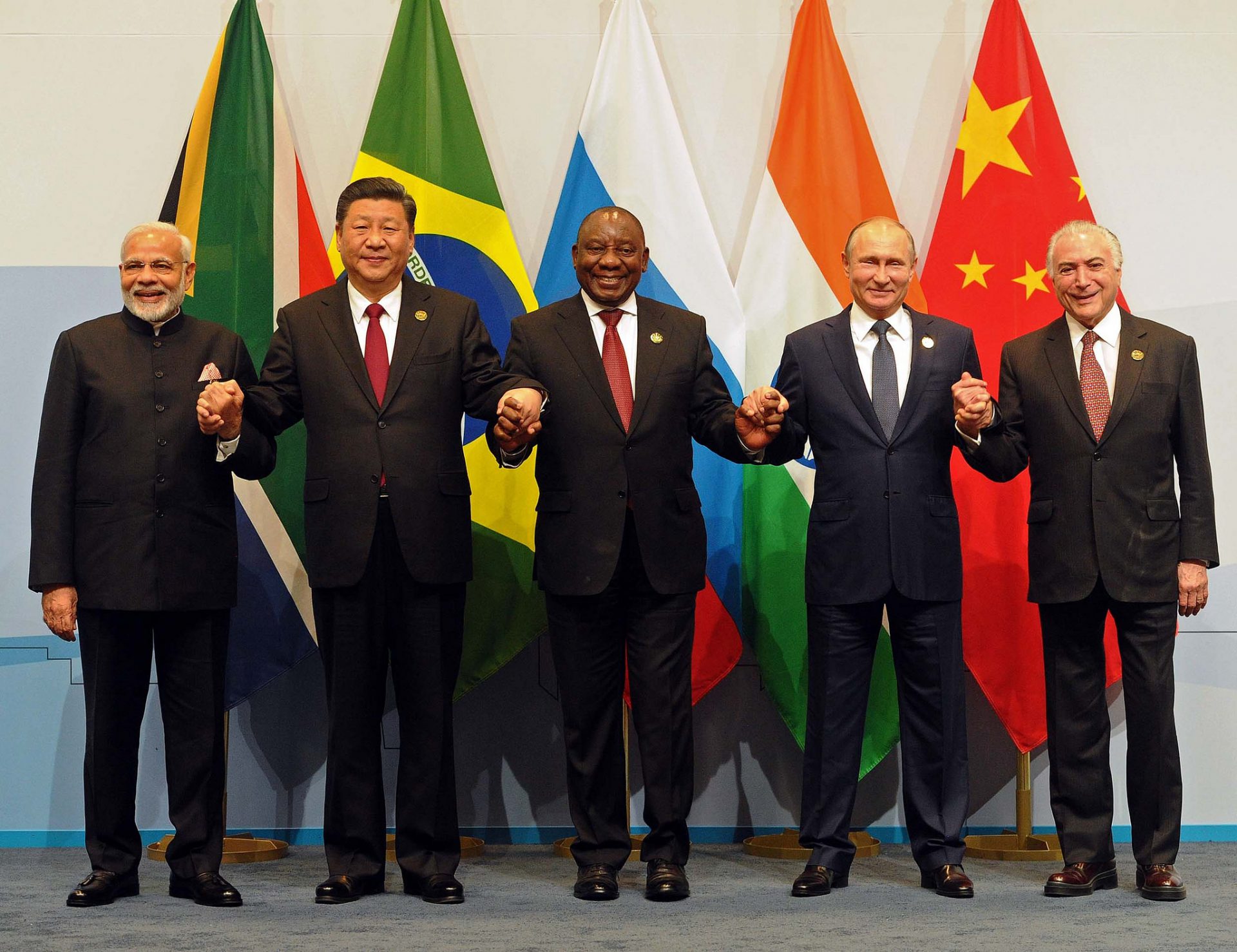
The push for a BRICS digital currency framework is less about creating an instant challenger to Wall Street and more about building an escape hatch. As financial fragmentation deepens, the world is moving away from a unipolar monetary regime toward a fractured, regionalized marketplace where the cost of doing business across geopolitical divides will permanently rise. The plumbing is being laid, trench by trench, far from the view of Western regulators.