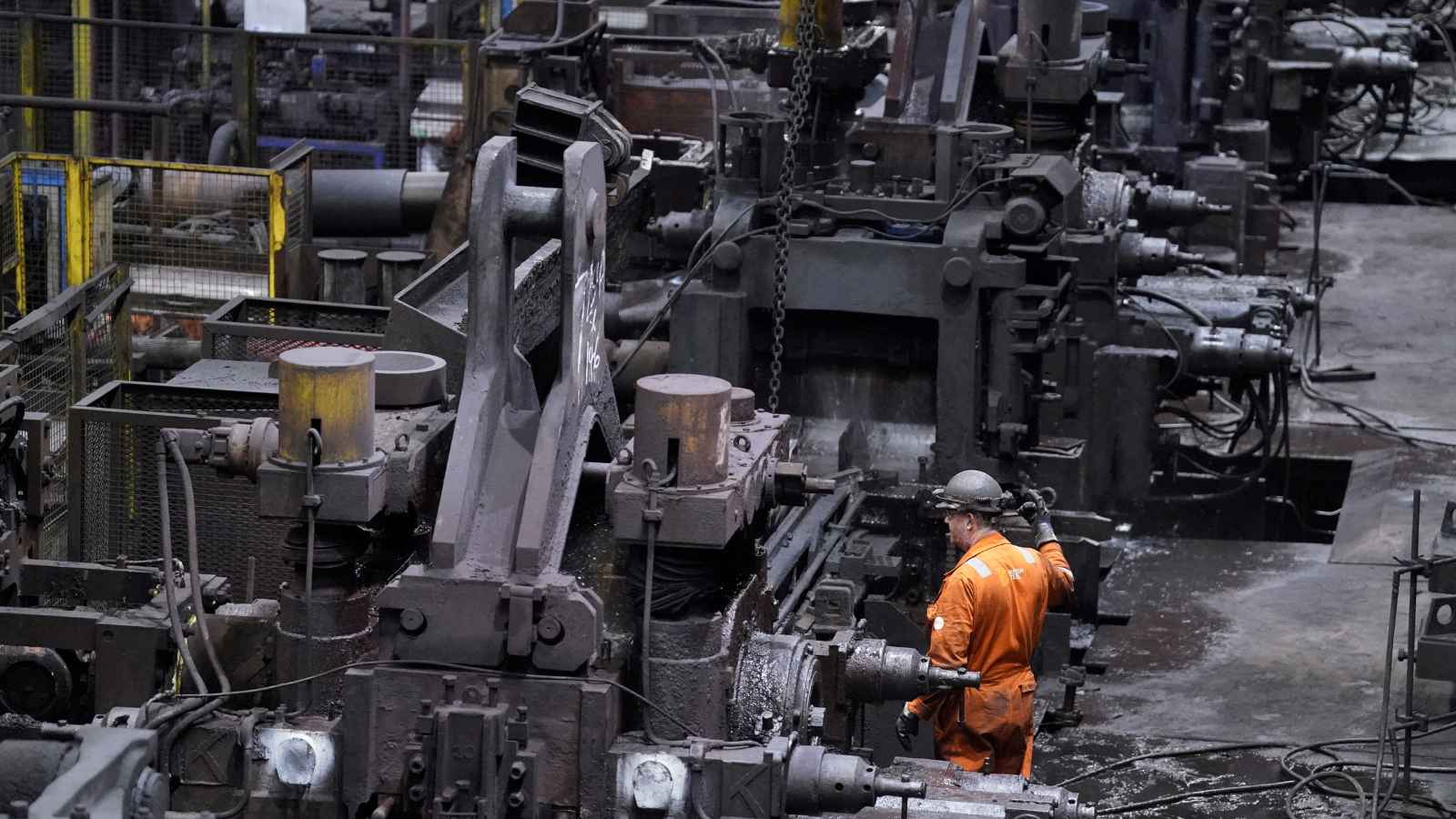
The British government just bought a massive, money-bleeding liability and called it a victory for national security.
When Whitehall stepped in to nationalise Chinese-owned British Steel, the media consensus solidified instantly. The headlines sang the same tune: a heroic rescue mission to protect the nation's sovereign steelmaking capacity, secure thousands of industrial jobs, and wrestle a vital asset away from foreign control.
It is a beautiful narrative. It is also completely wrong.
Nationalising British Steel does not protect the United Kingdom's industrial future. It subsidises its industrial decay. By pumping taxpayer billions into keeping obsolete, coke-fired blast furnaces on life support, the government is not achieving strategic autonomy. It is anchoring the British economy to the nineteenth century while the rest of the world builds the twenty-first.
Let us look past the geopolitical theatre and examine the brutal economic reality of modern metallurgy.
The Sovereign Steel Fallacy
The central argument for this nationalisation hinges on a flawed premise: that a modern economy requires domestic, primary blast-furnace capacity to be secure.
It does not.
I have watched governments dump fortunes into propping up dying industrial titans under the guise of national security. The playbook never changes, and it never works. The hard truth is that British Steel was not failing because its owners were Chinese; it was failing because the assets themselves are economically unviable in a high-energy, high-carbon-cost jurisdiction.
Primary steel production via blast furnaces requires massive imports of iron ore and coking coal. The UK does not have a captive, cheap supply of these raw materials. Every ton of steel birthed from Scunthorpe relies on global supply chains that are just as vulnerable to geopolitical disruption as the finished product itself.
True industrial resilience does not mean owning a polluting furnace. It means controlling the supply chains of the future.
Consider the structure of global steel consumption. Aerospace, automotive, and high-tech manufacturing do not just need raw volume; they need highly specialized alloys and advanced materials. The Scunthorpe plant produces long products—mostly rails and structural steel. These are commodities. Buying a commodity producer at a premium using public funds, while structural energy costs remain uncompetitive, is a fundamental misallocation of capital.
The Electric Arc Disruption Everyone Is Ignoring
The mainstream press laments the decline of traditional steelmaking while completely missing the technological shift reshaping the sector.
The future of Western steelmaking is not blast furnaces fed by coal. It is Electric Arc Furnaces (EAFs) fed by recycled scrap steel and powered by clean electricity.
Blast Furnace Route:  Iron Ore + Coking Coal + Massive Carbon Footprint = Commodity Steel
Electric Arc Route:   Scrap Steel + Renewable Power + Low Carbon Footprint = High-Value Alloys
The UK is one of the world's largest exporters of scrap steel. Every year, millions of tons of high-quality scrap are shipped out of British ports to be melted down in Turkey or Spain. At the same time, British taxpayers are now funding the importation of iron ore and coal to make primary steel at a loss.
It is economic madness.
Instead of forcing a nationalised British Steel to maintain its legacy footprint, the strategy should be an aggressive pivot toward a scrap-to-steel circular economy. EAFs require significantly fewer workers, use drastically less energy per ton, and cut carbon emissions by up to 80 percent.
But a scrap-based EAF strategy requires admitting a painful truth that politicians refuse to face: it requires far fewer jobs. Nationalisation is rarely about industrial strategy; it is almost always an expensive exercise in job preservation for localized voting blocks.
The Hidden Cost of Public Ownership
Let us address the operational reality of state-run heavy industry. When a government nationalises an asset to "save" it, the market discipline that drives efficiency vanishes overnight.
Private equity and foreign conglomerates walk away from failing steel plants because the math does not work. When the state steps in, the taxpayer becomes the lender of last resort for an entity that has no incentive to innovate.
- Capital Starvation: Government budgets are subject to political whims. A state-owned steel company must compete for capital against the NHS, schools, and infrastructure. Essential technological upgrades will be delayed by political bickering.
- Decarbonisation Deadlock: The UK has legally binding net-zero targets. By owning a massive carbon emitter, the government has internalised a massive financial conflict of interest. It must either subsidise carbon capture tech that does not yet work at scale, or pay carbon taxes to itself.
- Protectionist Inertia: Once the state owns the mills, it must protect them. Expect tariffs, quotas, and procurement mandates that force British infrastructure projects to buy overpriced domestic steel, driving up the cost of every new railway and bridge built in the country.
I am not suggesting the UK should abandon manufacturing. Quite the opposite. But we must decouple the romantic nostalgia of the industrial revolution from modern economic strategy.
The Playbook for Real Industrial Power
If the goal is genuine economic resilience, the current strategy must be inverted. Stop trying to fix an obsolete model.
First, accelerate the decommissioning of legacy blast furnaces. The capital earmarked for propping up British Steel's operational losses should be redirected entirely into building grid infrastructure capable of delivering cheap, industrial-scale renewable energy to EAF operators.
Second, secure the domestic scrap supply. Treat scrap steel as a strategic national resource. Impose export duties on raw scrap metal to ensure domestic EAFs have an abundance of cheap feedstock, turning a waste product into a competitive advantage.
Third, pivot up the value chain. The money wasted on nationalisation could fund massive R&D incentives for advanced metallurgy, powder synthesis, and additive manufacturing. Let the developing world compete on the low-margin volume of raw steel; the UK should dominate the high-margin engineering of advanced components.
The nationalisation of British Steel is not a bold vision for a sovereign future. It is a expensive admission of defeat—a declaration that the state would rather manage a slow decline than endure the brief, sharp pain of true modernization.
Stop celebrating the rescue of yesterday's technology. The furnace is dying. Let it cool.