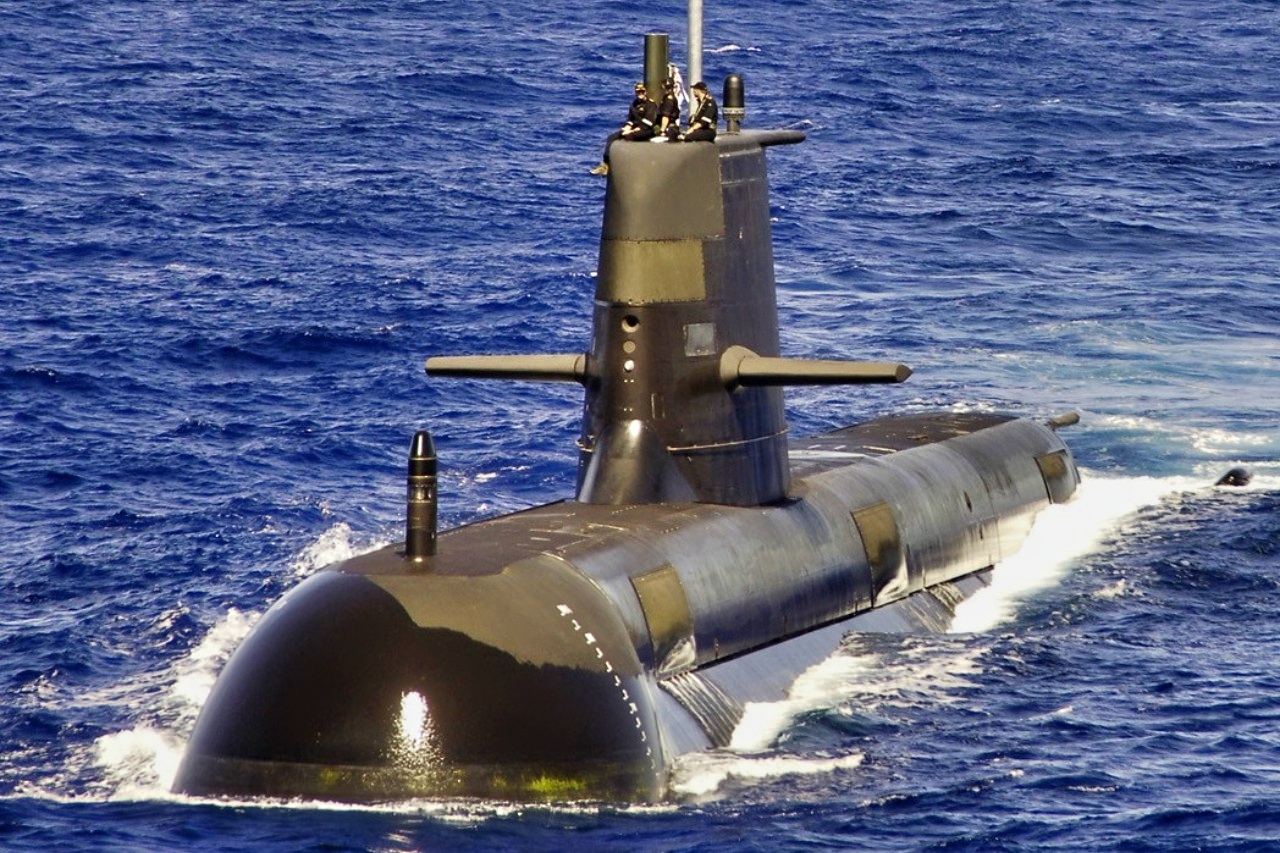
The arrival of the HMS Anson in the northern Arabian Sea marks a desperate escalation in a region already teetering on the edge of a full-scale kinetic war. By positioning a nuclear-powered attack submarine (SSN) within striking distance of the Iranian coast, the United Kingdom is signaling that it is finally ready to move beyond "defensive" posture. This 5,500-mile sprint from Perth, Australia, puts Tomahawk Block IV cruise missiles in a box seat to hit Iranian missile sites that have spent the last three weeks paralyzing the Strait of Hormuz.
While the official line from Downing Street emphasizes regional stability, the reality is far more precarious. The UK is currently operating with a razor-thin margin of naval availability. Sending the Anson—the fifth and most advanced of the Astute-class fleet—into this theater is not just a show of force; it is a calculated risk involving the Royal Navy's most precious and scarce resource.
The Geography of Escalation
The Strait of Hormuz is the world's most sensitive maritime chokepoint, and right now, it is a selective blockade. Since the conflict ignited on February 28, 2026, traffic through the narrow passage has collapsed by over 90%. Iran has effectively turned the waterway into a "permission-based" system, allowing a handful of vessels through while targeting others with drones and shore-based missiles.
The HMS Anson’s deployment is a direct response to this strangulation. Carrying a payload of Tomahawk missiles with a range of 1,600 kilometers, the submarine can loiter in deep water, undetected, and strike deep into the Iranian interior. Unlike surface ships, which are currently being harassed by GPS jamming and AIS spoofing in the Gulf, the Anson operates in a medium where it remains largely invisible.
This invisibility is its primary weapon. Military sources indicate that the vessel surfaces briefly once every 24 hours to establish a secure link with the Permanent Joint Headquarters in Northwood, London. Beyond that, it is a ghost. The intent is to keep Tehran guessing, forcing them to divert resources to coastal defense and anti-submarine warfare (ASW) rather than focusing entirely on the surface blockade.
The AUKUS Pivot and the Availability Trap
There is a deeper, more uncomfortable story behind the Anson’s journey. The submarine did not arrive from the UK's traditional Atlantic bases; it was diverted from HMAS Stirling in Western Australia. It was there as part of the AUKUS framework, a landmark trilateral agreement designed to build up Australia's nuclear-powered submarine capability.
The fact that the UK had to pull its only fully operational Astute-class submarine from an essential training and maintenance mission in Australia to cover a crisis in the Middle East exposes the "availability trap" facing modern mid-sized navies. The Royal Navy theoretically operates five Astute-class boats, but in practice, maintenance cycles and technical hitches often leave only one or two ready for immediate high-intensity operations.
By moving the Anson, the UK has effectively paused its most important strategic partnership in the Indo-Pacific to put out a fire in the Arabian Sea. It is a classic case of robbing Peter to pay Paul.
Authorization and the Shift in Rules of Engagement
The political landscape in London has shifted as rapidly as the naval one. Prime Minister Keir Starmer spent the early days of the conflict resisting pressure from the United States to join offensive strikes. That changed when Iranian drones began targeting British assets directly, including an attack on a base in Cyprus.
Downing Street has now authorized two critical shifts:
- US Access to British Bases: The US military can now use RAF Fairford and the joint base at Diego Garcia to launch strikes against Iranian missile sites.
- Expanded Mandate: British forces are no longer restricted to "purely defensive" intercepts. They are now cleared to "degrade" the capabilities being used to attack shipping.
This is a significant policy U-turn. Critics in the Opposition have characterized it as a loss of sovereign control, but the government argues it is a necessary response to an Iranian regime that has fired over 900 missiles and 3,000 drones across the region in less than a month.
The Technical Reality of the Astute Class
To understand why the Anson is such a formidable piece on the board, one must look at the tech. These are not the diesel-electric "hunter-killers" of the past. The Astute class is powered by a nuclear reactor that never needs refueling during its 25-year lifespan. It manufactures its own oxygen and fresh water.
In theory, the only limit to its submerged endurance is the amount of food it can carry for its 98-crew members—typically a 90-day supply.
The Weapons Mix
- Tomahawk Block IV: These missiles can be "loitered" over a target area, sending back live imagery to commanders before being directed to a specific impact point. They are the scalpel of the Royal Navy.
- Spearfish Heavyweight Torpedoes: These are for the "other" war. If the Iranian Navy attempts to challenge the Anson directly, the Spearfish is designed to break the back of any surface ship or destroy enemy submarines at high speed.
Strategic Deadlock
The presence of the Anson provides a "stealthy" deterrent, but it does not solve the fundamental problem of the Strait of Hormuz. A single submarine cannot escort a fleet of oil tankers. It can only punish the person who fires at them.
Iran has already signaled that it views the UK’s increased involvement as "participation in aggression." The Iranian Foreign Ministry has warned that British bases in the region are now legitimate targets. We have already seen this play out with the attempted strikes on Diego Garcia—a remote island in the Indian Ocean that was previously thought to be out of range for most conventional Iranian assets.
The move also places a massive burden on the crew of the Anson. Operating in the warm, high-salinity waters of the Arabian Sea creates unique acoustic and cooling challenges for a nuclear submarine. It is an environment that tests both the machinery and the sailors to their absolute limit.
What Happens When the Silence Breaks
The Royal Navy is currently walking a tightrope. It has deployed its best asset to a theater where it is outnumbered by Iranian fast-attack craft and midget submarines. The Anson’s mission is to be a silent threat, a "fleet in being" that prevents further escalation through the sheer possibility of a devastating response.
However, if the order to fire ever comes from Northwood, the Anson’s greatest advantage—its anonymity—will vanish the moment the first Tomahawk breaks the surface. Once that happens, the UK will be fully committed to a conflict it has spent weeks trying to avoid.
The Anson is lurking in the dark for now, but the light of a missile launch may be only one bad decision away.
Would you like me to analyze the specific missile range overlap between the Anson's current position and Iran's key coastal defense batteries?