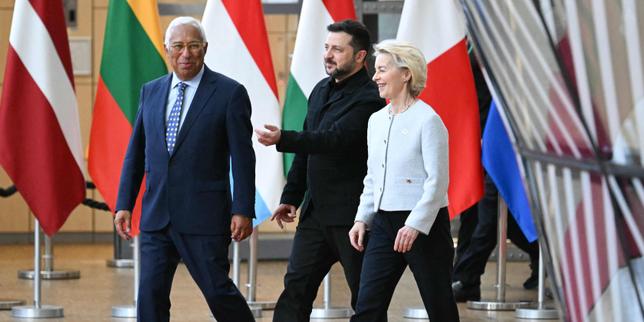
Money talks. Right now, it's screaming in the hallways of the European Commission. Kyiv just dropped another heavy financial demand on the table, and the reception in Brussels isn't warm. Leaders are tired, budgets are stretched thin, and patience is wearing awfully thin.
Behind closed doors, member states are quietly asking a blunt question. When does emergency support turn into an open-ended blank check? The EU has already pumped tens of billions into Ukraine since the invasion began. Public backing remains real, but political fatigue is setting in fast. Taxpayers back home are dealing with inflation, housing crises, and slowing economies. Brussels can't ignore domestic pressure forever.
The Reality of EU Budget Constraints
Let's look at the actual numbers. The European Union operates on a rigid multiannual financial framework. It's not a magic money tree. Every single euro sent to Kyiv has to come from somewhere else.
National capitals are pushing back hard against reallocating funds meant for agriculture, regional development, or internal security. Countries like Germany and the Netherlands are dealing with their own fiscal tightropes. When a new assistance package lands, finance ministers don't see solidarity first. They see a logistical and political nightmare.
- National treasuries are hitting structural limits.
- Public debt ratios across the bloc remain stubbornly high.
- Consensus among all twenty-sept member states gets harder to forge with every new tranche.
Fatigue Among Member States
Solidarity was easy to pledge in the spring of 2022. Flags flew everywhere. Speeches echoed through the European Parliament. Fast forward to today, and the mood has shifted from emotional resolve to cold calculation.
Some eastern nations feel the pinch on their own borders. Others in the west wonder why their citizens should bear the brunt while defense spending at home needs massive upgrades too. Trust is fragile. When Kyiv asks for more cash without a clear, realistic timeline for economic self-sufficiency, skepticism spikes.
Diplomats whisper about fatigue, but the truth is simpler. Leaders have to face voters every few years. If voters feel neglected while billions vanish eastward, political extremism wins. That is the real fear keeping EU leaders awake at night.
The Accountability Problem
Brussels wants receipts. Literally. Pouring funds into a nation fighting an existential war creates massive governance challenges. Corruption has always been a structural hurdle in Ukraine. Brussels built safeguards into the aid mechanisms, but oversight remains messy on the ground.
Every time a new financial request emerges, lawmakers demand stricter anti-graft controls. Kyiv pushes back, arguing that bureaucratic red tape costs lives on the frontline. Both sides have a point. Yet, European auditors cannot simply look the other way. Accountability is non-negotiable when spending public money on this scale.
What Happens Next
The EU will likely patch together another compromise. That is what Brussels does best. But it will come with heavier strings attached, stricter milestones, and deeper political friction.
The era of unconditional financial flows is over. Ukraine must navigate a much colder political landscape where every single euro is fought over room by room, capital by capital. The financial lifeline won't snap overnight, but it's getting shorter and much tighter.