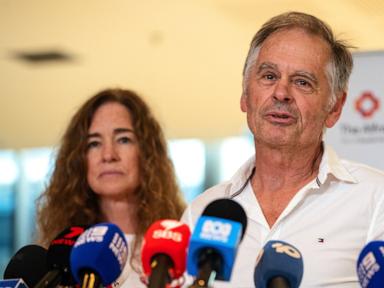
Independent Australian lawmaker Helen Haines lost both of her legs after being repeatedly rammed by a vehicle outside her electorate office in Wangaratta, rural Victoria, in October 2026. She survived emergency surgery and was airlifted to Melbourne, eventually leaving the hospital in mid-November 2026 to begin rehabilitation. Yet the physical trauma she endured is only part of a deeper reckoning over political violence, electorate office security, and the fragile promise of accessible representation in Australia.
Most coverage of the attack treats it as an isolated shock or a brief dispatch about a tragic injury. That framing misses the structural tension sitting right outside every local constituency office across the country. Elected representatives are expected to be reachable neighbors in small towns and suburban strips, not guarded fortresses. When a vehicle becomes a weapon in a quiet regional street, the boundary between everyday civic life and targeted assault collapses in seconds.
What Happened Outside the Wangaratta Office
The attack occurred in Wangaratta, roughly three hours northeast of Melbourne, in the regional seat of Indi. According to witnesses, a driver rammed the 65-year-old lawmaker, pinning her against her own vehicle before reversing and striking her a second time. Bystanders intervened at the scene, pulling the driver from his SUV and giving first aid to Haines before emergency crews airlifted her to a Melbourne hospital.
Her husband, Phil Haines, later confirmed the devastating medical toll. Surgeons amputated her left leg first and then her right leg after efforts to save it failed. For nearly a month, she remained under intensive hospital care while family members asked well-wishers to donate to Save the Children rather than send flowers—an appeal that drew more than 1.4 million Australian dollars. When she was discharged in November 2026, she described the transition as positive and turned her focus toward rehabilitation, even as her staff kept her recovery location private.
Police arrested 43-year-old Brendan Nugent of nearby Tarrawingee at the scene. He appeared in the Wangaratta Magistrates' Court facing serious allegations, including intentionally causing serious injury, dangerous driving causing serious injury, and harming a Commonwealth public official, without entering a plea or applying for bail ahead of a February return date. In court, his defense lawyer pointed to potential undiagnosed mental health issues alongside a concussion and a rare neurological condition, idiopathic transverse myelitis, which affects spinal cord nerve signaling. Meanwhile, his father noted in a public statement that the lawmaker had been a friend of the family for more than twenty years, adding a jarring personal layer to an already unsettling case.
Why Regional Offices Sit on the Front Line
Federal parliament buildings in Canberra get heavy perimeter planning, screening, and visible security. Local electorate offices rarely do. They sit in ordinary commercial rows, main streets, and shared buildings where constituents walk in to ask for help with pensions, visas, grants, or local infrastructure.
That openness is not an accident. It is a core norm of Australian democracy. Voters expect their local member to show up at community halls, supermarket car parks, and regional main streets without a wall of guards. Several lawmakers reacted to the assault on Haines by arguing that locking themselves behind heavy security would hand a victory to intimidation and sever the daily contact that makes local representation meaningful.
At the same time, security agencies and parliamentary officials have sounded sharper alarms. Australian Federal Police Commissioner Krissy Barrett warned of rising extremist rhetoric online, calling the incident something many in law enforcement had been dreading. Ahead of Victoria's November state election, parliamentary authorities urged members of parliament to check office camera feeds before leaving and report troubling visits or messages.
Open access works best when public norms hold. Once grievance, online hostility, or personal crisis spills onto the pavement outside a local office, a storefront becomes a soft target.
There is an uncomfortable trade-off here that few politicians want to spell out plainly. Turning every regional office into a hardened bunker changes the feel of local politics and can alienate ordinary residents who just want to talk to their representative. Yet leaving regional offices exposed—especially in areas where a single member covers vast country towns and relies on routine car movements—creates real operational risk.
To see how thin the margin is in practice, consider a hypothetical example of a regional MP finishing an afternoon of constituent meetings in a country town. They step out of a ground-floor office onto a public parking strip with no bollards, no dedicated security detail, and a clear line of sight from adjacent roads. A single vehicle moving fast in a tight space leaves almost no reaction time for a pedestrian or nearby staffer. Even a basic physical barrier or staggered parking layout changes the physics of a vehicle strike, though small towns often lack the street space or budget to remodel every shopfront overnight.
Beyond Extremism to Messier Realities
Public debate after a high-profile attack almost always reaches for a single tidy explanation. Some commentators immediately point to online polarization and political extremism. Others focus on individual mental health or medical crises.
A clear-eyed assessment has to hold both possibilities without jumping ahead of the evidence. Courts test criminal intent, medical histories, and motive through formal proceedings, not cable news segments or social media threads. Police had not publicly established a motive at the early court stage, while defense counsel raised neurological and psychological factors that the justice system will examine in time.
What is already clear is the broader climate surrounding public office. Elected officials at federal, state, and local levels increasingly report abusive correspondence, threats, and hostility that spill offline. Even when a specific offender's exact motivation remains under investigation, heightened anger and instability make violent episodes harder to spot in advance.
Practical Steps That Do Not Break Local Trust
Protecting lawmakers does not require turning democracy into a gated compound. It requires targeted, practical adjustments that address real vulnerabilities without shutting out the public.
- Audit physical blind spots at regional offices. Review parking layouts, rear exits, lighting, and pedestrian pathways outside constituency offices, focusing first on high-exposure ground-floor sites.
- Pair simple physical deterrence with practical routines. Where feasible, use bollards, planters, or angled parking to reduce vehicle-ramming exposure, while training staff on lock-down habits, safe exits, and checking camera feeds before closing.
- Expand threat assessment beyond senior ministers. High-profile cabinet figures already get specialized security reviews, but regional and backbench members face daily public exposure with far fewer layers of protection.
- Separate genuine threats from everyday disagreement. Law enforcement and parliamentary security need clear reporting channels so staff are not overwhelmed by every sharp critique, while real threats get rapid, coordinated follow-up.
None of these measures will eliminate every risk. A determined person in a vehicle—or someone experiencing an acute medical or psychological breakdown—can still catch people off guard in a quiet regional town.
Helen Haines survived an assault that cost her both legs and reshaped her life overnight. Whether Australia answers that shock with thoughtful, proportionate safeguards—or swings between complacency and overreaction—will shape how safe it is for ordinary people to serve their communities in years to come.