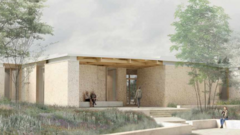
Governments and private healthcare consortiums are currently rushing to greenlight billions of dollars for new regional cancer care centres. The public relations narrative is predictably flawless, promising state-of-the-art radiation vaults, shorter commute times for rural patients, and immediate relief for overcrowded metropolitan general hospitals. Yet beneath the groundbreaking ceremonies and glossy architectural renderings lies a structural crisis. Building a physical structure does not solve a systemic deficit. Without an immediate, aggressive restructuring of the specialized medical workforce, these shiny new facilities will sit partially dark, housing multi-million-dollar linear accelerators with nobody qualified to run them.
The true barrier to modern oncological treatment is not brick and mortar. It is professional exhaustion and specialized migration.
The Empty Vault Syndrome
Medical infrastructure spending is a politically attractive tool. It offers tangible proof of administrative action. When a government announces a new regional hub, it satisfies a desperate community demand for localized treatment. For a patient undergoing six weeks of daily external beam radiation, driving two hours each way while dealing with severe nausea is a form of institutional punishment.
The immediate math seems simple. If you build a clinic with three radiation therapy suites in an underserved region, you reduce the caseload of the central urban hospital by twenty percent.
But a radiation facility is not a standard medical clinic. It requires a highly coordinated, hyper-specialized trio to treat a single patient safely: an oncological physician to prescribe the protocol, a medical physicist to calibrate the radiation beams down to the millimeter, and radiation therapists to position the patient and operate the machinery.
When a new center opens, it does not magically generate these professionals from the local economy. It triggers a predatory talent raid on existing, already strained public hospitals.
Consider a standard regional expansion plan. To staff a modest, newly constructed dual-machine unit, administrators must hire at least four radiation oncologists, three medical physicists, and eight senior therapists. If the national pipeline for these specialties is flat, those professionals are stripped directly from the metropolitan centers. The metropolitan centers then experience a sudden drop in operational capacity, leading to a spike in their own waitlists.
The net result is a costly geographic redistribution of medical delays, not an increase in national clinical throughput.
The Training Bottleneck Nobody Wants to Fund
Equipment vendors sell advanced technology with the promise of increased efficiency. Modern machines can deliver a highly precise dose of radiation in three minutes, whereas older units required twenty. On paper, this translates to more patients treated per hour.
Clinical reality rejects this clean projection. The bottleneck has shifted entirely from the machine's transit time to the human preparation phase.
Before a patient ever lies down under a treatment gantry, a team must execute a complex planning sequence. This involves high-resolution simulation scans, complex anatomical mapping to isolate tumors from healthy organs, and rigorous QA checks by a medical physicist. For complex head and neck cancers, this planning phase can easily absorb twelve hours of intense, uninterrupted intellectual labor per patient.
We are forcing an overstretched workforce to operate within an administrative framework that treats oncology like a factory assembly line.
[Patient Diagnosis]
       │
       ▼
[Simulation Scans]
       │
       ▼
[Anatomical Mapping & Contouring]  ◄─── The Human Bottleneck (12+ Hours)
       │
       ▼
[Physicist Quality Assurance]
       │
       ▼
[Radiation Delivery]
The pipeline to produce the staff capable of doing this work is narrow and brittle. A certified medical physicist requires a master’s or doctoral degree in physics, followed by a competitive two-year clinical residency. Across the country, residency slots are severely limited because existing clinics lack the excess staff capacity to supervise trainees.
It is far easier for a politician to secure twenty million dollars for a concrete bunker than it is to secure two hundred thousand dollars annually to fund a permanent residency position. The former creates a photo opportunity; the latter shows up only as a line-item expense in a bureaucratic ledger.
The Private Equity Squeeze
Compounding this structural instability is the aggressive entry of private equity into the cancer care market. Corporate healthcare networks look at oncology and see high-margin, predictable cash flows driven by an aging population. Their strategy relies on building boutique outpatient centers in affluent suburban areas, peeling away lucrative, low-complexity patients who require standard, predictable treatments.
This leaves public teaching hospitals with the most complex, financially ruinous cases: patients with advanced multi-organ involvement, severe comorbidities, or unstable social situations that require prolonged inpatient stays.
Public infrastructure cannot survive this economic segregation. When private clinics bid up the market rate for experienced radiation therapists by offering better hours and signing bonuses, public institutions lose their veteran staff. The public sector is left with the highest-risk operations and the least experienced workforce, operating under chronic budgetary deficits.
The illusion of expanded choice through private construction actually fragments the baseline safety net.
Re-engineering the Clinical Pipeline
If we are committed to building these new facilities, the investment strategy must be inverted. We must stop prioritizing concrete over human capital.
First, funding allocations for any new center must legally mandate a matching investment in local educational infrastructure. If a region receives a grant to build a care hub, that grant must simultaneously fund dedicated clinical instructor roles at nearby universities and guarantee a fixed number of paid residency slots within that specific building.
Second, we must automate the administrative overhead that consumes up to thirty percent of a clinician's daily routine. Medical physicists should not spend their mornings manually transferring data formats between incompatible software systems purchased from competing corporate vendors. Standardizing data architecture across the entire healthcare system would instantly unlock thousands of hours of latent capacity without hiring a single additional body.
Finally, regional hubs must be structurally integrated into metropolitan networks via real-time digital peer-review platforms. A rural center does not necessarily need a world-renowned specialist physically in the room to map a rare tumor; it needs a secure, high-bandwidth connection that allows that specialist to collaborate remotely with the local team during the planning phase. This preserves localized treatment delivery while maintaining centralized clinical expertise.
The expansion of physical clinics is a necessary response to an escalating public health demand, but treating it as a real estate problem is a catastrophic error. A state-of-the-art facility without an elite, stable workforce is simply an expensive monument to poor planning. True healthcare infrastructure is measured in human endurance and systemic resilience, not square footage.