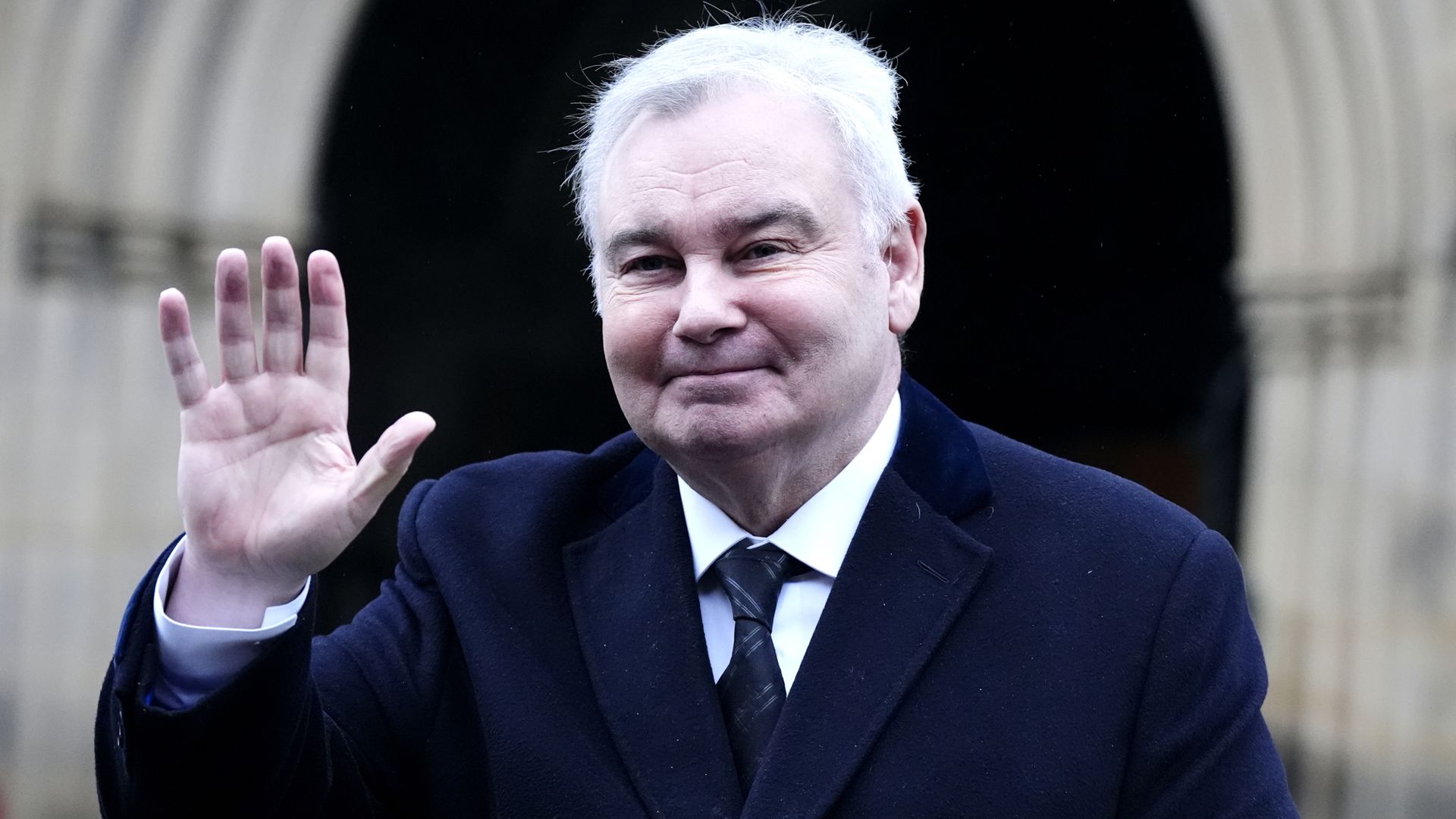
Eamonn Holmes is currently fighting a multi-front war for his health, a struggle that his son Declan recently characterized as "doing okay" despite the immense physical toll of the past few years. While the headlines often focus on the brief updates from his family, the reality for the veteran broadcaster involves a grueling recovery process from a 2022 stroke, compounded by chronic back issues and a series of surgical complications. This isn't just a story about a TV personality taking a sick day; it is a case study in the relentless nature of neurological recovery and the public's often-warped perception of what "recovery" actually looks like for a man in his mid-sixties.
The Physical Toll Behind the Screen
The update from Declan Holmes serves as a rare moment of transparency for a family that has spent decades in the relentless glare of the British media. To understand why "doing okay" is actually a significant statement, one must look at the sheer volume of physical trauma Holmes has endured. It started with chronic pain so severe it necessitated spinal surgery. Then came the fall that broke his shoulder. Then, the stroke.
Neurological events like strokes do not happen in a vacuum. They are often the culmination of systemic stress, and in Holmes’ case, they occurred while he was already physically vulnerable. Recovery from a stroke is not a linear climb. It is a jagged, exhausting series of two steps forward and one step back. When a family member says someone is "doing okay," they are often signaling that the patient has reached a plateau of stability, which, after a period of crisis, feels like a victory.
The Hidden Grind of Stroke Rehabilitation
Most people view stroke recovery through the lens of dramatic milestones—the first steps or the first clear words. The reality is much more tedious. It involves hours of repetitive physiotherapy designed to rewire the brain's neural pathways, a process known as neuroplasticity. For someone like Holmes, whose entire career has been built on his ability to be quick-witted and physically present on a live set, the loss of total physical autonomy is a psychological blow as much as a physical one.
The "why" behind his slow progress isn't a mystery. It is a biological certainty. At 64, the body’s ability to bounce back is significantly diminished compared to a younger patient. Every secondary injury—like his previous spinal issues—acts as a drag on his current rehabilitation. The core of the issue is that the public expects celebrities to undergo "miracle" recoveries. We want the montage. We want the triumphant return to the desk within six months. Holmes is providing a much more honest, and frankly more difficult, narrative.
The Complexity of Chronic Pain and Mobility
The intersection of Holmes’ chronic back pain and his stroke recovery creates a specialized kind of medical purgatory. To recover from a stroke, you must move. To move, you need a functional musculoskeletal system. If your spine is compromised, every exercise prescribed by a neuro-physiotherapist becomes a source of secondary pain. This creates a feedback loop where progress is stalled not by a lack of will, but by the physical limits of the frame.
The Psychological Weight of Professional Absence
Broadcasting is an ego-driven, high-energy industry. For a man who has been a fixture on breakfast television for nearly forty years, the forced deceleration is jarring. There is an overlooked factor here: the loss of identity. When Declan Holmes speaks about his father, he isn't just talking about a patient; he’s talking about a provider and a public figure who has suddenly been sidelined. The mental fortitude required to stay "okay" while your career remains in a state of indefinite flux is immense.
Breaking the Silence on Male Health Struggles
There is a specific cultural pressure on men of Holmes' generation to "soldier on." By being relatively open about his use of a wheelchair and his need for assistance, Holmes is inadvertently stripping away the stigma associated with physical disability in later life. The industry he works in is notoriously ageist and ableist, favoring the polished and the mobile. His presence—even in a diminished physical state—is a disruption to that standard.
The "how" of his recovery is now centered on long-term management rather than a quick fix. This involves a team of specialists, from occupational therapists who adapt his living environment to the constant support of his immediate family. It is a high-cost, high-effort endeavor that highlights the disparity in how stroke victims recover. While Holmes has the resources to access the best care, the sheer grit required to show up for the sessions remains a personal burden that no amount of money can outsource.
The Fragility of the Public Update
Journalistically, we have to look at the timing of these updates. They often surface when the public begins to speculate or when the silence becomes too loud. Declan’s comments weren't a medical bulletin; they were a boundary setting. They tell the public that while the journey is ongoing, the family is managing the expectations.
The struggle Holmes faces is a reflection of a broader health crisis among aging men who ignore early warning signs of cardiovascular distress. While we cannot speculate on the specifics of his medical history leading up to the stroke, the pattern is familiar to any health investigative reporter: a high-stress career, chronic pain management, and the eventual breaking point of the vascular system.
The Reality of the "New Normal"
What the competitor articles miss is the concept of the "new normal." There is a high probability that Eamonn Holmes will never return to the exact physical state he was in ten years ago. That isn't a failure; it is an aging reality. The "brutal truth" is that for many stroke survivors, "doing okay" is the destination, not a pit stop on the way back to 100% health.
The focus should shift from "when will he be back to normal?" to "how is he adapting?" Adaptation is the true metric of success in late-stage rehabilitation. Whether it is using walking aids or modifying his work schedule to accommodate fatigue, these are the victories that matter. The narrative of the "brave battle" is tired. What we are seeing is a calculated, slow-motion endurance test.
Broadcasting requires a level of stamina that the average viewer underestimates. Standing for three hours under hot lights, maintaining a high cognitive load, and engaging in rapid-fire dialogue is a marathon. For Holmes, simply standing unaided for a short duration is currently his marathon. The gap between those two realities is where the frustration lives.
The son's update is a reminder that behind the "Eamonn Holmes" brand is a human being dealing with the indignities of a failing body. It’s a quiet, unglamorous fight. It’s the smell of antiseptic, the frustration of a limb that won't follow orders, and the exhaustion that hits at 2:00 PM every single day.
If Holmes manages to return to a regular broadcasting slot, it will be a testament to a level of discipline that exceeds anything he ever did in a newsroom. If he doesn't, "doing okay" remains a perfectly valid place to land. The public's desire for a Hollywood ending often ignores the dignity found in the struggle itself.
Recovery isn't a performance for our benefit. It’s a private, grueling labor that occasionally leaks into the press through the voices of those who love the patient most. Declan Holmes didn't promise a miracle; he promised stability. In the world of stroke recovery, stability is the only foundation worth building on.
The path forward for Eamonn Holmes isn't about reclaiming his past; it’s about navigating his present with the same blunt honesty he used to grill politicians. That honesty starts with admitting that some days "okay" is the best the body can offer, and that has to be enough.