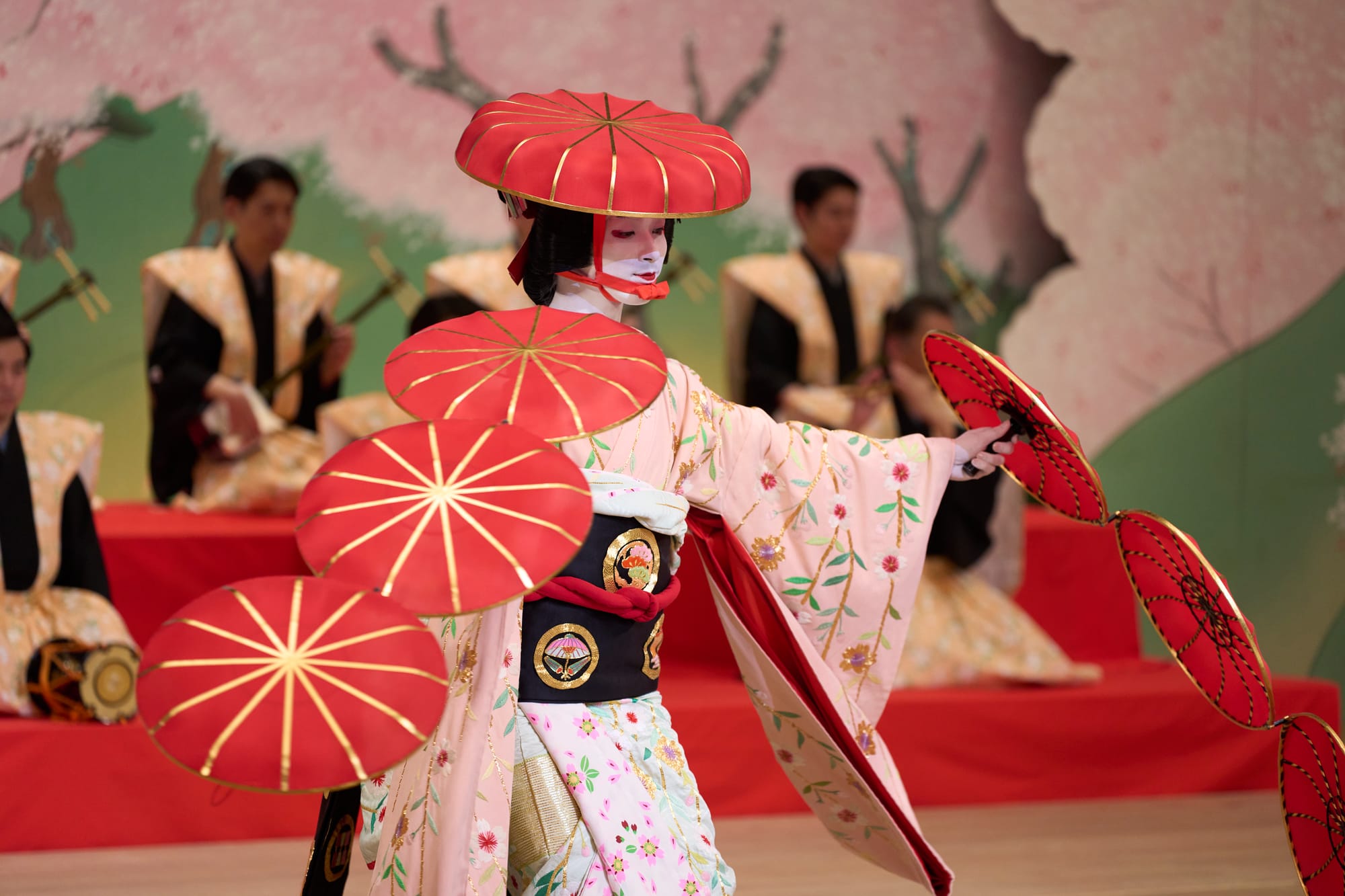
The survival of a 400-year-old art form usually depends on a choice between two deaths: literal extinction or the slow rot of becoming a museum piece. Kabuki, Japan’s stylized theater of grand gestures and heavy white greasepaint, has spent decades walking that wire. But with the Oscar nomination of the animated feature Kokuho, the conversation has shifted from preservation to evolution. The film does not merely document the tradition; it deconstructs the physical and psychological toll required to master it. This is not a soft-focus tribute to "heritage." It is a granular, often painful look at the mechanics of cultural inheritance and the high-stakes gamble of bringing a rigid stage craft into the fluid world of modern cinema.
The Weight of the Living National Treasure
At the heart of Kokuho is the concept of the "Living National Treasure," or Ningen Kokuho. In Japan, this is more than a title. It is a government-sanctioned designation that effectively turns a human being into a state-protected monument. For the protagonist and the real-world actors who inspired the story, this status is both a pinnacle and a prison. The film captures the friction between the individual’s desire for expression and the tradition’s demand for absolute conformity.
The "One Shot" approach mentioned in early production notes refers to more than just a cinematographic technique. It represents the singular, high-pressure environment of the Kabuki stage where there are no retakes. If a performer misses a beat during a mie—that signature, cross-eyed freeze-frame of intense emotion—the spell breaks. Kokuho mimics this intensity by utilizing long, unbroken animated sequences that mirror the real-time physical endurance required of a stage performer.
Breaking the Onnagata Code
The most significant hurdle for any modern adaptation of Kabuki is the onnagata, the male actors who play female roles. This isn’t drag in the Western sense. It is a highly codified system of movements, vocal pitches, and gestures designed to project an idealized version of femininity that does not exist in nature.
In Kokuho, the animation team had to solve a problem that has plagued live-action filmmakers for years: how to make the onnagata’s movements feel intentional rather than stilted. On stage, an actor might tilt his head at a specific 45-degree angle to signify grief. In a standard film, that can look like a neck cramp. Kokuho uses the exaggerated physics of animation to bridge this gap, translating the internal gravity of the actor into visual weight.
Critics often argue that Kabuki is inherently unfilmable because its power lies in the shared physical space between the performer and the audience. The "hanamichi," the walkway that runs through the crowd, is a literal bridge between the mundane and the mythic. Kokuho attempts to replicate this by breaking the fourth wall through its perspective shifts, forcing the viewer to acknowledge the artifice of the performance while simultaneously getting swept up in the melodrama.
The Business of Bloodlines and Box Office
Behind the artistic triumphs lies the cold reality of the "iemoto" system. Kabuki is a family business. Names are inherited, and with those names come specific repertoires and expectations. If you are born into a certain lineage, your career path is set before you can walk. If you are an outsider, the climb is nearly impossible.
Kokuho tackles this gatekeeping head-on. The industry is currently facing a dual crisis: an aging audience and a shrinking pool of successors willing to endure the brutal training. By securing an Oscar nomination, the film has done what decades of government subsidies could not—it made Kabuki relevant to a global, younger demographic without stripping away the difficulty of the medium.
The financial stakes are equally high. The Shochiku Company, which holds a near-monopoly on professional Kabuki, has been experimenting with "Super Kabuki" (integrating anime themes and high-tech effects) to stay solvent. Kokuho represents a different strategy: using prestige cinema to validate the traditional core. It’s a gamble that the "authentic" version of the art, with all its slow pacing and complex symbolism, can compete in a marketplace dominated by instant gratification.
Technical Mastery Over Digital Shortcuts
The production of Kokuho avoided the common pitfall of over-relying on motion capture. While it would have been easier to strap sensors to a dancer and hit record, the directors understood that Kabuki movement is not natural. It is an accumulation of resisted force.
Hand-drawn animation allowed the creators to emphasize the "ma"—the space between movements. In Japanese aesthetics, the silence is as important as the sound, and the stillness is as important as the action. By manually timing the frames, the animators could replicate the specific, jerky grace of a master performer. This isn't about realism; it's about truth.
The Cost of Perfection
There is a dark undercurrent to the story that many casual viewers miss. The pursuit of the "One Shot" perfection leads to a psychological breakdown. The film doesn't shy away from the physical injuries—the ruined knees, the vocal cord nodules, the isolation. It asks if a tradition is worth the destruction of the people who carry it.
This is where the investigative lens reveals the most friction. Interviews with contemporary Kabuki actors suggest a growing tension between the old guard, who view suffering as a prerequisite for mastery, and the younger generation, who seek a more sustainable way to perform. Kokuho sits right in the middle of this fire, acting as both a celebration of the craft and a cautionary tale about the weight of the past.
The Global Stage and the Translation of Soul
The Oscar nod is a significant milestone, but it also raises the question of whether something so uniquely Japanese can be truly understood by a Western Academy. There is a risk of "Orientalism," where the beauty of the costumes and the exoticism of the music overshadow the technical brilliance.
However, the narrative of Kokuho is universal. It is a story about the burden of excellence. Whether it’s a concert pianist, a professional athlete, or a Kabuki actor, the struggle to transcend human limits is a language everyone speaks. The film succeeds because it treats Kabuki not as a curiosity, but as a discipline as rigorous as any Olympic sport.
A Legacy in Flux
The success of Kokuho hasn't just boosted ticket sales at the Kabuki-za in Tokyo; it has sparked a debate about the "right" way to innovate. Some traditionalists argue that animation cheapens the tactile reality of the theater. Others see it as the only way to ensure the art form doesn't die with its current masters.
The real victory of the film isn't the nomination itself, but the fact that it has forced a stagnant industry to look in the mirror. Kabuki has always survived by adapting. In the Edo period, it was the pop culture of the masses, full of scandal and special effects. Somewhere along the way, it became "high art," and in doing so, it lost its edge. Kokuho restores that edge by showing that the tradition is not a fragile vase to be kept behind glass, but a living, breathing, and often violent force.
The next time a performer strikes a pose and the audience shouts their house name, the echoes of this digital interpretation will be in the room. The film has proven that you don't need to change the dance to change how the world sees it. You just need to show them the sweat beneath the paint.
Watch the next performance not for the spectacle, but for the moments of stillness where the actor disappears and only the lineage remains.