The diplomatic machinery in Washington is currently grinding through a familiar, exhausted routine. For months, American officials have signaled that a grand bargain—a truce between the United States and Iran, paired with a regional realignment—is the only exit ramp from a Middle East engulfed in flames. However, while Western capitals talk of de-escalation and "the day after," the reality on the ground in Tel Aviv is fundamentally different. Israel is not merely reacting to a crisis; it is actively restructuring its entire national security doctrine to sustain a permanent state of high-intensity conflict. This is not a tactical delay. It is a strategic divergence that threatens to leave American foreign policy stranded in the sand.
The core of the friction lies in a massive miscalculation by the current U.S. administration. Washington views the current regional chaos as a series of fires that can be put out with the right amount of financial incentive and diplomatic pressure on Tehran. Israel, conversely, has reached a grim consensus that the old "mowing the grass" strategy—periodic, limited military operations—has failed. Instead, the Israeli security establishment is preparing for a multi-front struggle that could last years, if not decades. They aren't looking for a truce because they no longer believe a truce provides safety.
The Collapse of the Managed Conflict Illusion
For nearly twenty years, the Israeli-Palestinian issue was treated as a management problem. The assumption was that Hamas could be contained through economic sweeteners and high-tech border defenses, while the Iranian nuclear threat could be delayed via sabotage and international sanctions. October 7 did not just break a fence; it shattered that entire intellectual framework.
When you walk through the halls of the Knesset or talk to the top brass at the Kirya in Tel Aviv, you don't hear talk of a two-state solution or regional integration. You hear about Strategic Depth. Israel has concluded that its previous reliance on technology and small, elite units was a mistake. They are now reverting to a traditional, heavy-infantry-based military posture designed for long-term occupation and buffer zone maintenance. This shift is expensive, bloody, and inherently incompatible with the "truce" the U.S. is trying to broker.
Washington’s desire for a deal with Iran is driven by a domestic need to pivot away from the Middle East. They want the region "quiet" so they can focus on the Pacific and Eastern Europe. But for Israel, "quiet" is now viewed as the period during which their enemies build the next October 7. The Israeli leadership sees a U.S.-Iran truce not as peace, but as a subsidized re-armament period for the "Axis of Resistance."
Why the White House Pressure is Failing
There is a persistent myth that the U.S. can simply turn off the tap and force Israel to the table. This ignores the reality of modern defense procurement and internal Israeli politics. While the U.S. provides essential munitions, Israel has spent the last year rapidly expanding its domestic production lines. They are preparing for a world where American support might be conditional or slow.
The Political Necessity of Combat
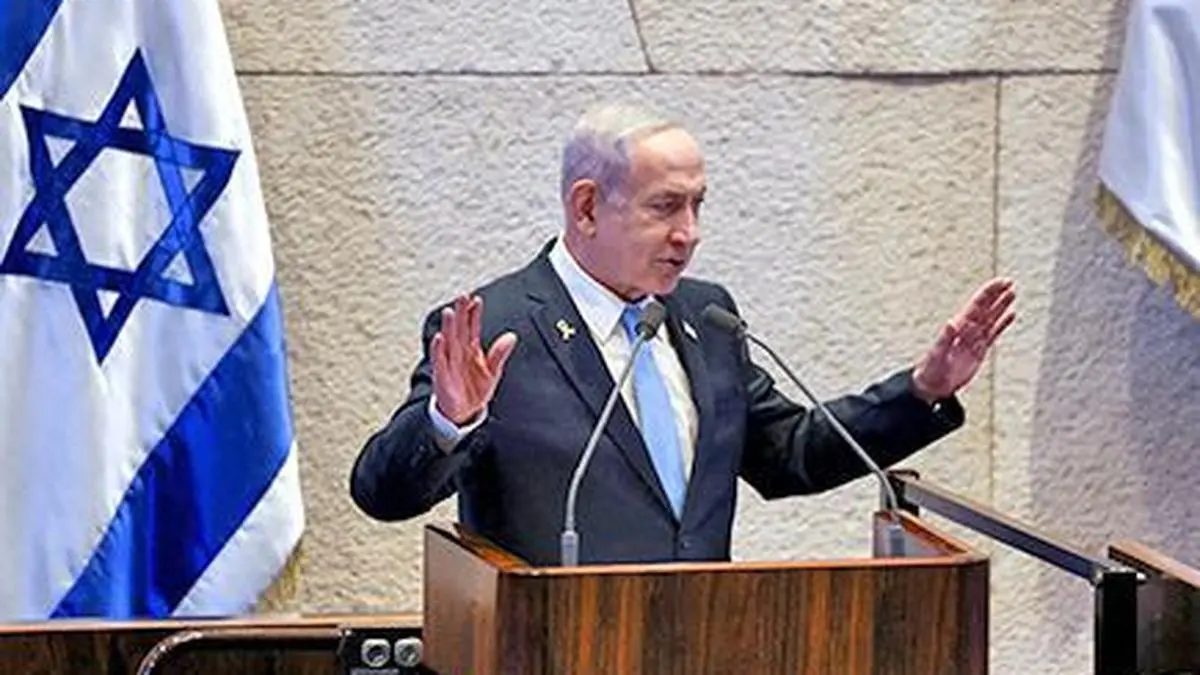
Beyond the military reality, there is the undeniable survival instinct of the current Israeli government. Prime Minister Benjamin Netanyahu’s political life is tethered to the continuation of the security crisis. In a time of peace, the commissions of inquiry begin. In a time of war, he is the "indispensable" wartime leader.
However, it is a mistake to attribute this entirely to one man. The Israeli public, deeply scarred and increasingly right-wing, has little appetite for the concessions that a U.S.-brokered deal would require. To get a deal with Iran, the U.S. wants Israel to concede on Palestinian statehood and limit its strikes on Hezbollah. For many Israelis, that looks like a suicide pact.
The Hezbollah Factor
The northern border remains the most significant trigger for a "forever war." Tens of thousands of Israeli citizens are displaced from their homes in the Galilee. No Israeli government can survive if those people cannot return. The U.S. wants a diplomatic solution that pushes Hezbollah back a few kilometers. Israel’s military leadership is increasingly convinced that only a full-scale ground operation into Southern Lebanon will suffice. This creates a massive disconnect. Washington is trying to prevent a regional war; Israel feels it is already in one and simply needs to win it.
The Economic Engine of Permanent War
Historically, long wars bankrupt nations. Israel, however, is attempting a high-risk economic experiment. By mobilizing its tech sector into defense R&D and securing massive private investment from the diaspora, it is trying to insulate its economy from the shocks of a multi-front conflict.
The Defense-Industrial Complex in Israel is no longer a part of the economy; it is becoming the economy. We are seeing a shift where civilian startups are pivoting to "dual-use" technologies—drones, AI-driven targeting, and cyber defense. This creates a self-sustaining cycle. The more Israel fights, the more it refines its military tech, which it then exports to a world increasingly nervous about its own borders. This "battle-proven" label is a powerful economic driver that makes the cost of war more palatable to the treasury.
Iran’s Long Game Meets Israel’s New Wall
Tehran is playing a game of strategic patience. They have watched the U.S. struggle with domestic polarization and believe that if they can just wait out the current administration, they can secure a deal that legitimizes their nuclear threshold status. They use their proxies—Hamas, Hezbollah, the Houthis—to bleed Israel slowly.
Israel’s response is a fundamental rejection of that patience. They are moving toward a doctrine of Total Asymmetry. This means hitting Iranian assets directly, regardless of the "red lines" established by Western diplomats. The strike on the Iranian consulate in Damascus was not an isolated incident; it was a declaration. Israel is telling the world that it will no longer play by the rules of proportional response that the U.S. prefers.
The Problem with the "Truce" Logic
The U.S. logic is based on the idea of Rational Actors. They assume Iran wants to avoid a direct war and that Israel wants to avoid economic ruin. But "rationality" is subjective. To the Iranian Revolutionary Guard, regional chaos is a tool of influence. To the Israeli cabinet, the risk of a "forever war" is less than the risk of a nuclear Iran or a fortified Hezbollah.
When two sides have such fundamentally different definitions of survival, a middle-ground truce is not a bridge; it is a mirage.
The Regional Casualties of Discord
While the U.S. and Israel clash over strategy, the surrounding Arab states are caught in an impossible position. Countries like Jordan and the UAE want the stability promised by the Abraham Accords, but they cannot ignore the rising domestic anger over the humanitarian catastrophe in Gaza.
Israel’s "digging in" makes it nearly impossible for these regional partners to cooperate openly. The U.S. vision of a "Regional Security Architecture"—a sort of Middle Eastern NATO aimed at Iran—requires Israel to cooperate on a Palestinian track. Israel’s refusal to do so effectively kills the project. This leaves the U.S. with a choice: back a regional plan that Israel will actively sabotage, or abandon the plan and let the region drift toward a massive, uncontrolled explosion.
The Intelligence Gap
One of the most concerning aspects of this rift is the widening gap in intelligence sharing and trust. In the past, the Mossad and the CIA operated with a high degree of transparency. Today, there is a palpable sense of "need to know." Israel is increasingly conducting operations without notifying Washington, fearing that the U.S. will leaked information or exert pressure to cancel the mission.
This lack of coordination increases the risk of a "Black Swan" event—a strike or an assassination that forces the U.S. into a war it didn't choose. Washington finds itself in the uncomfortable position of providing the weapons for a war it has no control over. It is a reversal of the traditional patron-client relationship. Israel has realized that in the current geopolitical climate, the "tail" can effectively wag the "dog" because the U.S. cannot afford to let Israel fail.
The Strategy of No Return
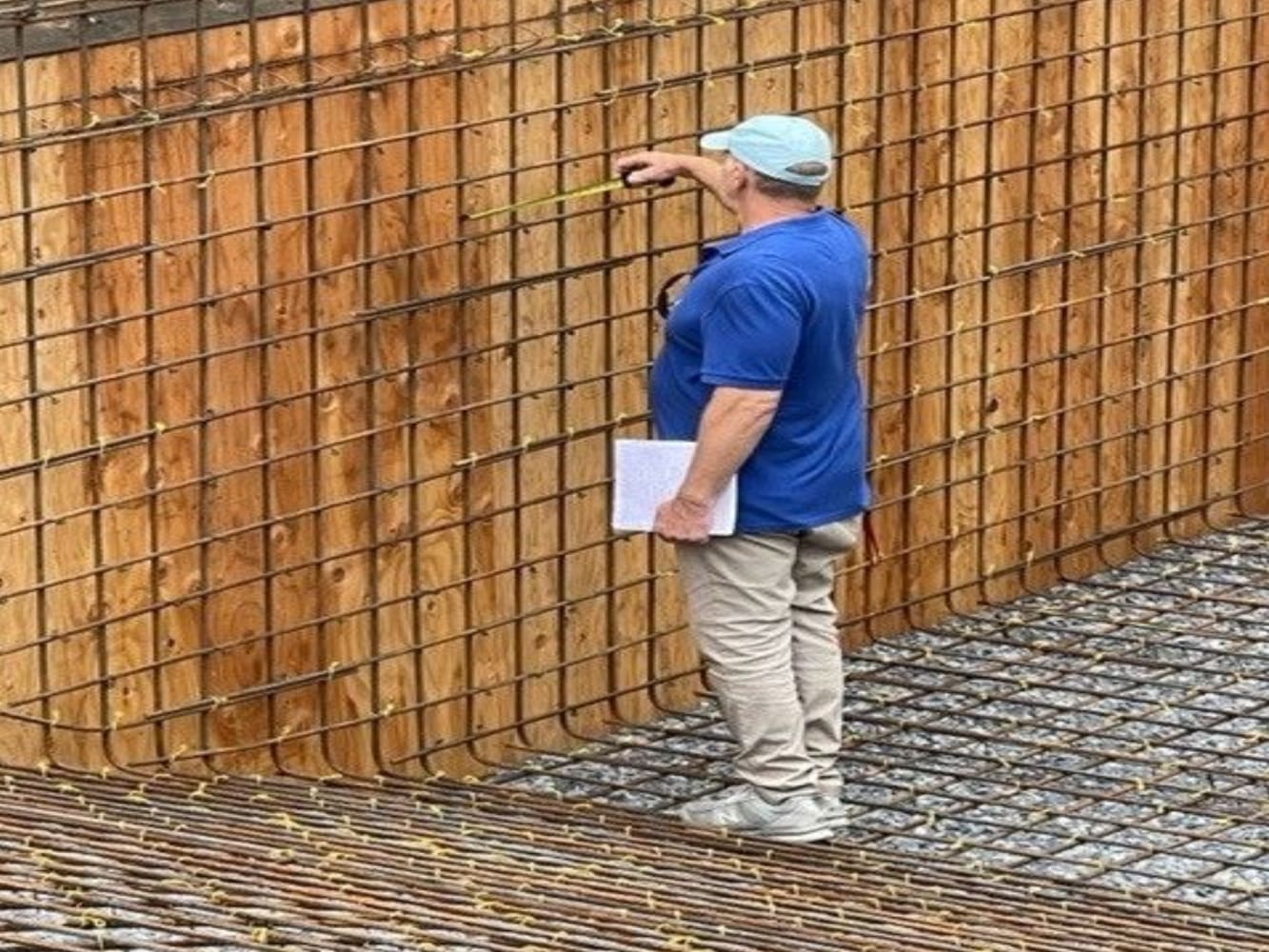
Israel is currently building permanent military infrastructure in the heart of the Palestinian territories. This includes paved roads, reinforced bases, and advanced surveillance grids. These are not the actions of a military planning to leave in six months. They are the actions of a state preparing for a generation of policing and low-intensity combat.
This "fortress" mentality is the death knell for the U.S. diplomatic effort. You cannot negotiate a truce when one side is pouring concrete for a permanent garrison. The White House continues to use language from the 1990s—"peace process," "negotiated settlement," "mutual recognition"—while the reality on the ground has moved into a medieval era of walls, sieges, and attrition.
The Illusion of Control
The U.S. foreign policy establishment suffers from a persistent "Main Character" syndrome. They believe that if they just find the right combination of words and money, they can dictate terms to the world. But Israel is demonstrating the limits of American power. By digging in for a "forever war," Israel is forcing the U.S. to choose between total abandonment or total, unconditional support. There is no longer a third way.
Western analysts often ask when the war will end. They are asking the wrong question. For the current Israeli leadership and a significant portion of its security apparatus, the war is the new normal. It is the environment in which the state will exist for the foreseeable future. The goal is no longer to "win" in the sense of a signed peace treaty on a White House lawn. The goal is Sustainability.
The "forever war" is not a failure of policy to the hardliners in Jerusalem; it is the policy. It is a buffer against a hostile region and a way to force the world to accept Israel on its own terms, rather than as a project of Western liberalism. As long as Washington tries to sell a peace that Israel no longer believes in, the two allies will continue to drift toward a breaking point that neither is truly prepared for.
The strategy in Tel Aviv is clear: if you cannot have peace, make the war your home. This is the reality that the U.S. State Department refuses to acknowledge, even as the foundations of their Middle East policy crumble. The truce is a ghost. The war is the only thing left that is real.
Stop looking for the exit strategy. There isn't one. Instead, look at the foundations being poured in the desert; that is where the future of the region is being written, in concrete and steel, far away from the negotiating tables of Geneva or D.C.