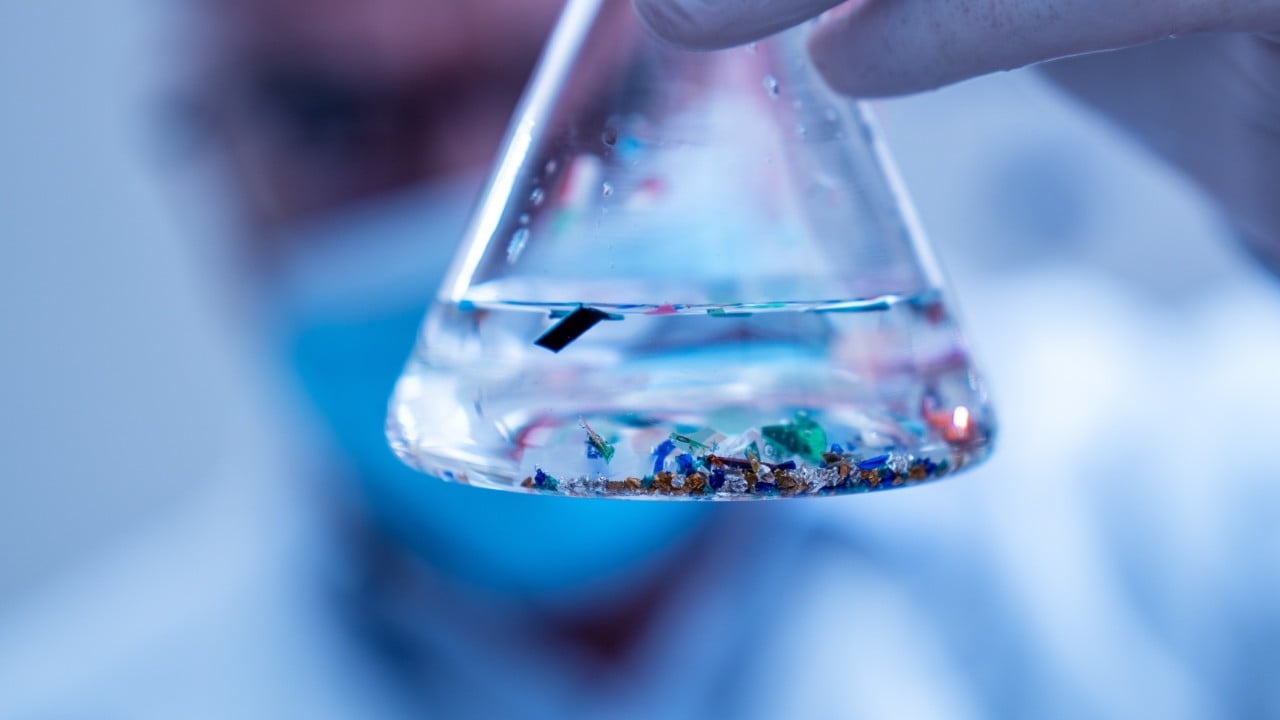
A commercial aviation industry desperate to escape its carbon guilt has found a new media darling in a laboratory breakthrough out of China. Researchers at Nanjing Forestry University and Tsinghua University recently published a study in Nature Energy detailing a chemical process that transforms hard-to-recycle polystyrene waste into high-quality cycloalkane jet fuel. By operating a tandem reactor system that pairs 460°C hydro-pyrolysis with a low-temperature, ruthenium-based hydrogenation stage, the scientists achieved a stunning 94.8% fuel yield at an estimated production cost of $1.00 to $1.80 per kilogram. On paper, it looks like a rare double victory: erasing our toxic mountain of Styrofoam packaging while undercutting the price of conventional fossil petroleum.
But the economic and logistical reality of global aviation tells a far grimmer story.
Beneath the flawless metrics of laboratory gram-scale testing lies a fundamental structural mismatch that threatens to keep this technology grounded forever. Airlines consume roughly seven to eight million barrels of oil every single day. Less than one percent of that current supply comes from sustainable aviation fuel (SAF). While the Chinese study correctly highlights that isolated ruthenium sites can accelerate chemical conversion by 100 times compared to commercial alternatives, it completely glosses over the brutal mechanics of waste management, energy input costs, and thermodynamic reality. We are not on the verge of cheap, plastic-powered flight. Instead, we are looking at an incredibly complex, high-heat chemical recycling process that will face devastating bottlenecking the moment it attempts to scale beyond the walls of an academic institution.
The Chemistry Versus The Collection Crisis
The scientific achievement itself is undeniably clever. Polystyrene is notoriously difficult to recycle through mechanical means because it is mostly trapped air, highly susceptible to chemical degradation during melting, and almost always contaminated with food waste.
The Chinese team bypassed standard recycling limits by designing a two-stage thermochemical process. The first reactor breaks the stubborn polymer chains apart under a hydrogen atmosphere at high temperatures. The second reactor passes these hot molecular fragments over an atomically dispersed ruthenium catalyst supported on cobalt-aluminum oxide, refining them into dense alkanes suitable for turbine combustion.
Yet, this entire chemical miracle relies on a massive, unspoken assumption: a steady, pure, and uncontaminated supply of waste polystyrene delivered directly to the reactor gates.
In the real world, the economics of plastic collection are utterly broken. Polystyrene is incredibly lightweight. A truck completely filled to maximum volume with expanded foam blocks carries only a fraction of a ton by weight. The financial cost and carbon footprint of collecting, compressing, sorting, and transporting these low-density materials across a continent easily wipe out the theoretical $1.00 per kilogram production advantage. If a processing plant cannot secure millions of tons of clean feedstock without spending a fortune on diesel-fueled logistics, the low-cost claim dissolves before the catalyst even heats up.
The Hidden Hydrogen Premium
Aviation experts assessing the viability of non-biological SAF pathways frequently point to the hidden energy penalties built into synthetic fuel production. The tandem reactor system is not a passive filter; it is a ravenous consumer of both heat and molecular hydrogen.
- Thermal Input: The initial stage demands a sustained environment of 460°C to shatter the plastic bonds.
- Hydrogen Demand: The secondary hydrogenation phase requires a massive, continuous stream of hydrogen gas to saturate the cracked hydrocarbons into stable alkanes.
If the hydrogen utilized in this process is sourced from traditional steam methane reforming—which relies on natural gas—the environmental benefit drops significantly. The study claims a 73% reduction in lifecycle carbon dioxide emissions compared to conventional petroleum jet fuel. However, that figure assumes an ideal scenario powered by zero-carbon energy and green hydrogen.
Currently, green hydrogen remains incredibly scarce and prohibitively expensive. Diverting the world's limited green hydrogen supply to process dirty plastic waste, rather than using it to directly decarbonize heavy industries like steelmaking or maritime shipping, represents a questionable allocation of green resources.
A High Stakes Race Against Global Volatility
The pursuit of plastic-derived aviation fuel is no longer confined to academic labs in Asia. In April 2026, Clean Planet Technologies opened a pilot facility in Kent, United Kingdom, attempting to advance a similar proprietary plastics-to-SAF process through the rigorous ASTM international qualification pathway.
The driving force behind these sudden investments is less about sudden environmental altruism and far more about raw geopolitical survival. Recent global supply disruptions, including energy crunches driven by the conflict in Iran and vulnerabilities along crucial maritime chokepoints like the Strait of Hormuz, have left nations terrified of absolute fuel shortages. For a country like the UK or China, converting millions of tons of domestic plastic waste into aviation fuel isn't just a green initiative; it is an attempted hedge against a volatile global oil market.
[Domestic Plastic Waste] ➔ [High-Heat Pyrolysis] ➔ [Catalytic Hydrogenation] ➔ [Strategic Fuel Reserve]
But industrial scaling cannot be willed into existence by geopolitical anxiety alone. Clean Planet Technologies does not expect its fuel to achieve full commercial airline deployment until at least 2029, even under ideal regulatory conditions. Moving from a controlled pilot plant to the scale required to feed a commercial hub like London Heathrow or Beijing Capital International requires billions in capital expenditure. Investors face a daunting paradox: why pour billions into a highly sensitive, catalyst-reliant plastic refinery when traditional fossil fuels remain easier to extract, and competing biofuels made from agricultural waste have already cleared the regulatory hurdles?
The Atmospheric Shell Game
We must also confront the fundamental philosophical contradiction of turning plastic waste into combustion fuel. When we transform a plastic bottle or a shipping cooler into jet fuel, we are taking carbon that was successfully locked away in a solid state and intentionally vaporizing it directly into the upper atmosphere.
While this process does prevent the plastic from fragmenting into microplastics within our oceans and landfills, it acts as a carbon acceleration mechanism. The aviation industry promotes SAF because it technically replaces the extraction of new crude oil from underground reserves. Yet, from a pure atmospheric standpoint, burning plastic fuel still releases massive volumes of greenhouse gases at 35,000 feet. It is an elaborate shell game that shifts a visible, physical waste crisis on the ground into an invisible, systemic climate crisis in the sky.
The Nanjing and Tsinghua breakthrough proves that humanity possesses the brilliant chemical capability to transform our worst garbage into high-energy liquid fuel. What it does not prove is that our global economic system can afford to do so. Until the massive bottlenecks of waste logistics are solved, and until green hydrogen becomes dirt cheap, these tandem reactors will remain an elegant laboratory curiosity. Airlines will continue to burn standard petroleum, and our plastic will continue to accumulate in the dirt.